 Retro Replay Retro Replay gaming reviews, news, emulation, geek stuff and more!


Retro Replay Review
Gameplay
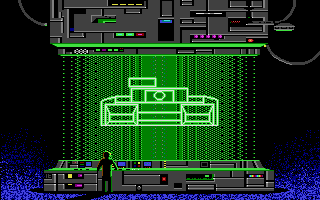
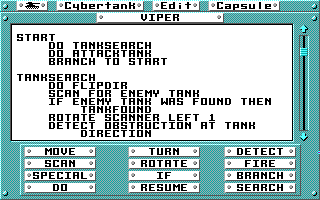
Omega puts a refreshing twist on mechanical warfare by shifting the focus entirely from shooting enemies to designing and programming your own cyber-tank. Rather than piloting a vehicle through chaotic battlefields, you sit at a virtual drafting table and text editor, assigning sensor parameters, movement routines, and targeting priorities. Every line of code you write has a tangible effect on how your tank maneuvers, scans for opponents, and prioritizes threats, making each test encounter feel like a direct collaboration between programmer and machine.
(HEY YOU!! We hope you enjoy! We try not to run ads. So basically, this is a very expensive hobby running this site. Please consider joining us for updates, forums, and more. Network w/ us to make some cash or friends while retro gaming, and you can win some free retro games for posting. Okay, carry on 👍)
The budget constraint adds a strategic layer to Omega’s design loop: you begin each assignment with limited funds and a strict set of performance goals. Too heavy an armor package might hinder your chassis speed; too powerful a gun might push you over budget. This tension encourages creative problem solving and forces you to weigh trade-offs at every turn. After each simulated skirmish, you receive a report card that highlights strengths and weaknesses, guiding you toward iterative improvements rather than brute-force solutions.
While combat itself is entirely simulated, Omega’s built-in arena tests are surprisingly tense. Watching your tanks patrol, engage, and—even in failure—learn from your scripts can be more satisfying than traditional action gameplay. The gradual unlocking of new parts and sensors as you progress in security clearances keeps the experience fresh; you’ll constantly revise your AI routines to make the best use of bigger budgets and more sophisticated components.
Graphics
Omega’s visual presentation is elegantly minimalist, reflecting its focus on code and mechanics rather than flashy effects. The core interface consists of a text editor panel alongside schematic wireframes of your tank, populated by icons denoting engines, turrets, sensors, and armor plates. This blueprint-style view is crisp and functional, allowing you to zoom in on individual modules and see real-time data readouts as your code runs.
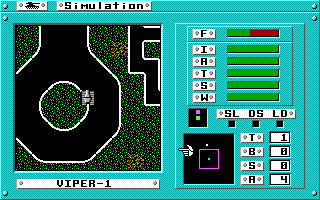
During test matches, the arena is rendered in simple vector graphics. Tanks glide across a grid, their shapes and colors indicating allegiance and status. Animations are straightforward but clear: turret barrels turn smoothly, projectiles arc predictably, and damage shows up as visual sparks or digital warnings. While Omega won’t win awards for texture work, its visuals serve clarity above all, ensuring you can diagnose AI misbehavior or hardware bottlenecks at a glance.
Menus and documentation are presented in an era-appropriate techno-font, reinforcing the cold, industrial aesthetic of a military R&D facility. Tooltips and in-editor help pop up unobtrusively, guiding newcomers through scripting commands and hardware specs without breaking immersion. Overall, the graphics strike a balance between form and function, making it easy to dive deep into design without distraction.
Story
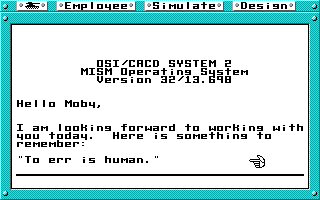
Although Omega doesn’t feature cutscenes or voiced dialogue, it weaves a concise narrative through mission briefings, intercepted communications, and corporate memos. You start as a low-level contractor in a secretive defense program, tasked with proving your value by producing a combat-worthy tank. Each successful trial grants you access to higher security clearances and a fatter budget, effectively turning your technical prowess into story progression.
The world-building unfolds gradually: off-hand remarks in briefings hint at rival corporations, black-ops doctrine, and the political stakes behind your assignments. You begin to wonder not just how to build the perfect tank, but why these machines matter so much to shadowy government interests. This shadowy backdrop provides enough intrigue to keep you invested, even if the emphasis remains squarely on mechanics rather than character development.
By the late game, subtle shifts in directive tone and report urgency suggest that your creations may play a role in larger conflicts. While Omega never becomes a sprawling narrative epic, it offers just enough context to frame your engineering challenges as part of a broader, high-stakes technological arms race.
Overall Experience
Omega is a must-play for anyone with a passion for engineering, programming, or strategy. It transforms what could be a dry simulation into a compelling puzzle series, where every hardware choice and line of code carries weight. The learning curve is deliberate but fair, supported by in-game documentation and a forgiving sandbox mode where mistakes become lessons instead of frustrations.
Its niche appeal may not satisfy players seeking nonstop action or cinematic storytelling, but those looking to stretch their creativity will find hours of engaging content. Replaying missions with different budgets or hardware restrictions yields entirely new design challenges, contributing strong replay value. For modders and tinkerers, the open scripting system offers a playground to experiment with custom AI behaviors, further extending the game’s lifespan.
In sum, Omega stands out as an original, intellectually stimulating title that rewards patience and ingenuity. Its marriage of strategic budgeting, hardware management, and hands-on coding makes for a distinctive experience—one that will resonate long after the final security clearance is earned.

Reviews
There are no reviews yet.