 Retro Replay Retro Replay gaming reviews, news, emulation, geek stuff and more!


Retro Replay Review
Gameplay
Operation Neptune blends classic side‐scrolling platform action with a robust set of math puzzles, creating a seamless edutainment experience. Players navigate underwater caverns, air‐filled chambers, and sunken ships, jumping between platforms while avoiding obstacles and enemies. At each stage, they must solve arithmetic challenges—ranging from whole numbers to fractions, decimals, ratios, and percentages—to progress, ensuring that math feels like an integral part of the adventure rather than a tacked‐on quiz.
(HEY YOU!! We hope you enjoy! We try not to run ads. So basically, this is a very expensive hobby running this site. Please consider joining us for updates, forums, and more. Network w/ us to make some cash or friends while retro gaming, and you can win some free retro games for posting. Okay, carry on 👍)
The game’s interface is remarkably user-friendly. With a single keystroke, players can summon a built-in calculator, toggle problem-solving hints, or adjust difficulty settings on the fly. This level of customization ensures both novice and advanced learners stay engaged. The puzzles themselves tie directly into platform segments: you might calculate the volume of a submerged crate to open a hatch, or determine ratios to calibrate a diving bell’s buoyancy.
Difficulty ramps up steadily, rewarding persistence and reinforcing concepts without feeling punishing. Younger players receive more hints and simpler number sets, while older kids face complex, multi-step problems. Replay value is strong, as replaying levels with different parameters (time limits, fewer hints) encourages mastery. Overall, the gameplay loop of “solve, reward, explore” strikes an ideal balance between education and entertainment.
Graphics
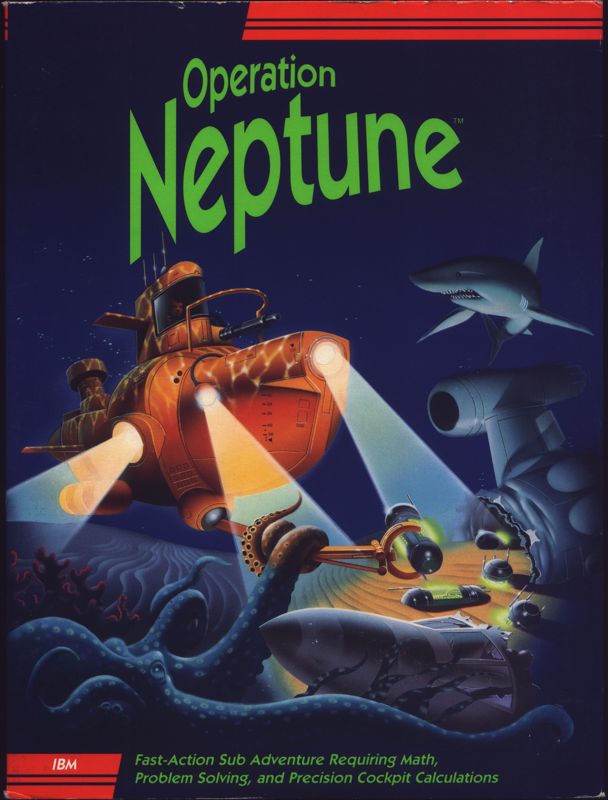
Visually, Operation Neptune embraces a colorful, cartoon-style aesthetic. The undersea environments are richly detailed, with coral reefs, thermal vents, and ancient ruins rendered in vibrant hues. Background layers scroll at different speeds, providing a sense of depth that enhances immersion. While the sprites aren’t photo-realistic, their clear outlines and expressive animations make it easy to distinguish hazards, platforms, and interactive objects.
The user interface is intuitive and unobtrusive. Math questions appear in neatly bordered panels, with bold text and contrasting backgrounds that ensure readability even on smaller screens. The on-screen calculator and hint indicators are consistently placed, so players never need to hunt for essential tools. Submenus for adjusting fraction formats or displaying decimal equivalents complement the core visuals without cluttering the play area.
Transitions and effects—bubble trails, glowing runes, pressure gauges—are modest but effective. Animations for character movements, enemy attacks, and puzzle feedback (green checkmarks for correct answers, gentle red flashes for mistakes) deliver immediate, clear responses. Though rooted in early ’90s edutainment design, the graphics hold up well today, maintaining charm and clarity for modern audiences.
Story
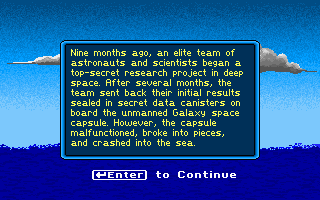
Operation Neptune casts players as the youngest recruit in the elite Super Solvers team, dispatched to recover powerful artifacts lost in the depths of the ocean floor. An inciting incident—a mysterious energy surge disrupting coastal cities—drives the narrative: the artifacts regulate global tidal patterns, and only quick thinking and mathematical precision can restore balance. This premise gives each puzzle a tangible motivation beyond rote computation.
The storyline unfolds through brief cutscenes and in-game dialogues with Doctor Quasar, the team’s resident mathematician, and Marina Swift, an expert marine biologist. Their banter injects humor and personality, as Doctor Quasar frequently tosses out puns about ratios and Marina explains volume calculations in the context of sea creatures. This lighthearted approach keeps the tone engaging, ensuring that learning moments never feel dry or overly technical.
Each level represents a chapter in the deep-sea expedition, with varied objectives that tie directly into narrative beats. Players might first chart a coastal inlet using area calculations, then venture into volcanic trenches where pressure and volume problems become critical to survival. The gradual reveal of an overarching “pulse wave” mystery keeps curiosity piqued, encouraging learners to tackle tougher puzzles just to see what happens next.
Overall Experience
Operation Neptune succeeds in delivering a cohesive, entertaining blend of platforming and math instruction. Its user‐friendly tools—calculator, hints, adjustable difficulty—ensure that learners of varying skill levels stay motivated and supported. By embedding real-world problems such as area, distance, and volume into game mechanics, it demonstrates the practical value of math in engaging contexts.
Parents and educators will appreciate the thorough coverage of fundamental topics: whole numbers, fractions, decimals, ratios, and percentages. The game’s structure naturally reinforces these concepts through repetition and incremental challenges, fostering confidence without sacrificing fun. The narrative framework—rescuing artifacts, foiling ecological threats—provides a sense of purpose that elevates simple problem sets into meaningful tasks.
For older kids seeking more than a traditional math drill, Operation Neptune offers a polished, motivating experience. Its colorful graphics, engaging story, and well‐paced difficulty curve make it a standout in the edutainment genre. Whether played in the classroom or at home, this title strikes an ideal balance between learning and play, making it a highly recommended addition to any educational software library.


Reviews
There are no reviews yet.