 Retro Replay Retro Replay gaming reviews, news, emulation, geek stuff and more!




Retro Replay Review
Gameplay
Pipes introduces a deceptively simple concept: get water flowing to every house in the neighborhood by laying down the right pipes in the right places. You start with a limited budget and a map full of potential connections, and you must evaluate which type of pipe offers the best balance between cost and efficiency. As you progress, the game nudges you toward smarter decisions by increasing both the number of houses and the complexity of the terrain you need to cover.
(HEY YOU!! We hope you enjoy! We try not to run ads. So basically, this is a very expensive hobby running this site. Please consider joining us for updates, forums, and more. Network w/ us to make some cash or friends while retro gaming, and you can win some free retro games for posting. Okay, carry on 👍)
What makes Pipes stand out is its intuitive tile-based interface, which lets you drag and drop pipe segments onto the grid. Each type of pipe – straight sections, elbows, T-junctions, and crossings – comes with its own cost and flow rate. You quickly learn that the cheapest pipes may not always be the most economical in the long run, since water pressure can drop if you overuse them or create overly winding routes.
The game’s difficulty scales nicely from hooking up a single house to a network of five homes. On the easiest level, you’re free to experiment, learn the basics of flow dynamics, and turn a modest profit. By the time you tackle five houses, however, your budget is razor-thin and one misplaced elbow can mean the difference between success and failure. This gradual ramp-up keeps younger players engaged without overwhelming them, while still offering a genuine puzzle-solving challenge.
Replayability is built into the choice of different map layouts and the decision of how many houses you want to connect. Even if you’ve beaten a given scenario, you might come back later to try a more cost-effective solution or to lower your environmental impact by using longer, more sustainable piping routes. For families and educators, the game’s predictable structure makes it easy to measure improvements over time and celebrate smarter strategies.
Graphics
Pipes uses a clean, colorful art style that feels approachable for its young audience while still being pleasant for adults. The top-down grid map is easy to read, and the neighborhood’s houses, trees, and playgrounds are rendered in a cheerful cartoon style that never distracts from the core puzzle. Bright color-coding of pipe types and flow indicators ensures that players never lose track of where water is flowing or where clogs might form.
Animations are simple but effective: each time you place a pipe segment, it snaps into place with a satisfying click and a little water droplet animation hints at the flow direction. When you successfully connect water to a house, a small fountain icon pops up, accompanied by a gentle “whoosh” sound effect, giving a clear sense of accomplishment. Conversely, if your budget runs dry before you hit your target, the game provides visual feedback with grayed-out pipe segments and a soft “tink” sound, prompting you to rethink your layout.
The UI elements—budget tracker, house counter, and pipe-selection wheel—are all clearly labeled and accessible. There’s no clutter to distract from the main task, and tooltips appear if you hover over unfamiliar icons. A subtle tutorial overlay guides you through your first few moves, but you can disable it once you feel confident, ensuring the visuals remain uncluttered for repeat playthroughs.
While Pipes isn’t pushing the limits of modern graphics, it doesn’t need to. The charming, straightforward visuals serve the educational goal: to focus young minds on problem-solving rather than flashy effects. In this regard, the graphics perfectly complement the game’s overall design philosophy of clarity, engagement, and accessibility.
Story
Although Pipes lacks a deep narrative, it cleverly frames each level as a community service project, giving players an immediate sense of purpose. You’re no longer just laying down pipes—you’re ensuring families have clean water, parks stay lush, and businesses can operate. This simple premise taps into the universal appeal of “helping your neighbors,” making each successful connection feel meaningful.
The minimal storytelling also leaves plenty of room for young players to inject their own imagination. You might decide that the yellow house belongs to your best friend, or that the soccer field needs more water so the local team can practice in style. By not overloading the game with cutscenes or dialogue, Pipes empowers children to become the narrators of their own water-supply saga.
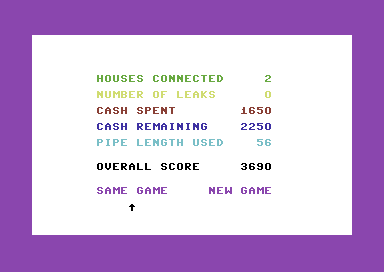
Between levels, a brief progress screen shows how many connections you’ve made and how much of your budget remains. This provides a lightweight “story beat” that keeps you invested in the next challenge without bogging you down in exposition. For educators, the lack of a heavy narrative means more time spent on math, economics, and spatial reasoning—the real stars of the show.
In the context of an educational game, this modest storytelling approach works in its favor. It sparks curiosity about municipal infrastructure, resource management, and the importance of planning ahead—all wrapped up in a fun, hands-on activity that doesn’t feel like traditional “school work.”
Overall Experience
Pipes strikes a well-balanced chord between education and entertainment. Children learn key principles of budgeting, geometry, and systems thinking as they experiment with different piping strategies. The game’s steady difficulty curve and clear feedback loops keep frustration at bay while still rewarding thoughtful play.
For parents and teachers, Pipes offers a handy assessment tool. The built-in level selector allows you to tailor the experience to your child’s skill level and track progress over time. Whether you’re looking to supplement a lesson on resource allocation or simply want a constructive way for kids to spend screen time, Pipes delivers on both fronts.
More experienced puzzle-game fans will find the game’s later challenges surprisingly taxing, as budget constraints and complex layouts force you to wring every drop of value from each pipe segment. Those who relish optimization puzzles will appreciate the endless “What if?” scenarios: What if I used one long main line? What if I added a loop for redundancy?
In short, Pipes offers a polished, focused puzzle experience that educates as much as it entertains. Its friendly presentation, clear objectives, and thoughtful progression ensure that players of all ages come away with both a sense of accomplishment and a better understanding of how infrastructure projects work in the real world.


Reviews
There are no reviews yet.