 Retro Replay Retro Replay gaming reviews, news, emulation, geek stuff and more!
Retro Replay Review
Gameplay
Playhouse Strippoker leans heavily on familiar poker mechanics, making it instantly approachable for fans of card games. At its core, players engage in classic five-card draw, placing bets, discarding unwanted cards, and drawing replacements in hopes of achieving the best hand. Rather than complex rule variations, the title keeps the focus on straightforward wagering and strategic decision-making. Each round begins with a set amount of money, and every lost hand deducts $100 from your stake.
(HEY YOU!! We hope you enjoy! We try not to run ads. So basically, this is a very expensive hobby running this site. Please consider joining us for updates, forums, and more. Network w/ us to make some cash or friends while retro gaming, and you can win some free retro games for posting. Okay, carry on 👍)
The unique twist comes from its flirtatious reward system: with every $100 you lose, your digital opponent removes an item of clothing. This mechanic heightens tension and adds cheeky stakes without overcomplicating the gameplay. As you climb the ladder of victories, you risk seeing the playmate strip even further, driving players to balance risk versus reward with each bet. For those who relish the thrill of bluffing or reading an AI’s tell, the game offers plenty of room for mind games.
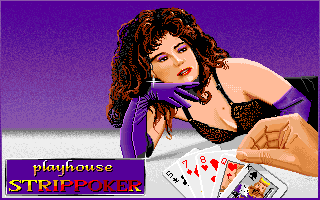
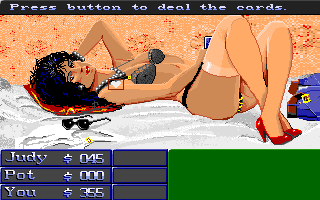
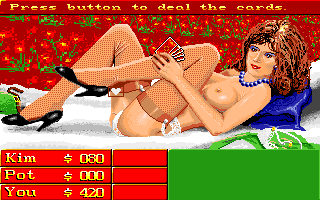
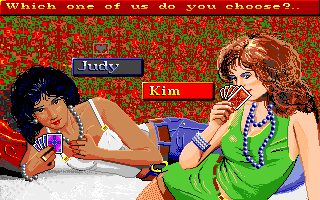
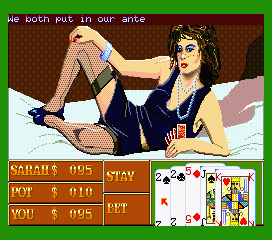
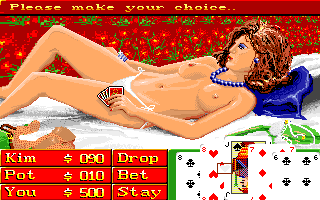
Across different platforms—MSX1, MSX2, Amiga, Atari ST, and DOS—Playhouse Strippoker preserves the same pacing and controls. The MSX1 original features a single playmate, while enhanced ports introduce two women with subtle visual distinctions and name changes, but the core mechanics remain unchanged. This consistency ensures that regardless of hardware, the game’s seductive poker formula remains the central focus.
Graphics
On the MSX1, Playhouse Strippoker presents a minimalist pixel aesthetic, with blocky sprites and a limited color palette. The original version’s graphics are more utilitarian, conveying the essential shapes of the playmate and the card table without much ornamentation. Despite hardware constraints, the title manages to convey personality through simple animations—subtle head tilts and hand movements give the character a surprising amount of life.
Meanwhile, the MSX2, Amiga, Atari ST, and DOS ports feature richer palettes and higher-resolution sprites. Developers stayed true to the conceptual design of the MSX1 girl, refining her appearance with softer curves and more detailed shading. Background elements, such as the apartment setting and furniture, gain layers of depth. While still far from photorealistic, these upgrades enhance the overall ambiance, making the seduction scene more immersive.
Across all versions, card graphics remain clear and legible, with each suit symbol and number crisp enough to read at a glance. The interface layouts vary slightly to match platform conventions—Amiga and DOS users benefit from more vibrant menus, while Atari ST players get a slightly slower but equally charming rendition. The developers’ commitment to preserving the original’s conceptual look ensures a cohesive visual identity.
Story
Playhouse Strippoker offers a minimal narrative framework: you’re invited to a private apartment by an attractive playmate who proposes a friendly poker match. Beyond that initial premise, the game’s storyline never evolves into deep character arcs or surprising twists. Its simplicity is intentional, keeping the focus on the interplay of cards and the escalating strip dynamic.
The European take on this seductive poker scenario distinguishes itself from its American counterpart, Artworx Strip Poker, by featuring a slightly different atmosphere. The setting feels more like a cozy one-on-one evening at home rather than a glamorous casino backdrop. This intimacy enhances the flirtatious tension as you wager and win or lose money—and garments—against your opponent.
Character development is practically nonexistent, but the playmate’s occasional dialogue lines—light teasing or playful encouragement—inject small doses of personality. These quips, scattered between rounds, help maintain engagement despite the lack of a deeper plot. Ultimately, the “story” in Playhouse Strippoker serves as a simple vehicle for its risqué gameplay rather than an elaborate narrative experience.
Overall Experience
Playhouse Strippoker delivers a niche yet straightforward package for those interested in a lighthearted, adult-themed poker diversion. Its strengths lie in intuitive controls and the titillating strip mechanic, which transforms each card loss into a playful reward for the player. The absence of complicated poker variants ensures that newcomers and experienced card sharks alike can dive right in without a steep learning curve.
However, modern audiences might find the gameplay repetitive after extended sessions. With only one main setting and minimal variation in challenge—AI difficulty levels being the primary modifier—long-term replay value depends on personal tolerance for the strip poker formula. Nostalgia enthusiasts and retro gaming collectors may appreciate the cross-platform differences and historical context more than new players.
Overall, Playhouse Strippoker remains a memorable relic of early 1990s European game design. It captures the playful essence of strip poker without veering into overly explicit territory, striking a balance between cheeky fun and accessible card gameplay. While not a must-have for every gamer, it’s a noteworthy title for aficionados of retro adult-themed entertainment and anyone curious about the genre’s roots.


Reviews
There are no reviews yet.