 Retro Replay Retro Replay gaming reviews, news, emulation, geek stuff and more!




Retro Replay Review
Gameplay
Questron II expands on the simple yet addictive loop established by its predecessor, tasking you with growing from a penniless peasant into a legendary hero. Combat remains turn‐based and menu‐driven, but the sheer volume of creatures—from roaming goblins to fire‐spitting drakes—keeps each skirmish feeling fresh. You’ll invest time in leveling up your attributes, carefully managing gold to purchase better armor, weapons, and essential supplies like torches and potions.
(HEY YOU!! We hope you enjoy! We try not to run ads. So basically, this is a very expensive hobby running this site. Please consider joining us for updates, forums, and more. Network w/ us to make some cash or friends while retro gaming, and you can win some free retro games for posting. Okay, carry on 👍)
The game world is divided between two distinct continents—Landor and the Realm of Sorcerers—each teeming with unique challenges. As you traverse sprawling plains, murky swamps, and crumbling castle interiors, you’ll also delve into numerous dungeons and tombs. These subterranean areas increasingly rely on environmental puzzles: hidden doors triggered by pressure plates, mazes lined with mimic chests, and traps that must be disarmed in the correct order. Exploration is rewarded, but a misstep can quickly drain your hard‐earned resources.
Time travel is the central hook of Questron II’s gameplay. Under Wizard Mesron’s guidance, you’re sent back to an era before the Book of Magic exists, where six Mad Sorcerers vie to bring it into being. This mechanic adds a sense of urgency to each quest: you must root out each sorcerer’s lair, disrupt their rituals, and secure vital spell components before they complete the Book. The nonlinear nature of selecting which sorcerer to pursue first adds replay value, though it also means you’ll want to consult external maps or take diligent notes.
Graphics
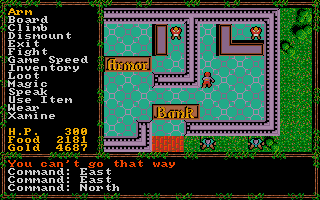
By today’s standards, Questron II’s graphics are charmingly retro, displaying a palette that ranges from bright, blocky outdoors to dim, foreboding dungeon corridors. Character sprites are small but distinct, making it easy to identify foes like skeletal warriors, swamp trolls, and ethereal wraiths. Each area features its own color scheme: golden hues for sunlit plains, muted grays for castle stones, and inky blacks with neon highlights for sorcerer strongholds.
While animation frames are sparse—often limited to a simple two‐step walking cycle and basic attack swipes—the game leverages its low‐res visuals effectively. Icons for inventory items, spell scrolls, and keys are instantly recognizable, reducing menu clutter. The occasional flicker in animation doesn’t detract from play; instead, it evokes nostalgia for the late ’80s era of home computer RPGs.
Sound effects and music are minimalist but appropriate. Adventure and battle themes loop quietly in the background, punctuated by simple tonal blips when you level up or cast spells. These audio cues reinforce your progress and help you gauge your status in dungeons without constantly monitoring text prompts. Together, the audio‐visual package may feel dated to newcomers, but it retains a certain retro allure.
Story
Questron II picks up the narrative thread from its predecessor: you once defeated the wicked Wizard Mantor, earning fame in your homeland. Now, Wizard Mesron dispatches you back in time to prevent the creation of the Book of Magic itself. This premise gives the story a ticking‐clock tension—virtually any of the six Mad Sorcerers you tackle first could tip the balance of magical power if left unchecked.
Each continent offers its own subplots and lore tidbits. In Landor, villagers whisper of haunted chapels and missing caravans, while the Realm of Sorcerers brims with clandestine cults and floating fortresses. NPC dialogue is sparse but functional, providing just enough context to guide you toward the next dungeon or unlock a hidden passage. You’ll piece together legends of a lost hero and the original forging of the Book through scrolls and cryptic inscriptions etched on dungeon walls.
While the overarching narrative remains straightforward—defeat six sorcerers and save the world—the game sprinkles in minor twists. Certain sorcerers form uneasy alliances, forcing you to consider which order to tackle them in, and a few hidden side‐quests delve into the backstories of lesser villains. The emphasis stays on action and exploration, but those patient enough to read every note and interrogate every NPC will find subtle narrative rewards.
Overall Experience
Questron II offers a substantial adventure that can easily occupy dozens of hours, particularly if you aim to achieve maximum character levels, uncover all secrets, and conquer every dungeon trap. The blend of level grinding, resource management, and dungeon puzzles creates a satisfying progression curve: early levels feel punishingly slow, but once you start acquiring powerful spells and weapons, exploration becomes truly exhilarating.
The game’s nonlinearity and time‐sensitive objectives encourage multiple playthroughs. You might begin chasing the easiest Mad Sorcerer on your first run, then experiment with tackling tougher ones earlier on subsequent adventures. This structure lends the game a sandbox feeling uncommon in its era, letting you chart your own path across both continents.
Though visually simplistic by modern standards, Questron II captures the spirit of classic computer RPGs. Its straightforward mechanics, vast map, and nostalgic presentation make it especially appealing to retro gaming enthusiasts and those interested in gaming history. Newcomers may face a steep learning curve and some repetition, but the sense of achievement that comes from defeating a sorcerer or uncovering a long‐hidden tomb remains as potent today as it was decades ago.


Reviews
There are no reviews yet.