 Retro Replay Retro Replay gaming reviews, news, emulation, geek stuff and more!
Retro Replay Review
Gameplay
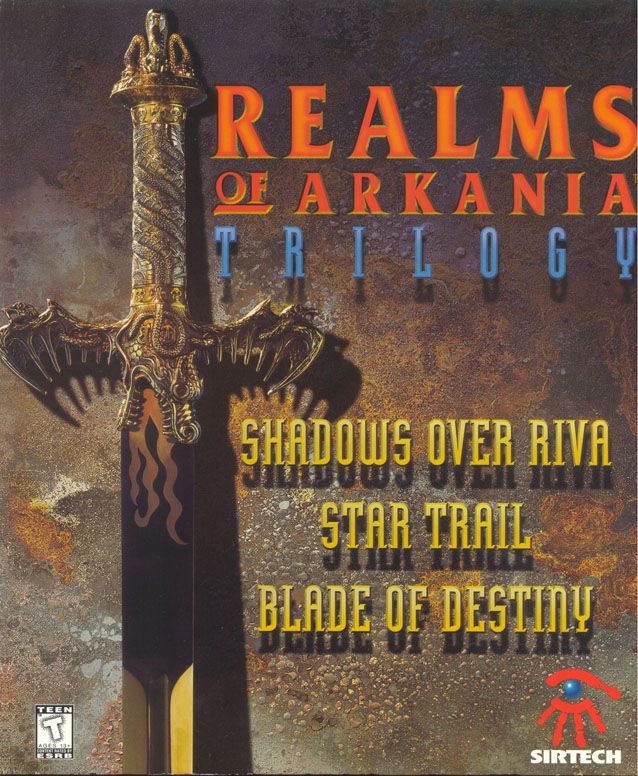
Realms of Arkania Trilogy offers a deep, turn-based role-playing experience that remains faithful to its pen-and-paper roots. From the meticulous character creation process to the tactical combat encounters, each entry—Blade of Destiny, Star Trail, and Shadows over Riva—challenges players to think strategically and plan ahead. The trilogy’s game mechanics are richly detailed: attributes, skills, and equipment all interact in complex ways, ensuring that choices made at the character creation screen reverberate throughout your entire playthrough.
(HEY YOU!! We hope you enjoy! We try not to run ads. So basically, this is a very expensive hobby running this site. Please consider joining us for updates, forums, and more. Network w/ us to make some cash or friends while retro gaming, and you can win some free retro games for posting. Okay, carry on 👍)
Blade of Destiny lays the foundation with a straightforward but engaging exploration system, where mapping your own roads and dungeons is part of the adventure. Star Trail builds on this by adding more intricate puzzles, stronger enemy encounters, and expanded skill checks for everything from lockpicking to diplomacy. Shadows over Riva completes the evolution with a semi-open world, merchant caravans, and real-time event systems that can alter the political and economic landscape of the city of Riva.
Combat in the trilogy remains turn-based, with action points governing movement and attacks. Early on, encounters can feel punishing, but as you learn to synergize your party’s strengths—archers providing covering fire, warriors holding the line, and mages unleashing powerful area spells—battles become rewarding tests of tactics rather than mere stat-checks. The inclusion of morale and terrain modifiers adds another layer of depth, making each skirmish unique.
Beyond combat, the series excels in exploration and player agency. Each town, fortress, and dungeon is filled with hidden treasures, secret passages, and NPCs offering side quests that can have lasting consequences. Whether you choose to bribe city guards to look the other way, negotiate with a rival guild, or solve an ancient riddle in a forest ruin, your decisions have weight—and the world reacts in kind.
Graphics
Given The Realms of Arkania Trilogy’s origins in the early 1990s, the graphics are decidedly retro by modern standards. Blade of Destiny and Star Trail feature tile-based overworld maps and static, hand-drawn backgrounds for towns and dungeons. While pixelated by today’s measures, these environments convey a surprisingly immersive sense of scale and atmosphere, especially when combined with carefully chosen color palettes and moody shading.
Shadows over Riva steps forward with more detailed sprite work and richer environmental textures, showcasing the developers’ growing proficiency with the Aurora Engine. The city of Riva feels alive, with animated marketplace stalls, flickering torchlight in narrow alleys, and varied architectural styles reflecting different districts. Character portraits and enemy sprites also received visual upgrades, offering clearer details and more expressive animations during combat.
One of the trilogy’s strongest points is its use of pre-rendered background art to evoke a high-fantasy world. Lush forests, winding mountain passes, and cavernous dungeons all benefit from evocative lighting effects and hand-painted scenery. Even if the resolution is lower than modern games, the artistry shines through, capturing the spirit of a classic tabletop campaign.
While there are no real-time dynamic shadows or physics-based particle effects here, the combination of atmospheric music cues and static visuals often produces a cinematic feel. Players willing to appreciate the charm of pixel art and early CGI backgrounds will find the trilogy’s aesthetic thoroughly engaging—proof that strong art direction can outshine flashy technical bells and whistles.
Story
The narrative arc across Realms of Arkania Trilogy is a grand tapestry of political intrigue, ancient prophecy, and personal heroism. Blade of Destiny introduces you to the harsh, war-torn province of Thorwal, where a kidnapped noble’s plight draws your party into a web of orc raids, undead incursions, and treacherous alliances. Through branching dialogues and moral dilemmas, the first game sets the tone for a world where choices have real consequences.
Star Trail shifts the focus to the great elven city of Graum, where an ominous evil resurfaces in the form of necromantic forces. As you track the Star Trail—a mystical ley line that pulses with arcane energy—you’ll uncover long-lost artifacts, decipher cryptic runes, and confront a dark cult bent on awakening a slumbering dragon. The plot deepens significantly, blending high fantasy with detective-style investigation and rich lore drawn from the novelizations of Arkania.
Shadows over Riva culminates the trilogy in the cosmopolitan city of Riva, now besieged by political corruption and looming threats from rival kingdoms. Here, the story becomes more personal: your party’s decisions can elevate or destroy merchant houses, influence citywide elections, and even determine the fate of entire neighborhoods. Side quests are often intricately tied to the main plot, making every ally or enemy you make feel essential to the grand finale.
Throughout all three games, NPCs speak in distinctive voices—sometimes literal voiceovers, sometimes text—imbuing each interaction with character and emotion. The writing, though occasionally stilted by modern standards, brims with epic scope and memorable moments. Whether negotiating a peace treaty between warring lizardfolk tribes or haggling for a rare healing herb, the blend of world-building and interpersonal drama keeps the narrative consistently compelling.
Overall Experience
For fans of classic computer role-playing games, Realms of Arkania Trilogy is nothing short of a treasure trove. It offers hundreds of hours of exploration, character development, and strategic combat, all wrapped in a setting rich with folklore and high-fantasy intrigue. Modern quality-of-life improvements—auto-mapping, higher resolutions, and refined UI—help smooth over some of the rough edges without sacrificing the series’ old-school charm.
While newcomers might be daunted by the depth of the mechanics or the slower pacing, persistence pays off. There’s a genuine sense of accomplishment in surviving a tough dungeon, unraveling a multi-stage quest, or guiding your party to victory against overwhelming odds. The trilogy’s learning curve is steep, but learning its systems is part of the pleasure.
The soundtrack deserves special mention: each entry features an evocative score that heightens tension in winding caves and underscores triumph in sun-dappled glades. Sound effects—from clashing swords to dripping water—are simple but effective, reinforcing the tactile feel of your adventures. These audio elements combine beautifully with the visual style to create a cohesive, atmospheric experience.
Ultimately, Realms of Arkania Trilogy stands as a testament to the enduring appeal of old-school CRPGs. It may not hold your hand or guide you with quest markers, but it rewards exploration, creativity, and careful planning. For players seeking a deep, narrative-driven journey across three sprawling titles, this compilation remains a worthy addition to any RPG enthusiast’s library.

Reviews
There are no reviews yet.