 Retro Replay Retro Replay gaming reviews, news, emulation, geek stuff and more!
Retro Replay Review
Gameplay
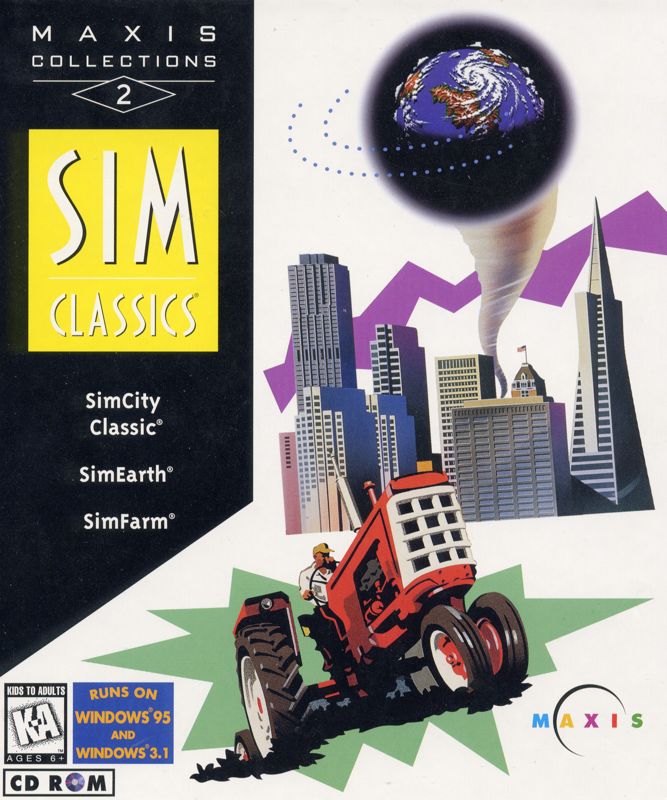
SimClassics: Maxis Collections 2 brings together five foundational simulation titles—SimCity Classic (Amiga and Windows versions), A-Train (DOS), SimEarth: The Living Planet, and SimFarm—each offering distinct gameplay mechanics that stand the test of time. From zoning your first residential district in SimCity Classic to plotting rail lines in A-Train, the compilation captures the satisfying loop of planning, building, and troubleshooting. Veteran players will appreciate the nostalgia of manually adjusting taxes, tweaking land values, or scheduling cargo trains, while newcomers will find straightforward tutorials that ease them into each simulator’s core systems.
(HEY YOU!! We hope you enjoy! We try not to run ads. So basically, this is a very expensive hobby running this site. Please consider joining us for updates, forums, and more. Network w/ us to make some cash or friends while retro gaming, and you can win some free retro games for posting. Okay, carry on 👍)
Each title presents a unique strategic challenge. In SimFarm, you manage crop rotations, livestock health, and market prices through seasonal cycles, blending resource management with risk assessment. SimEarth expands the scope to planetary evolution, tasking you with controlling climates, species development, and geological events. A-Train demands careful financial planning as you grow a rail empire, juggling loan interest rates and passenger demands. The two versions of SimCity Classic add an interesting comparison: the Windows build features mouse-driven menus and smoother performance, whereas the Amiga edition retains its tactile keyboard-centric controls.
The compilation’s interactivity remains engaging despite its age. While modern gamers may miss slick automation, the deliberate pace and hands-on adjustments foster a deep sense of agency. Experimenting with disasters in SimCity or introducing invasive species in SimEarth creates emergent narratives unique to each playthrough. In short sessions or marathon planning sprees, these simulations reward patience and creativity, providing hours of meaningful sandbox gameplay.
Graphics
Graphically, SimClassics: Maxis Collections 2 wears its era on its sleeve. The 16-color pixel art of SimCity Classic and SimFarm evokes early ’90s home computing, while A-Train’s DOS visuals lean toward simple line art and character icons. SimEarth’s map view features muted earth tones and rudimentary sprite animations for weather events and lifeforms. Though none of these games feature high-definition textures or dynamic lighting, their clear, icon-driven interfaces remain functional and charming in their retro aesthetic.
The two SimCity Classic versions highlight differences in platform capabilities. The Amiga build runs at a lower resolution with blockier icons, giving it a distinctly vintage feel, whereas the Windows release supports a higher-resolution grid and smoother palette transitions. Both versions, however, maintain the same intuitive tile-based city view. A-Train’s top-down corridors and station icons look rudimentary by today’s standards, but the game’s focus on data readouts over flashy visuals means clarity often triumphs over complexity.
SimEarth and SimFarm adopt a softer palette, leaning on representation rather than detailed artwork. The planetary map in SimEarth uses simple green, blue, and brown swatches to denote biomes and terrain, complemented by basic animations for storms or volcanic eruptions. SimFarm’s fields and barns are rendered in block colors and straight lines, yet convey essential information about crop health and storage. For many players, the nostalgic charm of seeing these classic layouts restored in a single package outweighs any desire for modern graphical bells and whistles.
Story
As sandbox simulations, the games in SimClassics: Maxis Collections 2 lack a traditional linear narrative. Instead, they invite players to create their own stories through emergent events and management decisions. In SimCity Classic, the tale unfolds as your metropolis grows—birth of new neighborhoods, rise and fall of industry, and dramatic disaster scenarios evoke a vibrant city’s lifecycle. Each session feels like writing a municipal chronicle, with player choices shaping the plot.
SimEarth’s grander scale spins a planetary saga where you guide life from primordial slime to complex ecosystems. There is no fixed storyline, but watching continents drift, species evolve, and civilizations tip into ice ages provides a compelling cosmic drama. The narrative emerges from your climate interventions, asteroid impacts, and the delicate balance between flora and fauna. A-Train and SimFarm similarly forgo scripted tales in favor of operational challenges—your success or failure becomes the story.
What unifies these titles is the sense of progression and cause-and-effect that underlies every action. Markets crash, crops fail, and railroads collapse if mismanaged—each setback writes a cautionary chapter. Conversely, triumphs like record agricultural yields or a thriving transcontinental rail line feel like personal milestones in a player-driven epic. Though there’s no preset storyline, the compilation excels at letting you become the architect of your own simulation-based narrative.
Overall Experience
SimClassics: Maxis Collections 2 delivers a hefty dose of simulation history in one thoughtfully assembled package. By bundling these five genre-defining titles, the collection offers tremendous value for both nostalgic veterans and simulation newcomers. The user interface for launching each game has been modernized to work smoothly on contemporary systems, minimizing compatibility hassles and allowing you to jump right into the sandbox.
While purists may note minor differences in color palettes or sound fidelity compared to original floppy disk releases, the overall experience remains faithful. The compilation’s raw mechanics—zoning, resource allocation, ecosystem management, and logistical planning—stand the test of time, proving that strong design endures beyond flashy visuals. If you’ve ever wondered where city-builders, eco-simulators, and tycoon games got their start, this anthology serves as an essential retrospective.
In today’s era of hyper-realistic graphics and streamlined interfaces, SimClassics: Maxis Collections 2 offers a refreshing return to gameplay-first simulation. It’s an engaging educational journey into the genre’s roots, a sandbox for creative problem-solving, and a reminder that deep systems can thrive without modern frills. For anyone curious about the evolution of simulation gaming or seeking a retro fix, this collection is an informative and entertaining time capsule.


Reviews
There are no reviews yet.