 Retro Replay Retro Replay gaming reviews, news, emulation, geek stuff and more!
Retro Replay Review
Gameplay
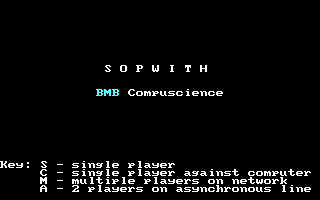
Sopwith offers a deceptively simple premise: pilot your biplane, outmaneuver enemy aircraft, and destroy ground installations before they take out your airfield. The core mechanics are easy to grasp–you have a throttle control, elevators, and altimeter, and you’re off into the skies. Despite its minimalist controls, the game demands precise timing and strategic thinking, whether you’re strafing enemy hangars or dodging the relentless fire of opposing fighters.
(HEY YOU!! We hope you enjoy! We try not to run ads. So basically, this is a very expensive hobby running this site. Please consider joining us for updates, forums, and more. Network w/ us to make some cash or friends while retro gaming, and you can win some free retro games for posting. Okay, carry on 👍)
The single-player mode pits you against an AI opponent that steadily increases in aggressiveness. Early levels let you get comfortable with the physics, but as gravity comes into play, each dive and climb requires careful throttle management to avoid stalling or crashing. Sopwith II refines this further by introducing multiple levels of play. Progress through more challenging maps and varied terrain to keep each sortie feeling fresh.
One of the standout additions in Sopwith II is the built-in recording and playback feature. Enthusiasts can capture dogfights and bombing runs, then replay them to dissect every turn and tactic. This not only aids in mastering the controls but also fosters a small but passionate community that shares memorable replays and strategies online.
Whether you’re a newcomer to aerial combat or a veteran retro gamer, the gameplay loop remains engaging. Dogfights are fast-paced yet unforgiving, and the satisfaction of a perfect bombing run on an enemy base never gets old. For those looking for a pure, skill-based flight challenge without the complexity of modern flight sims, Sopwith still delivers in spades.
Graphics
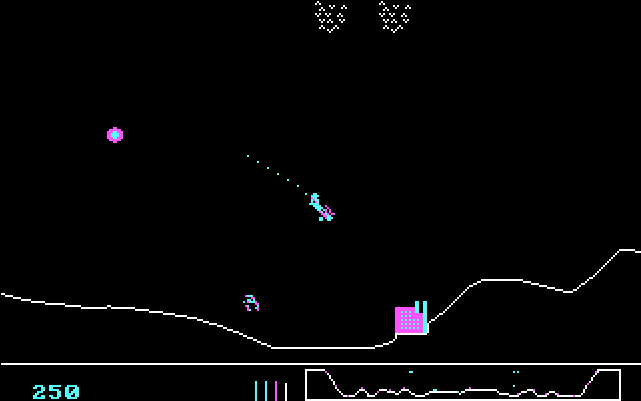
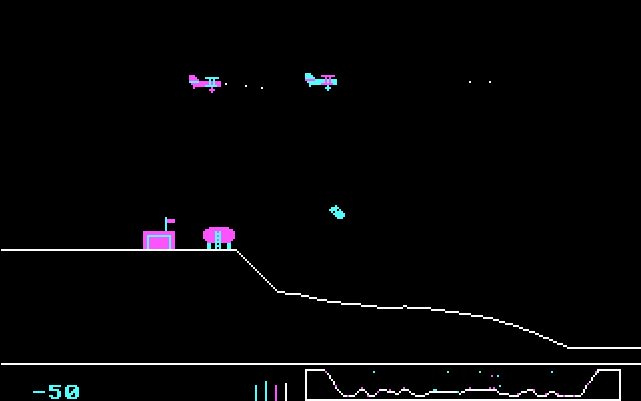
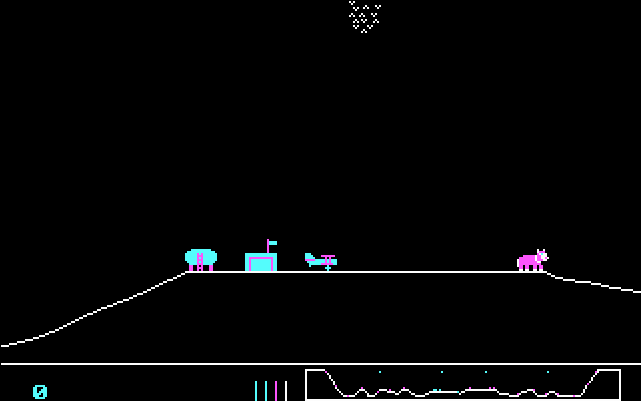
Graphically, Sopwith might appear quaint by today’s standards, but its charm lies in its clarity and nostalgia. The original vector-style visuals have been smoothed out in Sopwith II, offering cleaner lines, more detailed sprites, and seamless scrolling terrain. The biplane, hangars, and aircraft on both sides are easily distinguishable, ensuring you’re never confused about friend or foe.
Sopwith II enhances the environment with whimsical touches: flocks of birds scatter as you dive, and oxen amble through fields below your fight path. These little flourishes add life to the battlefield and remind you that you’re playing a game designed with personality rather than photorealism. The color palette remains restrained, reflecting the limitations of its era, but the overall presentation is cohesive and functional.
Animation is smooth and consistent across modern hardware, a direct improvement over the choppy framerate issues that plagued the original release on contemporary machines. Sopwith II’s optimized engine ensures that physics calculations and graphical updates run in lockstep, making each flight feel responsive and authentic.
Though Sopwith won’t compete with AAA titles in terms of pixel count or shader effects, its graphics serve the gameplay perfectly. You always know where your plane sits in three-dimensional space, and the simple visual style keeps distractions to a minimum, letting you focus on the thrill of aerial combat.
Story
Sopwith doesn’t present a deep narrative in the conventional sense; it opts for an open-ended wartime scenario rather than a linear storyline. You’re a lone pilot embroiled in a dogfight over hostile territory, your mission: clear the skies and reduce enemy infrastructure to rubble. This minimalistic approach gives you the freedom to write your own aerial legends, whether as a daring ace or a meticulous bomber pilot.
The game evokes the spirit of early aviation warfare, tapping into the romance and danger of World War I–style biplane engagements. Enemy buildings and planes act as both obstacles and objectives, driving home the sense of an active warzone. The lack of cutscenes or voiced dialogue keeps you immersed in the cockpit, where every moment is defined by throttle adjustments and evasive maneuvers.
For many players, the story isn’t told through text or scripted events but through emergent gameplay. A last-second victory, a narrow escape from ground fire, or a perfectly executed loop-the-loop becomes your personal legend. Sopwith II’s recording feature further cements these moments as shared folklore within its cult following.
Though minimalistic, the world-building in Sopwith quietly serves its purpose. You’re not following a scripted campaign but participating in a sandbox of aerial combat. Each sortie writes its own story, whether you’re balancing the risk of a low-altitude bombing run or engaging in a high-stakes dogfight above the clouds.
Overall Experience
Playing Sopwith today is like brushing off a beloved vintage leather helmet and goggles: the feel is immediate and invigorating. There’s no hand-holding tutorial or dozens of menu options–just you, your biplane, and a simple yet demanding objective. This distilled experience is a welcome contrast to modern flight simulators, offering pure, pick-up-and-play action.
The combination of tight controls, emergent gameplay, and a small but passionate community gives Sopwith enduring appeal. Sopwith II’s improvements—gravity physics, smoother graphics, animals, and replay functionality—breathe fresh life into a game that could otherwise feel dated. It runs flawlessly on current systems, preserving the original’s spirit while ironing out its technical quirks.
For retro gaming enthusiasts, Sopwith is a must-play that showcases the ingenuity of early developers working within tight hardware constraints. For newcomers, it stands as a refreshing alternative to bloated modern titles, proving that depth can be found in simplicity. Each successful mission feels earned, and every crash serves as a lesson in aerodynamics and strategy.
Ultimately, Sopwith delivers a timeless dogfighting experience. Its straightforward gameplay, understated graphics, and open-ended “story” invite you to create your own aviation legend. If you’re seeking a retro flight challenge that’s easy to learn but tough to master, Sopwith remains a gratifying ride through pixelated skies.


Reviews
There are no reviews yet.