 Retro Replay Retro Replay gaming reviews, news, emulation, geek stuff and more!

Retro Replay Review
Gameplay
Swords of Glass embraces a classic dungeon-crawl formula that will feel immediately familiar to veterans of early CRPGs. You start by choosing between a wizard or a warrior, each offering a distinct playstyle: the warrior relies on brute strength and durable armor, while the wizard casts spells that can turn the tide of battle but require careful mana management. Character creation is straightforward yet impactful, as your initial stat choices determine how easily you’ll navigate the dungeon’s perils.
(HEY YOU!! We hope you enjoy! We try not to run ads. So basically, this is a very expensive hobby running this site. Please consider joining us for updates, forums, and more. Network w/ us to make some cash or friends while retro gaming, and you can win some free retro games for posting. Okay, carry on 👍)
Once you’ve equipped your hero in the text-only town, you descend into the eight-level dungeon. Each floor presents its own collection of monsters, traps, and treasure chests. Combat is turn-based and described entirely through text prompts, so success hinges on reading descriptions attentively and making tactical decisions—do you strike for maximum damage, heal up before pressing on, or retreat to rethink your strategy? The pacing can be methodical, with moments of high tension when faced with powerful foes or dwindling supplies.
Progression in Swords of Glass is a satisfying grind: as you clear the early levels, your character gains experience, finds better gear, and unlocks new spells or combat maneuvers. Resource management is crucial—food, torches, and potions are finite, so you’ll learn to balance risk and reward. Exploring every corridor can yield life-saving items, but costly missteps may leave you stranded in the dark. There’s a palpable sense of achievement when you survive deeper levels or finally corner a tough enemy.
Despite its simplicity, the gameplay loop is surprisingly addictive. Each descent feels like a fresh challenge, and you’ll find yourself wondering what secrets lurk just one more level below. While veteran players might crave additional mechanics or more branching paths, Swords of Glass delivers a tight, focused experience that honors its Wizardry inspiration.
Graphics
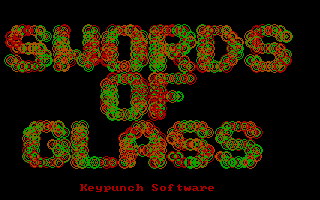
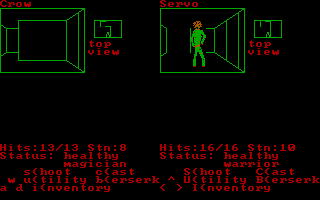
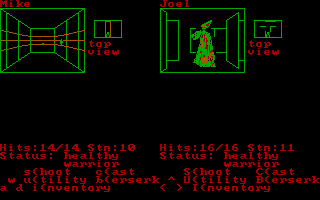
True to its old-school roots, Swords of Glass offers a pure text-only interface, with no sprites, 3D models, or elaborate animations. All visuals are conveyed through carefully crafted descriptions and simple ASCII representations, evoking the feeling of tapping commands into a DOS prompt. While this minimalist approach may seem stark to modern players, it also leaves much to the imagination and reinforces the game’s nostalgic charm.
The lack of graphical flair means there’s no visual clutter to distract from the core gameplay. Mob descriptions, dungeon layouts, and item details are rendered in plain text, but the writing is clear and evocative. Combat messages flash on the screen with succinct battle reports, and exploring a new area always feels atmospheric thanks to concise environmental storytelling.
Customization options are limited—you can’t change color palettes or toggle graphical filters—but the straightforward presentation ensures maximum readability. Whether you’re playing in a terminal window on a retro rig or a modern PC, the text remains crisp and free of performance issues. It’s a pure throwback for those who value gameplay depth over visual spectacle.
In short, the graphics—or lack thereof—are a deliberate design choice. If you crave flashy effects or richly detailed environments, Swords of Glass might not satisfy your 21st-century expectations. But if you appreciate the power of descriptive text to conjure vivid mental images, this game’s aesthetic will resonate deeply.
Story
The narrative framework of Swords of Glass is delightfully simple: a legendary amphora tells of the fabled Sword of Glass hidden in a dungeon of eight levels. Your quest is to prove your mettle, rise through the depths, and claim this mythical blade. There’s little in the way of branching storylines or complex political intrigue—what you see is what you get, and what you get is a classic hero’s journey distilled to its essentials.
While the overarching tale is minimalistic, bits of lore drip from shopkeepers’ murmurings and cryptic wall inscriptions. You’ll piece together fragments of backstory about ancient sorcerers who once roamed these halls, and hints at the sword’s rumored powers. This light storytelling works well in a text-driven context, as every new detail feels earned after a harrowing battle or a narrow escape.
Character interactions are limited to basic dialogue choices in the town, but these brief exchanges can guide your equipment purchases or reveal hidden side quests. There’s no party system—you face the dungeon alone, making your journey feel personal and stakes feel high. That said, players seeking deep character arcs or dramatic plot twists may find the narrative scope intentionally narrow.
Ultimately, the story in Swords of Glass serves as a motivating backdrop for its core gameplay. Its strength lies in the sense of mystery and gradual world-building, rather than elaborate cutscenes or voiced dialogue. For fans of emergent narratives driven by player action, this approach hits the mark.
Overall Experience
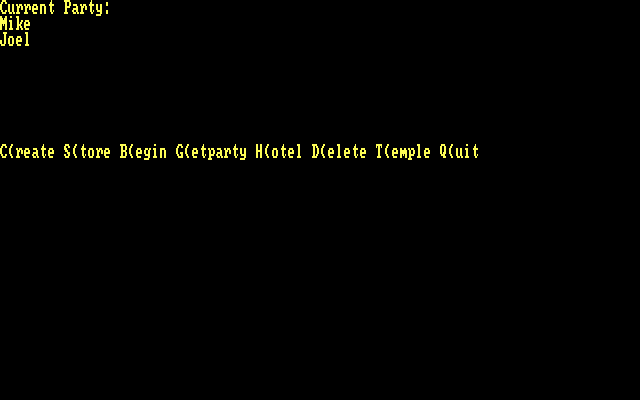
Swords of Glass is a love letter to the early era of computer role-playing games. Its straightforward town interface, text-based exploration, and methodical combat will resonate with purists who relish making every move count. The eight-level dungeon provides a focused playground for strategy and survival, and the promise of the Sword of Glass gives your descent direction and purpose.
As a cohesive package, the game excels in delivering solid, nostalgia-tinged gameplay that doesn’t overreach. There are no hand-holding tutorials—learning comes through trial, error, and careful note-taking. This old-school design means the learning curve can be steep, and some modern conveniences (like auto-mapping or quick-save slots) are absent. If you’re prepared for occasional frustration in exchange for genuine challenge, you’ll find it rewarding.
The text-only presentation limits visual spectacle but lets your imagination fill in the blanks, and the simple story keeps the focus on dungeon crawling rather than cinematic flair. At its core, Swords of Glass is about perseverance, discovery, and the thrill of unearthing a legendary weapon. It’s perfect for short sessions when you want to chip away at a dungeon, or longer marathons to conquer every level.
For gamers looking for a bite-sized, retro-style CRPG that values depth over dazzle, Swords of Glass is a memorable journey. It may not reinvent the wheel, but it polishes a classic formula to a gleaming edge—just like the mythical sword you’ll risk everything to claim.


Reviews
There are no reviews yet.