 Retro Replay Retro Replay gaming reviews, news, emulation, geek stuff and more!




Retro Replay Review
Gameplay
Telengard delivers a classic dungeon-crawling experience that emphasizes exploration, resource management, and strategic combat. Players begin by rolling randomly generated attributes—Strength, Intelligence, Wisdom, Constitution, Dexterity, and Charisma—which fundamentally shape their character’s strengths and weaknesses. From there, the adventurer descends into a sprawling 50‐level dungeon, each level measuring a staggering 200 by 200 rooms. Movement options include real-time traversal in the DOS version or turn-based movement and combat, offering flexibility to both action‐oriented and tactical players.
(HEY YOU!! We hope you enjoy! We try not to run ads. So basically, this is a very expensive hobby running this site. Please consider joining us for updates, forums, and more. Network w/ us to make some cash or friends while retro gaming, and you can win some free retro games for posting. Okay, carry on 👍)
The real-time aspect adds urgency: monsters continue to move and attack even when the player stands still, creating tense moments where a single misstep can lead to a sudden demise. Combat relies on a straightforward attack‐roll and defense system influenced by your attributes and equipment. Experience is gained not only through vanquishing foes but also by discovering treasure, encouraging thorough exploration rather than mere monster hunting. As levels progress, new spells become available, and attribute increases allow for more daring strategies and deeper builds.
Telengard also introduces interactive dungeon features—altars, thrones, and fountains—that can yield both boons and banes. Opening a chest might reward you with gold or a magical item, but the risk of a trap is ever-present. Cryptic encounters with creatures who might become allies add another layer of unpredictability; high Charisma could turn a potential foe into a friend who offers healing or items. This variety of dungeon elements keeps gameplay fresh, ensuring that repeated runs still hold surprises.
Graphics
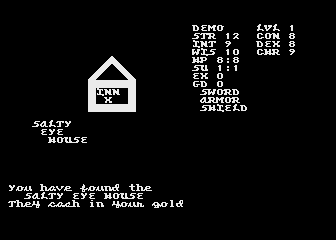
By modern standards, Telengard’s graphics are minimalistic, featuring a top-down perspective rendered in simple character‐based or low-resolution sprites. Early DOS users would navigate a black background dotted with colored ASCII symbols marking walls, monsters, and items, while later adaptations offered basic VGA tile sets. Though these visuals may appear rudimentary today, they excel in conveying clear information without clutter.
The austere presentation serves a functional purpose: with each room looking visually similar, players learn to pay attention to subtle icon variations that signal secrets or dangers. Minimal animations—such as a flickering torch or the brief flash of a sword swing—heighten the sense of each action, drawing the focus onto decision-making rather than spectacle. Players accustomed to high‐fidelity graphics may find this style stark, but it cultivates an atmosphere of mystery and danger.
Telengard’s graphics are complemented by atmospheric sound effects: the distant clink of armor, the echoing growl of a monster, and occasional musical motifs that reinforce the dungeon’s mood. The sparse audio cues act as vital gameplay feedback, alerting you to nearby threats or treasures. In sum, while Telengard lacks modern graphical flair, its purposely simple aesthetic remains effective for immersion and gameplay clarity.
Story
Unlike narrative-driven RPGs, Telengard offers only the vaguest of premises: you are an adventurer delving deeper into an endless dungeon in search of fortune and glory. There is no central plot or cast of characters guiding you along. Instead, the game’s story is forged by your own choices and the random twists of each dungeon level you explore. This emergent storytelling allows every player’s experience to feel unique.
As you venture downward, the environment itself becomes the protagonist, revealing its secrets one room at a time. Discovering a hidden altar or encountering a friendly monster can elicit moments of wonder akin to stumbling upon a lost relic within an ancient ruin. Without a fixed script, your imagination fills in the gaps: why is that altar here, and who placed it? Each dungeon feature acts as a narrative seed, sprouting personal anecdotes and memories.
For players who crave a defined storyline, Telengard may feel sparse. Yet those who appreciate open‐ended exploration will find its interpretive canvas compelling. The lore you craft—from the valorous knight whose constitution barely survived that poison trap to the cunning rogue who charmed a gelatinous cube—becomes far more memorable than any prewritten dialogue.
Overall Experience
Telengard stands as a testament to the enduring appeal of pure dungeon‐crawling design. Its emphasis on randomized levels, attribute-driven progression, and perilous real-time encounters ensures high replay value. Few games capture the raw excitement of exploring unknown chambers and narrowly escaping ambushes with as much authenticity. For veteran RPG fans, its simplicity is a refreshing antidote to modern titles loaded with hand‐holding and cinematic cutscenes.
Despite its age, Telengard can still induce the same rush experienced by those who first ventured into its depths decades ago. The learning curve is steep: a single miscalculation can mean the end of your character, but every defeat offers new insights. Over time, you refine your strategies—knowing when to flee, which spells to prioritize, and how to navigate the dungeon’s vast grid will separate novice explorers from seasoned veterans.
Ultimately, Telengard is not for everyone, especially those expecting a story-driven epic or cutting-edge visuals. However, if you seek an unadulterated dungeon‐crawling challenge brimming with procedural surprises and minimalist design, this classic title delivers. It remains a rewarding journey into the roots of computer role‐playing games and a testament to the power of imagination over graphical fidelity.

Reviews
There are no reviews yet.