 Retro Replay Retro Replay gaming reviews, news, emulation, geek stuff and more!

Retro Replay Review
Gameplay
Terminal Terror builds on the run-and-gun foundation of its predecessor and delivers a surprisingly deep and varied experience. From the very first mission, you’re presented with branching objectives that can be tackled in multiple ways, giving the level design a sense of openness rare in its era. Whether you choose a direct assault or a stealthy infiltration, the game’s “profile” stealth meter dynamically adjusts based on your movement speed, weapon readiness, and noise levels, encouraging you to think like a true secret agent.
(HEY YOU!! We hope you enjoy! We try not to run ads. So basically, this is a very expensive hobby running this site. Please consider joining us for updates, forums, and more. Network w/ us to make some cash or friends while retro gaming, and you can win some free retro games for posting. Okay, carry on 👍)
The introduction of non-lethal gadgets—tranquilizer darts, EMP grenades, and even a silenced dart pistol—rewards patience and precision. If you prefer a more action-oriented approach, the power bar mechanic adds a strategic twist to firefights: the longer you hold down the trigger, the slower your firing rate becomes, and weapon accuracy gradually degrades. Learning to manage this bar means balancing burst fire with timely reloads, creating tense firefights that force you to adapt on the fly.
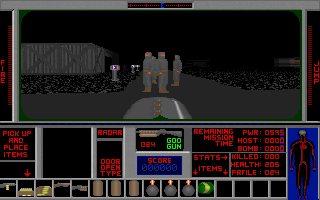
One of the standout innovations is the hit-detection system. When Nick takes a bullet to the leg, he’ll limp and turn unpredictably; a shot to the arm throws off his aim; a head wound blurs the screen until you use a medkit. This level of feedback keeps encounters nerve-racking and personal, as you scramble to patch up injuries while under fire. Combined with an inventory bar that lets you swap weapons, use health packs, or deploy gadgets on the move, every skirmish feels like a mini-puzzle.
Allies and civilians add another layer of complexity: one stray bullet can cost you a mission if you’re not careful. Civilians will panic and run, potentially tripping alarms, while friendly forces can turn hostile if you get too trigger-happy. This tension between aggression and caution elevates each level beyond a simple corridor shooter, ensuring that you’re always weighing risks and adapting your tactics to the changing battlefield.
Graphics
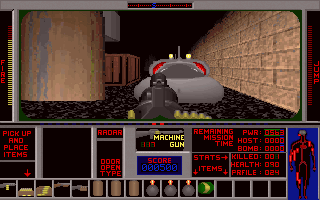
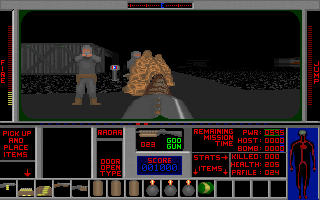
Visually, Terminal Terror embraces the mid-90s aesthetic of sprite-based enemies and 2.5D environments, but it pushes the envelope with richly detailed textures and dynamic lighting. Hallways are bathed in flickering fluorescent lights, warehouses hide in shadows, and outdoor compounds feature volumetric fog that makes night missions genuinely eerie. The flicker of muzzle flashes and the bloom from explosions contrast sharply with dimly lit corridors, heightening immersion.
Character sprites are well-animated and clearly distinguishable, even in chaotic firefights. Enemy terrorists clutch their weapons, toss grenades with randomized arcs, and react believably when stunned or injured. Nick Hunter’s own animations—sliding into cover, reloading under duress, or gingerly limping—underscore the hit-detection system’s effects and make you feel every bullet wound.
Environmental details abound: crates marked with hazard symbols, computer consoles with scrolling code, and surveillance cameras whose blinking lights telegraph their field of view. In several missions you’ll navigate cramped subways, desert outposts, and high-security fortresses, each with its own palette and set dressing. This level of variety keeps the visuals fresh and encourages exploration as you seek vantage points, hidden caches, and alternate routes.
While the game doesn’t boast polygonal characters or high-resolution textures by modern standards, its art direction and atmospheric effects more than compensate. Even today, the blend of practical effects and clever sprite design gives Terminal Terror a distinct visual identity that stands out from its contemporaries.
Story
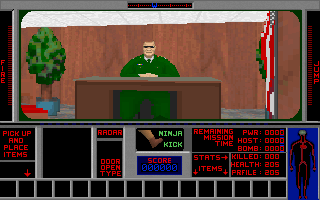
Picking up where Lethal Tender left off, Terminal Terror thrusts super-spy Nick Hunter into a globe-trotting manhunt for the escaped terrorist mastermind Bruno Riggs. The narrative unfolds through briefings delivered via satellite uplinks, in-game codec calls, and occasional FMV cutscenes. While the acting can be melodramatic, it perfectly captures the pulp-thriller vibe of 90s espionage cinema.
Each mission ties directly into the escalating plot: you’ll raid a pirate radio station broadcasting Riggs’ manifesto, storm a chemical weapons lab, and even infiltrate a luxury cruise ship rigged to become a floating fortress. The stakes feel genuine as Riggs’ new cell draws closer to unleashing a devastating bioweapon. Along the way, you meet a cast of supporting characters—rogue MI6 agents, corrupt arms dealers, and local resistance fighters—who expand the world beyond simple terrorist hideouts.
The writing balances high-octane action with moments of dark humor. In one memorable exchange, your informant quips about missing a dentist appointment if you don’t extract him from a booby-trapped embassy in time. These touches lighten the tension and give Nick real personality, making you care about the mission outcomes rather than treating each level as just another deathmatch arena.
While the story follows some genre tropes—there’s a last-minute betrayal, a ticking clock, and a final showdown atop a crumbling facility—it’s executed with enough flair and variety to keep you engaged from start to finish. The narrative pacing, combined with branching objectives and optional side ops, ensures that the plot never feels purely linear.
Overall Experience
Terminal Terror succeeds as both a worthy sequel and a forward-thinking shooter. Its blend of branching missions, stealth mechanics, and limb-specific damage infuses each playthrough with tension and replay value. You’ll find yourself replaying levels to test new loadouts, attempt perfect non-lethal runs, or simply shave seconds off your completion time.
The controls, while rooted in classic FPS conventions, are responsive and intuitive. A quick tap of the strafe key lets you circle-strafe gunmen, while a single keystroke toggles your stealth profile, reminding you to slow down and stay in the shadows. The game’s pacing keeps you on your toes: frantic gunfights seamlessly give way to slow, methodical sneaking sections, creating a dynamic rhythm that rarely feels repetitive.
Sound design and music further enrich the experience. Gunshots echo realistically in enclosed spaces, alarms blare when you’re detected, and a pulsing electronic score propels you through tense moments. Voiceovers for mission briefings and in-game chatter add authenticity, even if they occasionally slip into cheesy territory.
Overall, Terminal Terror stands out as an ambitious FPS that dared to blend genres and mechanics in ways few contemporaries attempted. Whether you’re a fan of action, stealth, or tactical shooters, you’ll find plenty to admire—making it a highly recommended addition to any retro gaming collection or a surprising rediscovery for those seeking hidden gems from the 90s.



Reviews
There are no reviews yet.