 Retro Replay Retro Replay gaming reviews, news, emulation, geek stuff and more!
Retro Replay Review
Gameplay
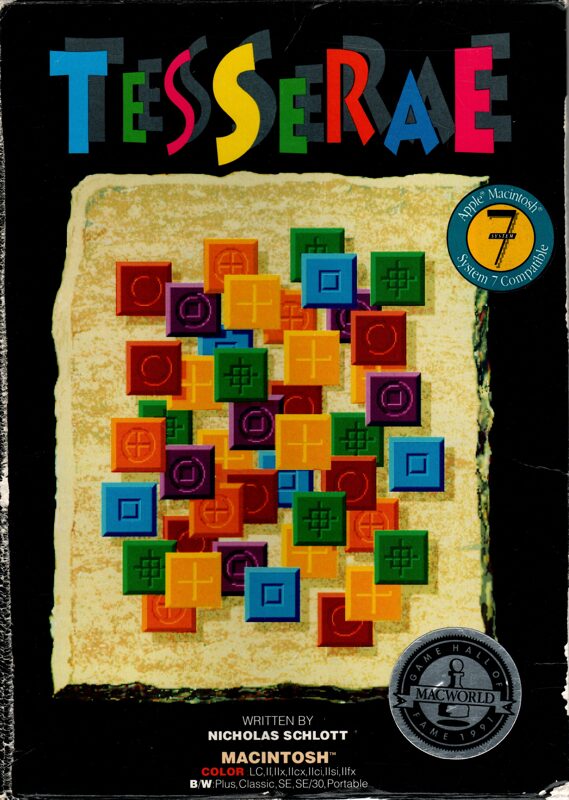
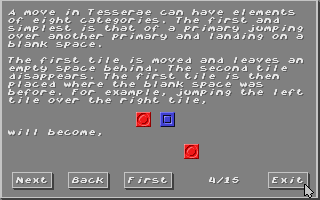
Tesserae hinges on a deceptively simple yet deeply strategic mechanic: flipping tesserae from one square over to an adjacent square. Each move forces you to consider the spatial relationship between tiles, setting up potential merges or cancellations. This push-and-pull of positioning feels fresh even after dozens of levels, as every board demands a unique approach to clear it.
(HEY YOU!! We hope you enjoy! We try not to run ads. So basically, this is a very expensive hobby running this site. Please consider joining us for updates, forums, and more. Network w/ us to make some cash or friends while retro gaming, and you can win some free retro games for posting. Okay, carry on 👍)
When two identical symbols collide, they fuse into a more complex tile, rewarding foresight and planning. Conversely, pairing contrasting symbols triggers a cancellation that removes tiles entirely. Balancing these two outcomes—constructive merging versus destructive elimination—is the core puzzle loop, and it delivers a satisfying “aha!” moment whenever a chain reaction unfolds just as intended.
The objective is straightforward: clear the board. Yet as you progress, the game ratchets up the challenge by enlarging the grid and introducing multi-part tesserae with new behaviors. Early stages might consist of a modest 5×5 layout with basic icons, but later levels expand into sprawling matrices, each teeming with advanced symbol interactions and the risk of cascading deadlocks.
This blend of mechanics evokes the tactile problem-solving of a Rubik’s Cube in 2D, with a dash of Q-Bert’s board-hopping flair. At the same time, the addictive pursuit of a perfect clear echoes the endless replayability of classics like Tetris or MineSweeper. If you enjoy mastering a system piece by piece, you’ll find Tesserae a compelling test of spatial reasoning and patience.
Graphics
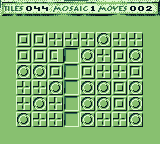
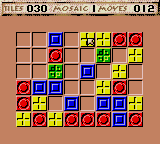
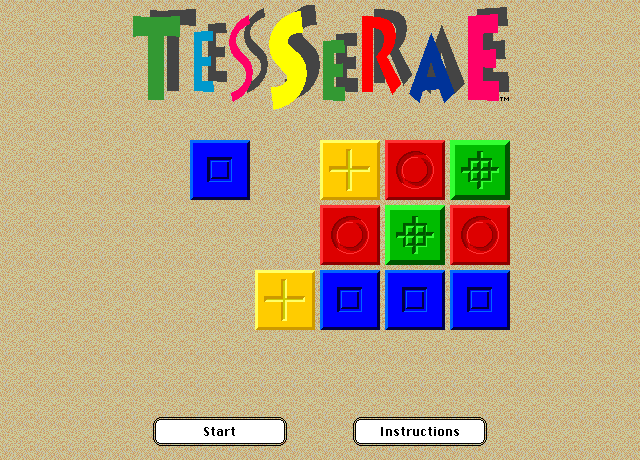
Visually, Tesserae opts for a crisp, minimalist style that puts gameplay front and center. Each symbol is rendered as a clean, colorful icon, ensuring fast readability even when the action heats up. The simple aesthetic belies the complexity of the puzzles, allowing your eyes to track dozens of moving parts without distraction.
Animation is smooth and purposeful: tiles flip with a satisfying 2D rotation, merging or disappearing in a quick burst of color. These tactile visual cues help you anticipate how a move will resolve, reinforcing the game’s design philosophy of clarity and precision over flashy effects.
The palette pops with high-contrast hues, making it easy to distinguish between symbol types at a glance. While the game doesn’t offer customizable skins or extensive colorblind options, its base art style is bright and accessible, comfortably sitting on screens of all sizes—from handheld devices to large monitors.
Underneath its straightforward presentation, Tesserae runs with impeccable performance. You’ll experience zero lag as tiles cascade, even on higher-tier boards packed with dozens of on-screen elements. The result is a polished, no-frills look that keeps you grounded in the puzzle-solving experience.
Story
Unlike narrative-driven titles, Tesserae forgoes a traditional plot in favor of an abstract, nearly meditative setting. Each level is framed as a fresh mosaic of glyphs and icons, inviting players to craft their own sense of progression through gameplay mastery rather than cutscenes or character arcs.
That said, there is an implicit theme of assembly and disassembly woven into the experience. As you merge basic symbols into more intricate tesserae, you might imagine uncovering an ancient language or reconstructing a fading masterpiece. This informal backstory adds a subtle layer of intrigue without distracting from the puzzles themselves.
Sound design contributes to the world-building: gentle chimes signal successful merges, while a soft thud marks each cancellation. These audio cues, paired with minimal ambient music, create an atmosphere of focused concentration—almost like decoding secret symbols in an archaeological dig.
For players seeking character-driven narratives or sprawling worlds, Tesserae may feel spartan. However, its abstract framework fosters a personal connection to the gameplay, letting you derive meaning and satisfaction from each cleared board.
Overall Experience
Tesserae offers a compelling blend of accessibility and depth, making it an excellent choice for both casual puzzlers and hardcore strategy fans. Learning the flipping-and-merging mechanics takes mere minutes, but truly mastering large, multi-symbol boards can demand hours—and that steep learning curve is deeply rewarding.
Its minimalist presentation and low system demands mean you can dive into intricate puzzles anytime, anywhere. Whether you’re on a quick coffee break or settling in for an evening of brain teasers, the game slots neatly into any schedule without overwhelming you with lengthy tutorials or story beats.
On the flip side, some players might crave more variety in theme or a narrative push to sustain interest through hundreds of levels. While the core mechanics remain engaging, the lack of external objectives—characters to save, worlds to explore—could limit its appeal to those who prefer story-led titles.
All told, Tesserae shines as a pure puzzle experience. It captures the timeless allure of tile-matching and board manipulation, elevating it with dynamic symbol interactions that feel both fresh and familiar. If your ideal game is one you can pick up for a few levels or lose yourself in for hours on end, this title deserves a spot in your collection.


Reviews
There are no reviews yet.