 Retro Replay Retro Replay gaming reviews, news, emulation, geek stuff and more!



Retro Replay Review
Gameplay
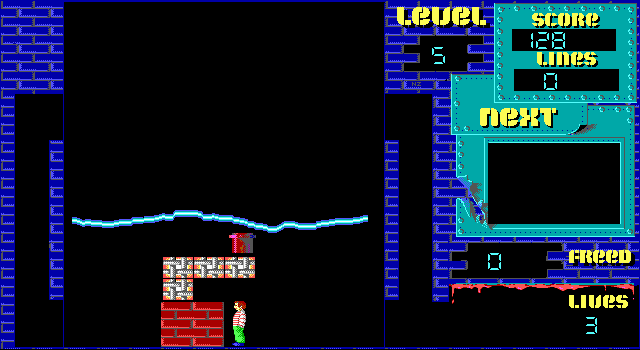
Tetriller reinvents the classic Tetris formula by introducing an NPC character who traverses your brickwork as you play. Instead of simply clearing lines, you must strategically stack pipes, clocks, steel beams, and other urban-themed pieces in a deep well, all while guiding a man walking at the bottom. Each piece you place affects his path, and you need to build stair-like structures that allow him to climb toward the exit before the well fills up.
(HEY YOU!! We hope you enjoy! We try not to run ads. So basically, this is a very expensive hobby running this site. Please consider joining us for updates, forums, and more. Network w/ us to make some cash or friends while retro gaming, and you can win some free retro games for posting. Okay, carry on 👍)
The real-time element of the man’s movement adds an extra layer of tension. As you rotate and drop your tetris-shaped blocs, you must anticipate his position and momentum. Drop a heavy metal beam too early and you risk crushing him. Let the well fill faster than he can climb and he becomes trapped, forcing you to reset. This cyclical challenge is addictive, turning the simple act of line-clearing into a pulse-pounding rescue mission.
Tetriller ramps up difficulty organically. Early levels introduce basic shapes and slow piece fall speeds, letting you focus on both stacking and timing the man’s steps. As you progress, special elements like clocks (which warp time), springboards (which boost the man upward), and breakable glass panes appear, creating dynamic scenarios. Mastering these new blocks and learning the man’s walking rhythm is key to sustainable high scores and progression.
Another standout feature is the combo system tied to the man’s safety. Clearing multiple lines while he’s climbing grants you temporary slow-motion, giving more reaction time for precise placement. Executed correctly, you can chain rescuing the man multiple times in one run, leading to huge score multipliers. It’s a clever twist that keeps veteran puzzle gamers engaged, as both speed and strategy become equally rewarding.
Graphics
Tetriller uses a gritty, neon-tinged urban aesthetic that feels both retro and modern. The well’s walls are lined with graffiti, flickering neon signs, and rusting pipes, creating an atmospheric backdrop for your puzzle play. Each Tetris-style piece is rendered with realistic textures—steel beams show rivets, clocks tick, and pipes have dripping water animation—adding tactile weight to every drop.
The man at the bottom is animated with surprisingly fluid motion for a 2D puzzle game. His walking animation, occasional panicked leaps, and comical stumbling when nearly crushed all contribute to a sense of empathy and urgency. Subtle lighting effects accentuate each piece’s impact: a falling clock casts a rotating shadow, a sprung springboard glows momentarily, and shattered glass sparkles before disappearing.
While the core block shapes are familiar, the graphic design team has injected personality into every element. Background loops of distant traffic and chattering crowds filter through smog, creating immersive soundscapes tied to the visuals. On higher settings, the game offers dynamic camera shakes and particle effects when you near a fail state, heightening both the drama and the sense that you’re in a high-stakes urban nightmare.
Performance-wise, Tetriller runs smoothly even when the well is packed full of elements and the man is sprinting up multiple flights of makeshift stairs. The UI remains clear and responsive, with crisp outlines and readable timers. Customizable color palettes are available for colorblind players, ensuring that each block type remains distinguishable under intense conditions.
Story
On the surface, Tetriller’s premise is delightfully simple: you’ve dozed off watching a Tetris marathon, and now you’re trapped in a recurring dream where an everyday man is falling victim to your puzzle-building. Yet as you delve deeper, fragments of his story emerge through environmental clues. Posters on the well’s walls hint at a missing-person case, crumpled newspaper clippings suggest he’s a local delivery driver, and graffiti tags appear to be coded pleas for help.
Between levels, brief vignettes flash on screen: a photo of the man smiling with his family, a flickering text message pleading “Get me out,” and cryptic monologues that imply you’re both stuck in this cycle. These narrative beats don’t interrupt gameplay, but reward attentive players who pause to read the background details. Over time, you realize the nightmare might be more than a dream—it could be someone else’s reality, with you unwittingly holding their fate in your hands.
The story is intentionally ambiguous, letting you project your own interpretations onto the scenario. Is the well a metaphor for trapped ambition? Are the falling urban elements symbols of a crumbling city? Or is it simply a tense arcade premise meant to drive your reflexes? Tetriller doesn’t spoon-feed answers, instead weaving narrative tapestry through its level design and visual storytelling.
For completionists, hidden “memory shards” appear after you rescue the man a certain number of times in one run. Collecting these unlocks additional lore screens that piece together his backstory and the origin of the ever-falling puzzle storm. While not essential to enjoy the core experience, these optional story fragments offer curious players a deeper glimpse into the game’s haunting urban dreamscape.
Overall Experience
Tetriller strikes a perfect balance between classic puzzle gameplay and innovative risk-reward dynamics. The simple thrill of fitting shapes together is amplified by the man’s vulnerable presence at the bottom of the well. Each session feels personal—you’re not just vying for a high score, you’re on a mission to save someone (again and again) from an unending vertical tomb.
The learning curve is approachable but satisfying. Beginners will have fun mastering basic piece placement and man-guidance. Seasoned puzzle fans will relish the advanced pieces, timed challenges, and scoring combos that demand both speed and foresight. The cycle of rescue-and-reset keeps the gameplay loop fresh, and each run offers a shot at refining your technique and pushing your best performance further.
With its moody visuals, subtle narrative undertones, and inventive twists on a time-tested formula, Tetriller stands out in the crowded puzzle genre. It’s ideal for quick pick-up-and-play sessions, yet deep enough to justify long-term engagement. The atmosphere straddles the line between charmingly retro and darkly surreal, ensuring that every moment feels both familiar and thrillingly new.
Whether you’re a Tetris purist looking for a fresh challenge or a puzzle newcomer seeking an engaging adrenaline rush, Tetriller delivers. The game’s blend of strategy, timing, and emergent storytelling makes it a must-play for anyone craving a uniquely tense yet addictive arcade experience.


Reviews
There are no reviews yet.