 Retro Replay Retro Replay gaming reviews, news, emulation, geek stuff and more!
Retro Replay Review
Gameplay
The Adventures of Alice who Went Through the Looking-Glass and Came Back Though Not Much Changed blends classic platforming with light puzzle-solving, maintaining a steady pace that keeps players invested without overwhelming them. You guide Alice through a series of interconnected garden mazes, each dotted with iconic set pieces—croquet lawns, tea party tables, and hedge maze walls. Movement feels smooth and responsive, with precise jumps and a satisfying aerial float that captures the dreamlike quality of Carroll’s world.
(HEY YOU!! We hope you enjoy! We try not to run ads. So basically, this is a very expensive hobby running this site. Please consider joining us for updates, forums, and more. Network w/ us to make some cash or friends while retro gaming, and you can win some free retro games for posting. Okay, carry on 👍)
Combat encounters are sparse but memorable. Alice wields the “American Express Blade,” a modern twist on the Vorpal sword, against bizarre anachronistic foes—clockwork card soldiers, animated teapots, and the occasional Jabberwock. The combat system emphasizes timing over button mashing: a well-timed parry can leave enemies vulnerable to a flurry of slashes, while dodging gives you space to regroup. Checkpoints are generously placed near major skirmishes, so failure feels instructive rather than punishing.
Puzzles are cleverly integrated into the exploration. A simple lever might alter the shape of a hedge, opening new paths or revealing hidden collectibles. Later challenges ask you to rearrange elements of a tea party to satisfy quirky guests or decode riddles posed by the Cheshire Cat. These brain teasers balance whimsy with genuine challenge, ensuring that players stay engaged without hitting a frustrating wall.
Graphics
The game’s art direction is a delightful marriage of Victorian illustration and modern flair. Environments are richly detailed, with each pixel of the hedge maze and each brushstroke of the sunset sky feeling lovingly crafted. Bright color palettes evoke the surreal atmosphere of Wonderland, while softer pastels ground quieter moments—such as wandering through a moonlit clearing or examining Alice’s schoolbooks.
Character designs are equally inventive. Alice herself retains her classic peter-pan dress and bobbed hair, but her expressions and movements feel refreshingly dynamic—she giggles as she tumbles down rabbit holes and glances around in wide-eyed wonder. The Cheshire Cat’s grin is rendered with fluid animation, appearing and vanishing in a swirl of violet mist, while the Jabberwock boasts intricate scale patterns that catch the light as it prowls across the garden paths.
Performance remains stable on both console and PC, with only rare frame drops during complex set-piece sequences. Lighting effects—dappled sunlight filtering through leaves, flickering lamplight at dusk—enhance immersion, and the game’s subtle depth-of-field shifts help focus your attention on interactive elements without feeling heavy-handed.
Story
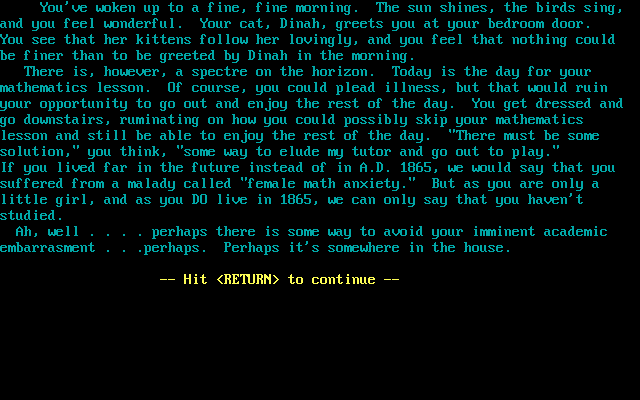
While the plot streamlines Lewis Carroll’s labyrinthine narrative, it retains the spirit of playful absurdity. Alice’s reluctance to do her mathematics homework serves as a light framing device: one moment you’re doodling fractions in a dusty schoolbook, the next you’re tumbling down a rabbit hole. This setup quickly gives way to a series of interconnected vignettes, each introducing a familiar character—Mad Hatter, Tweedledee and Tweedledum, the Queen of Hearts—in unexpected scenarios.
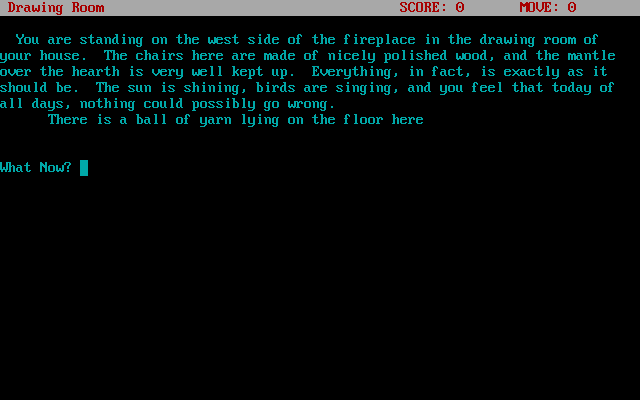
Humor shines through the anachronistic narration. On more than one occasion, an instruction pops up: >READ VORPAL SWORD — “American Express Blade. Don’t leave the garden without it.” These tongue-in-cheek asides break the fourth wall just enough to remind you that Wonderland remains, at its core, a place of nonsense and surprise. Dialogue is witty and often self-referential, with Carrollian riddles playing off modern sensibilities.
The streamlined structure means there’s less of the meandering prose found in the original text, but the emotional beats are intact. Alice’s curiosity, occasional frustration, and boundless imagination come through in soliloquies that punctuate key moments. By the time you confront the final challenge, you’ve glimpsed enough of Wonderland’s eccentricities to feel a genuine attachment to its oddball inhabitants.
Overall Experience
The Adventures of Alice who Went Through the Looking-Glass and Came Back Though Not Much Changed offers a compact yet richly layered journey. With roughly eight to ten hours of core gameplay, it strikes a comfortable middle ground—longer than a bite-sized indie platformer, but free of the padding that plagues many modern adventure titles. Side paths and hidden collectibles encourage repeat visits, and a “Curiosity Log” tracks your discoveries, unlocking concept art and behind-the-scenes sketches as rewards.
Accessibility options are robust, allowing players to adjust difficulty for combat, platforming, and puzzle complexity separately. Subtitles and colorblind-friendly palettes ensure that the whimsical visuals and witty dialogue remain clear to all. The game also supports both controller and keyboard-and-mouse input with on-the-fly remapping.
Ultimately, this title captures the timeless charm of Carroll’s Wonderland while injecting it with fresh, modern sensibilities. Whether you’re a longtime fan of Alice’s adventures or a newcomer seeking a beautifully crafted platformer with a quirky edge, The Adventures of Alice who Went Through the Looking-Glass and Came Back Though Not Much Changed delivers an experience that’s both familiar and delightfully unexpected.


Reviews
There are no reviews yet.