 Retro Replay Retro Replay gaming reviews, news, emulation, geek stuff and more!
Retro Replay Review
Gameplay
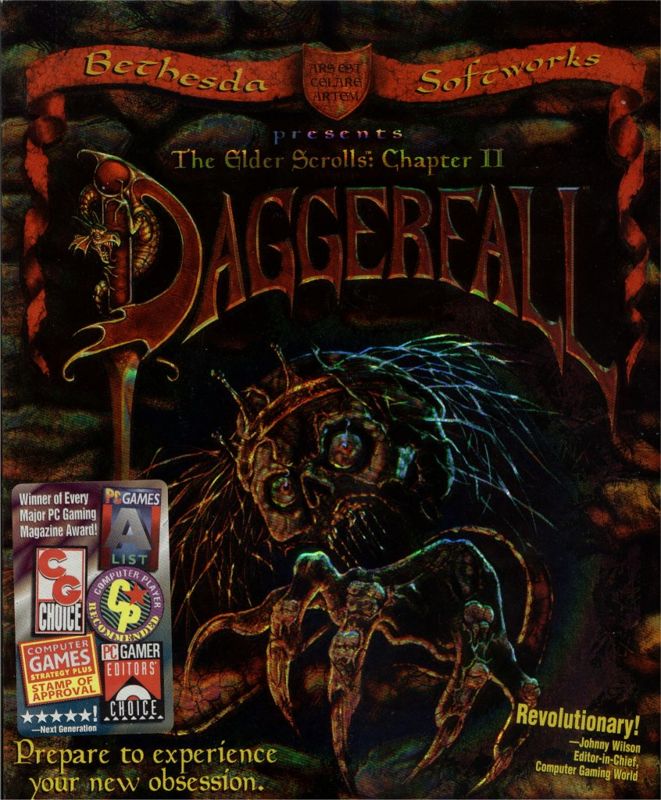
The Elder Scrolls II: Daggerfall remains a landmark in open-ended role-playing design, offering an almost staggering degree of freedom. From the moment you step off the boat bound for the eponymous city, you’re presented with countless avenues: follow the main quest, delve into Daedric shrines, or simply explore a world the size of Great Britain. The scope is dizzying, and while much of the terrain and dungeon layouts are procedurally generated, the sense of exploration never wears off.
(HEY YOU!! We hope you enjoy! We try not to run ads. So basically, this is a very expensive hobby running this site. Please consider joining us for updates, forums, and more. Network w/ us to make some cash or friends while retro gaming, and you can win some free retro games for posting. Okay, carry on 👍)
Character progression in Daggerfall is deeply integrated with your actions. Swing a sword, practice alchemy, or haggle at the market—you grow more adept in each skill by using it. This “learn by doing” approach ensures that your character truly becomes the specialist you envision. Want to be a master thief who can also charm aristocrats? It’s entirely possible, though you’ll need to hunt down that perfect balance of athletics, stealth, and persuasion.
Combat is real-time and action-based, with mouse-driven swings and parries creating a tactile feel that was unusual for its era. Ranged attacks, spellcasting, and melee each demand slightly different timing and positioning, so encounters with bandits, undead, or powerful Daedra never feel entirely repetitive. While the controls can take a bit of practice to master, they reward precision and strategy, especially when paired with enchanted weapons or clever spell combinations.
Beyond combat and core skills, Daggerfall’s gameplay emphasizes social and economic systems uncommon in its day. You can join guilds—the Mages Guild, Thieves Guild, Fighters Guild, and more—each offering unique quest lines and benefits. Property acquisition (houses, ships, and stables) further anchors you in the world, while lycanthropy, vampirism, or even wereboar transformations add supernatural layers to your exploits.
Finally, random events and rumors drive side quests that can take your hero across the provinces of High Rock and Hammerfell. From rescuing kidnapped nobles to uncovering hidden cults, there’s almost always something unexpected around the next bend of the road or level of the dungeon.
Graphics
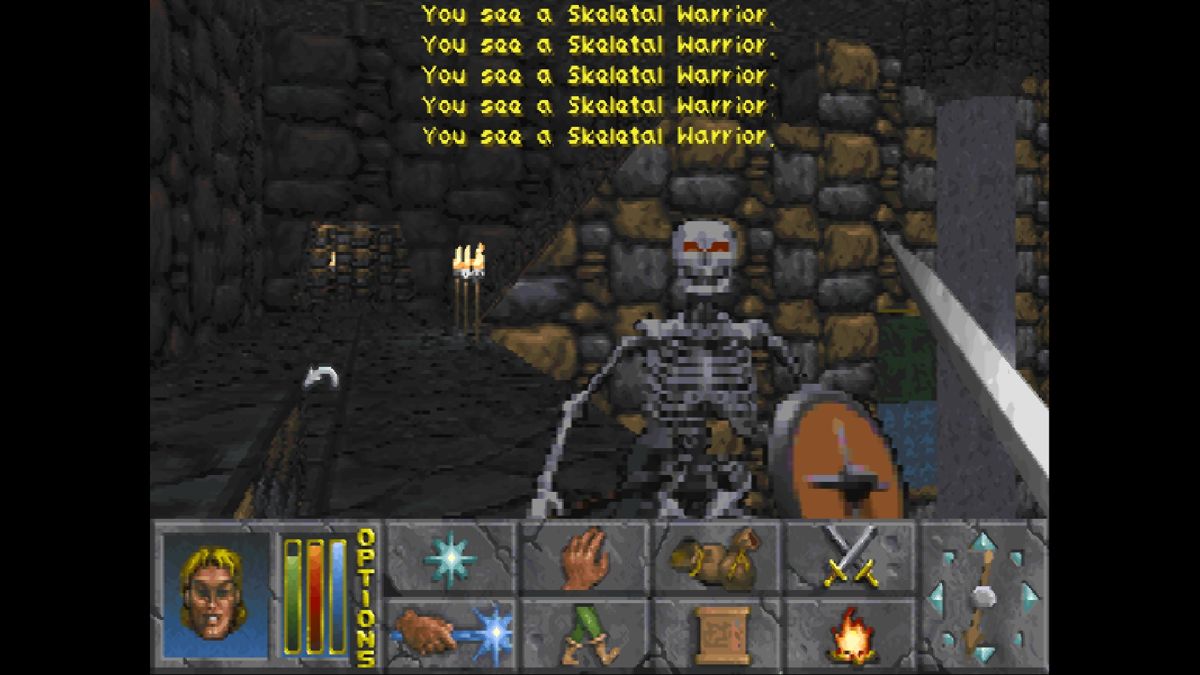
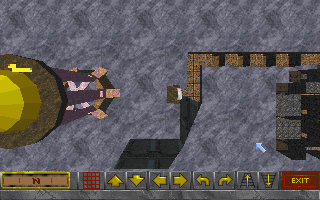
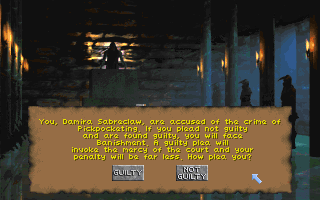
Daggerfall’s visuals are a product of mid-’90s technology: textured 3D landscapes blend with 2D sprites for characters and monsters. While it may look dated compared to modern titles, the art direction conveys medieval fantasy in bold strokes—rolling hills, crumbling castles, and torch-lit corridors still carry a sense of place. The sheer scale of the world means you’ll experience everything from windswept deserts to misty forests, each region boasting its own palette and atmosphere.
The procedural generation engine, though not flawless, populates towns, dungeons, and caves with varied layouts and color schemes. This approach keeps exploration fresh but can lead to occasional repetitive architecture or oddly shaped rooms. Yet many players find the sparse, randomized feel part of Daggerfall’s charm, enhancing the mood of venturing into the unknown.
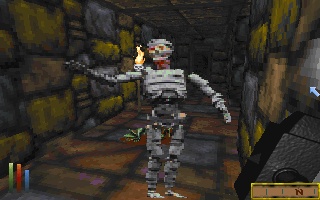
Character and creature sprites, though low-resolution by today’s standards, are surprisingly expressive. Armor sets, magical auras, and weapon glints stand out crisply against dimly lit backdrops, making it easy to distinguish foes in combat. Animations are simple but effective—an orc’s axe swing or a ghost’s ethereal drift invoke enough realism to draw you into the fray.
Performance on modern systems is virtually flawless, especially with fan patches and modern loaders that fix bugs and scale the UI. If you’re willing to accept pixelated textures and blocky models, the retro aesthetic can be quite appealing, offering a window into the roots of open-world RPGs.
Story
Daggerfall’s main narrative centers on Emperor Uriel Septim’s plea: free the tormented spirit of King Lysandus and recover a missing imperial letter. This quest unfurls across Daggerfall’s sprawling provinces, revealing political intrigue and ancient magics entwined with the royal lineage. The ghostly appearance of Lysandus and the looming threat of an iron golem’s resurrection lend a haunting edge to your mission.
Yet the main quest is only a fraction of the tale. Hundreds of NPCs deliver rumors, side missions, and faction conflicts that flesh out the world’s history. Whether infiltrating a vampire coven, negotiating a peace treaty, or hunting a notorious bandit, each storyline contributes to a richly layered sense of Tamrielic politics and mysticism.
The provinces of High Rock and Hammerfell bring distinct cultural flavors to the narrative. Breton castles and sword-dueling nobility contrast sharply with the desert cities and Redguard seafaring communities. This diversity reinforces the sense that Daggerfall is not just one city or dungeon, but an entire realm with competing interests and hidden secrets.
Character creation further ties into the story. By crafting a custom class from dozens of skills and attributes, you become not just a generic hero but a defined personality whose background influences dialogue options and quest outcomes. This personalization makes decisions feel meaningful, as if the world responds to the hero you’ve sculpted.
Overall Experience
The Elder Scrolls II: Daggerfall is an ambitious masterpiece with a few rough edges. Its vast world, dynamic skill growth, and faction systems laid the groundwork for modern open-world RPGs. While the graphics and procedural dungeons may feel primitive, the sense of freedom and depth more than compensate for any visual shortcomings.
Newcomers should be prepared for a steep learning curve and occasional bugs—fan-made patches and community guides are almost essential to smoothing out the experience. However, once you acclimate to the interface and mechanics, Daggerfall offers a uniquely immersive journey that can easily consume hundreds of hours.
For players who crave exploration, complex character builds, and a living, breathing medieval fantasy setting, Daggerfall remains a must-play classic. Its legacy echoes through every modern Elder Scrolls release, and experiencing the raw, open-ended design philosophy firsthand offers valuable insight into the genre’s evolution.
Ultimately, Daggerfall is more than nostalgia—it’s a sprawling adventure that still captivates with its boundless possibilities, political intrigue, and haunting atmosphere. If you’re ready to lose yourself in one of the largest virtual worlds ever created, this is the RPG for you.


Reviews
There are no reviews yet.