 Retro Replay Retro Replay gaming reviews, news, emulation, geek stuff and more!
Retro Replay Review
Gameplay
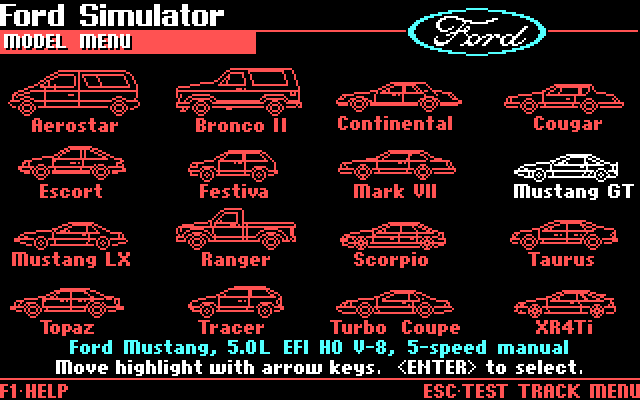
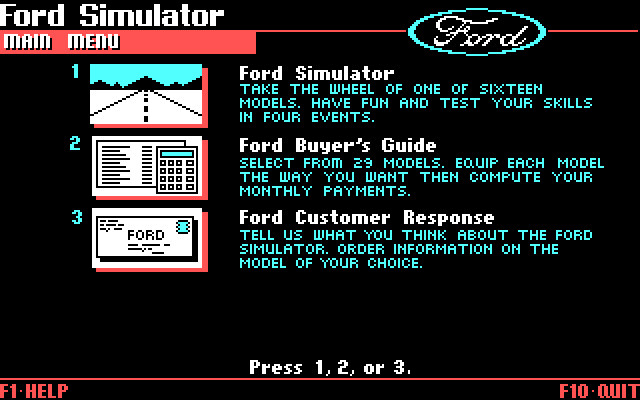
The Ford Simulator offers a straightforward yet engaging driving experience that puts you behind the wheel of Ford’s entire 1987 model lineup. From the moment you select a vehicle, you’re immersed in a realistic test-drive scenario that emphasizes the unique handling characteristics of each car. Whether you choose the sporty Mustang or the family-friendly Taurus, the controls remain intuitive, with steering, acceleration, and braking mapped neatly to your input device.
(HEY YOU!! We hope you enjoy! We try not to run ads. So basically, this is a very expensive hobby running this site. Please consider joining us for updates, forums, and more. Network w/ us to make some cash or friends while retro gaming, and you can win some free retro games for posting. Okay, carry on 👍)
Beyond simple driving loops, the simulator features a variety of preset routes, including highway stretches, winding country roads, and urban environments. These tracks showcase how different Ford models respond under varying conditions—allowing you to feel the weight of the Crown Victoria on tight turns or appreciate the nimbleness of the Escort in stop-and-go traffic. The pacing is flexible, too, so you can take a leisurely drive or push the limits on a straightaway.
One of the most practical additions is the integrated information form. While exploring each car, you can pause the action and fill out a short questionnaire to request brochures or detailed technical specs from Ford. It’s cleverly woven into the gameplay loop, reinforcing the simulator’s dual role as both an interactive showcase and a direct marketing tool. Completing the form doesn’t interrupt your session for long, and it makes follow-up research seamless.
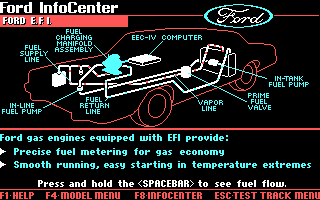
Another notable aspect of the gameplay is the subtle feedback system. As you drive, occasional pop-up tips highlight features—like fuel economy stats or engine descriptions—without breaking immersion. These pop-ups are optional and can be toggled on or off depending on whether you want a pure driving experience or a more guided presentation. This balance keeps the gameplay informative for potential buyers while still feeling like a genuine simulation.
Graphics
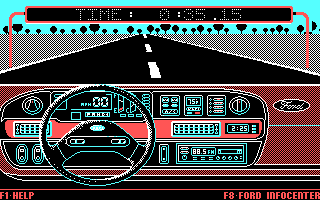
Visually, The Ford Simulator embraces the aesthetic norms of late-’80s computer graphics. Car models are rendered with clear polygonal lines, and each vehicle’s color options are accurately represented. Textures are relatively simple by modern standards, but they effectively capture the sheen of automotive paint and the basic dashboard layouts you’d expect from a period-accurate simulation.
The environments themselves are functional rather than decorative. You’ll drive on flat-shaded roads bordered by sparse foliage and minimal roadside details. While this means you won’t see highly detailed trees or dynamic lighting effects, the graphics engine maintains a steady frame rate and keeps the focus firmly on evaluating the cars’ performance.
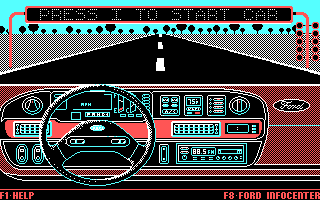
Interior views are a highlight of the graphic presentation. When you switch to cockpit mode, you’ll notice Ford’s signature steering wheel designs, analog gauges, and simple center consoles. The clarity of these cockpit renders is surprisingly strong for its era, making it easy to gauge speed, RPM, and fuel levels at a glance. This attention to interior styling helps reinforce the authenticity of each model.
Although there’s no dynamic weather or day-night cycle, the fixed daylight setting ensures consistent lighting conditions across all test drives. This design choice might feel dated compared to today’s standards, but it serves the simulator’s primary goal of letting you compare vehicles side by side without environmental variables skewing your perception.
Story
While The Ford Simulator doesn’t follow a traditional narrative, it does craft a subtle marketing storyline: you, as the prospective buyer, are invited on a “Tour of Innovation.” The sequence begins with promotional footage introducing Ford’s technological advancements, then segues into the hands-on simulation. This gently structured progression gives you a sense of moving from theory to practice.
The simulator peppers in historical context as you explore each model. Brief textual vignettes describe how the 1987 lineup represents a turning point for Ford—highlighting fuel efficiency improvements, safety enhancements, and new design philosophies. These snippets add depth to what might otherwise be a purely functional demonstration, giving buyers a narrative thread that ties each car to Ford’s broader corporate story.
Each vehicle’s segment feels like a chapter in that overarching story. You start with entry-level options and gradually work your way up to premium models, culminating in the flagship luxury cars. This progression mirrors a customer’s potential journey from budget-minded exploration to premium consideration, subtly guiding you through the desirability hierarchy Ford intended.
Although there are no character arcs or plot twists, the simulator’s pacing and informational interludes create a cohesive experience. You leave with more than just impressions of horsepower and handling—you gain an understanding of how 1987 Ford vehicles fit into the automotive landscape of their time. For marketing purposes, this quasi-narrative approach feels disarming rather than overt, building trust by educating rather than merely selling.
Overall Experience
The Ford Simulator succeeds as both a product showcase and a lighthearted driving simulation. Its strengths lie in its focused presentation of Ford’s 1987 model lineup and its user-friendly approach to interactive marketing. By blending test drives with informational pop-ups and a streamlined form for follow-up inquiries, it effectively bridges the gap between curiosity and concrete purchasing leads.
While modern gamers might find the graphics and mechanics simplistic, the simulator’s purpose is clear: it’s designed for potential car buyers rather than hardcore driving enthusiasts. If you’re researching classic Ford vehicles or simply want a nostalgic look at ’80s automotive design, this simulator delivers a concise and coherent package that informs as much as it entertains.
Accessibility is another plus. The minimal hardware requirements and straightforward controls mean the experience is open to a wide audience, from seasoned PC users to casual browsers. The lack of distracting subplots or complex missions keeps the focus firmly on evaluating each car’s real-world attributes.
In the context of interactive advertising, The Ford Simulator stands out for its balanced integration of gameplay and marketing. It doesn’t feel like a hard sell, and it maintains a respectful tone that values your time. For anyone curious about Ford’s 1987 lineup—or for collectors and historians seeking a digital snapshot of automotive marketing—this simulator remains a worthwhile, if dated, experience.


Reviews
There are no reviews yet.