 Retro Replay Retro Replay gaming reviews, news, emulation, geek stuff and more!
Retro Replay Review
Gameplay
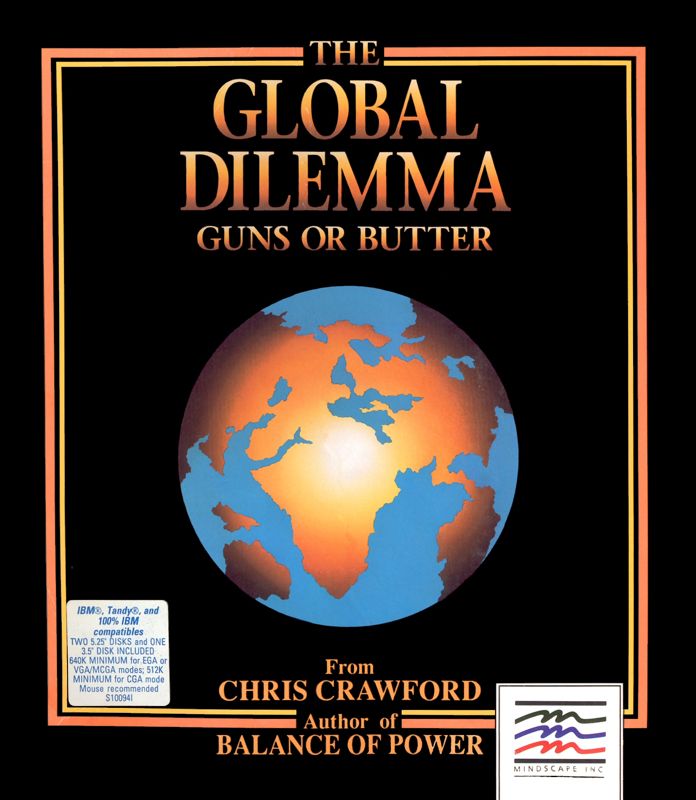
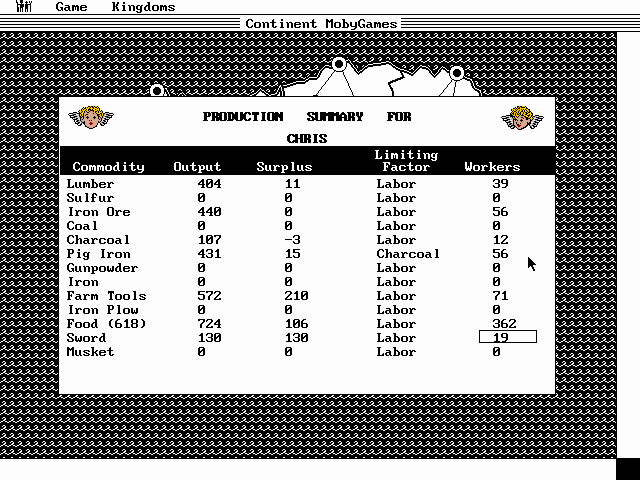
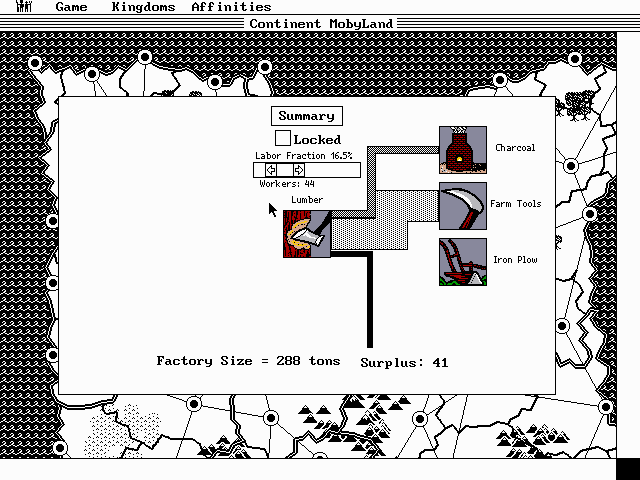
The Global Dilemma: Guns or Butter offers a deeply strategic, turn-based experience where every decision ripples across your nation’s economy and military. Players begin by allocating resources into a simplified industrial tree—coal mines feed steel mills, lumber mills support construction, and gunpowder factories bolster your armed forces. From these rudimentary inputs, you must juggle the competing needs of population growth (“butter”) and military expansion (“guns”), with the goal of outpacing rival nations in both productivity and might.
(HEY YOU!! We hope you enjoy! We try not to run ads. So basically, this is a very expensive hobby running this site. Please consider joining us for updates, forums, and more. Network w/ us to make some cash or friends while retro gaming, and you can win some free retro games for posting. Okay, carry on 👍)
Each turn represents a year of production and diplomacy, prompting you to reassess priorities constantly. Do you divert excess wood toward building new farms to support a burgeoning workforce? Or do you retool factories for war materiel, preparing for an inevitable border clash? This tug-of-war is the core challenge: net gains in population fuel your economy, but only a thriving military can seize neighboring provinces and their resources.
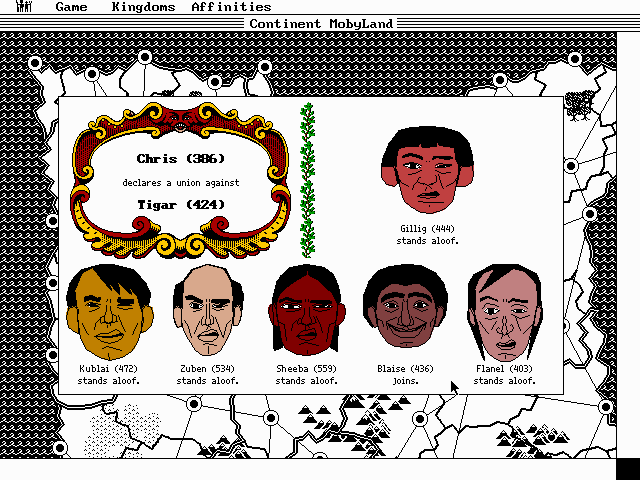
On higher difficulty levels, the game introduces a lightweight diplomacy system that enables short-lived alliances, trade pacts, and even backroom betrayals. Timing these agreements and gauging when to break them adds another layer of depth, ensuring that no two playthroughs feel identical. The careful balancing act—stripped down to its essentials—makes for a surprisingly tense and thought-provoking experience, even without flashy combat animations or real-time skirmishes.
Graphics
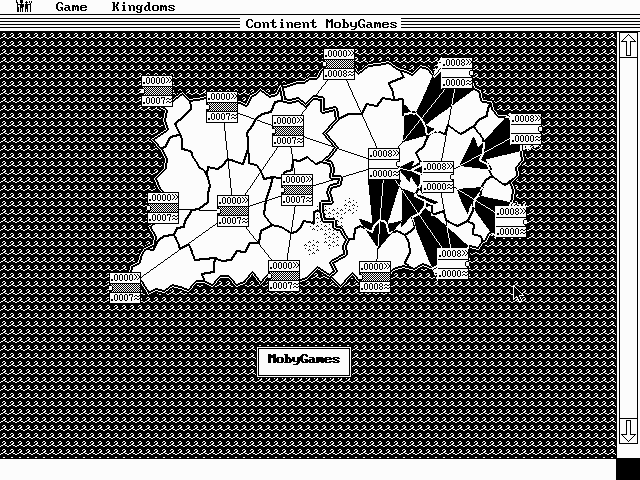
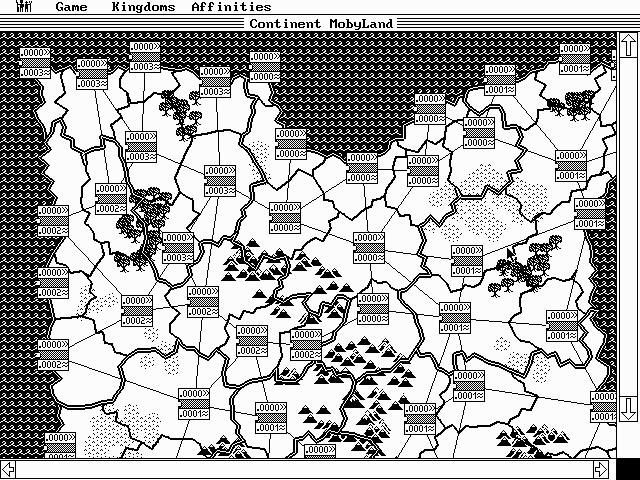
Visually, The Global Dilemma adheres to the minimalist standards of late-1980s design. The game’s palette is limited, employing simple icons and a top-down map of provinces, each shaded to indicate ownership or military presence. While it won’t win any beauty contests by modern standards, the UI is clean, functional, and highly readable—the clarity is a boon when you’re poring over resource tables and diplomatic statuses.
Province icons denote factories, farms, and troop concentrations with intuitive symbols that allow quick at-a-glance assessments of your empire’s health. The map grid is modestly animated, with flashing alerts to signal border incursions or diplomatic overtures. Though there’s little in the way of decorative flair, every graphic element serves a purpose, reinforcing the game’s educational bent rather than distracting from it.
Fans of vintage strategy will appreciate the era-authentic interface, which pairs nicely with the exhaustive manual. The documentation offers detailed diagrams of the production chain and sample playthroughs, making up for any aesthetic austerity. In a way, the no-frills presentation aligns perfectly with Crawford’s ethos of “big picture” simulations—form follows function, and the result is a streamlined, no-nonsense management screen.
Story
Unlike narrative-driven titles, The Global Dilemma forgoes character arcs or scripted events, opting instead for emergent storytelling rooted in player choice. Your rise (or fall) unfolds across a dynamic geopolitical sandbox, where rival nations vie for land, resources, and population. Conflicts and alliances emerge organically, based entirely on the economic and military pressures you and your neighbors generate.
The absence of a fixed storyline gives you room to craft your own drama. Will you pursue a pacifist route, funneling most production into farms and factories, hoping to sway rivals through trade agreements and soft power? Or will you become a warmonger, building a juggernaut army that sweeps across the map, annexing provinces one by one? The thrill of discovering “what if” scenarios drives much of the replay value.
Despite its abstractions, the game conveys a palpable sense of global tension. Each decision—whether to build another gunpowder mill or expand your housing stock—carries weight, and the ripple effects often lead to unexpected diplomatic twists. In this way, The Global Dilemma weaves its own narrative tapestry, one that reflects the complexities of resource allocation and international brinkmanship.
Overall Experience
The Global Dilemma: Guns or Butter stands out as a compelling blend of educational simulation and accessible strategy. Its emphasis on macroeconomic balance makes it a unique entry in designer Chris Crawford’s catalog, bridging the gap between hardcore wargames and edutainment. While some players may miss more elaborate graphics or storyline cutscenes, those who relish thoughtful, numbers-driven challenges will find it deeply satisfying.
Replayability is high thanks to variable opponent behaviors, optional difficulty levels, and the lightweight diplomacy layer. No two sessions play exactly alike, and the lack of random events means your successes and failures rest squarely on your strategic planning. Over time, you’ll learn to anticipate food shortages, pinpoint the tipping point for military mobilization, and even exploit short-term alliances to your advantage.
Ultimately, The Global Dilemma is a testament to Crawford’s design philosophy: strip away superfluous details, focus on core mechanics, and let players explore complex systems in a distilled form. Whether you’re a strategy veteran curious about the genre’s roots or a newcomer seeking a cerebral challenge, this title offers a gratifying test of wits and willpower. Just be prepared to spend hours tweaking your “guns versus butter” ratio—and marveling at how a handful of simple rules can yield such intricate geopolitical drama.

Reviews
There are no reviews yet.