 Retro Replay Retro Replay gaming reviews, news, emulation, geek stuff and more!

Retro Replay Review
Gameplay
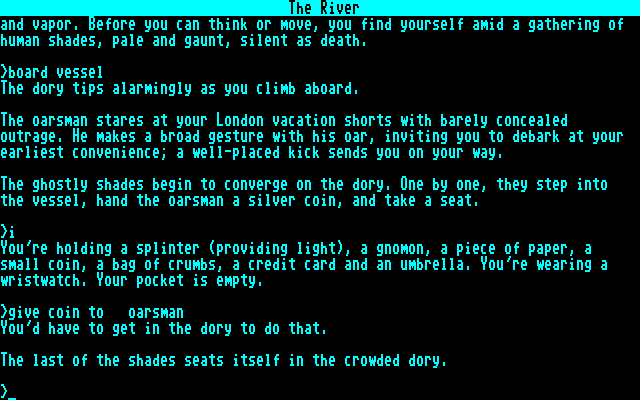
Trinity delivers a rich text-based gameplay experience that hinges on exploration, puzzle-solving, and narrative choices. The parser is robust, allowing a variety of verb-noun combinations that keep the gameplay fluid rather than frustrating. Though newcomers to interactive fiction may encounter a slight learning curve, the tutorial hints and context clues ease players into the mechanics without feeling intrusive.
(HEY YOU!! We hope you enjoy! We try not to run ads. So basically, this is a very expensive hobby running this site. Please consider joining us for updates, forums, and more. Network w/ us to make some cash or friends while retro gaming, and you can win some free retro games for posting. Okay, carry on 👍)
The core loop revolves around interacting with strange environments, collecting clues, and piecing together a coherent strategy to prevent catastrophic events. Each door you discover transports you to iconic moments in history or fiction—ranging from the murky streets of 1940s Berlin to the alien landscapes where imaginary tests took place. Successfully solving these puzzles not only feels rewarding but also carries real narrative weight, as your actions directly shape the timeline.
One of Trinity’s standout features is its non-linear progression. While the final goal is always the Trinity Test in New Mexico, you’re free to tackle the puzzle-doors in multiple orders, experimenting with different sequences to discover hidden connections. This design encourages replayability, as revisiting each scenario with fresh strategies can reveal new text descriptions and puzzle solutions.
Graphics
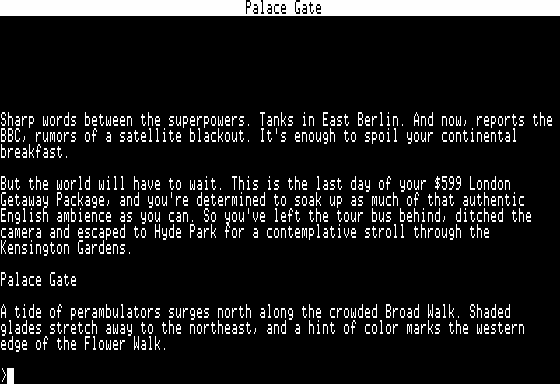
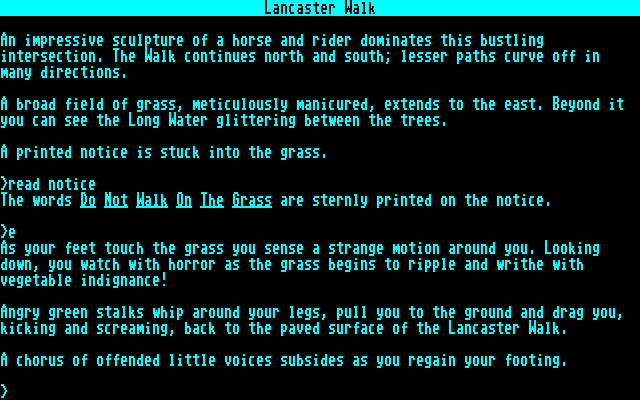
As a text adventure, Trinity foregoes traditional graphics in favor of evocative prose and minimalist design. The “visuals” are conveyed through carefully crafted paragraphs that paint vivid pictures of each setting—from the manicured lawns of Kensington Gardens to the desert sands of Los Alamos. While there are no pixelated sprites or 3D models, the descriptive language serves as a powerful substitute for imagery.
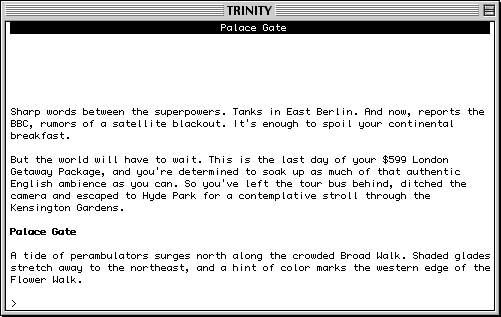
The interface is clean and uncluttered: a single window displays your surroundings, verb-noun input line, and an inventory readout. This streamlined presentation keeps the focus on the narrative, with occasional ASCII maps providing spatial context. Though some players accustomed to modern HUDs might find it stark, the lack of visual noise reinforces the game’s literary roots.
Trinity also incorporates intermittent atmospheric sound effects—such as distant sirens, wind over desert dunes, or the ominous hum of missile systems. These subtle audio cues complement the text and heighten immersion without crossing into full-fledged audio design. In a genre defined by words, these minimalist touches underscore pivotal moments and amplify tension.
Story
At its heart, Trinity is a tale about power, human folly, and the fragility of history. You begin trapped in Kensington Gardens, with nanny-hordes barring your escape and a Soviet missile countdown ticking away. The premise immediately establishes both personal stakes and larger geopolitical dread, setting the tone for a journey that spans time and reality itself.
Stepping through a mysterious door, you discover a nexus outside space and time—each portal taking you to a world shaped by nuclear fire. Whether navigating a wartime command bunker or a post-apocalyptic wasteland, the writing balances historical detail and speculative fiction. By weaving real events like Hiroshima or speculative scenarios such as an alternate Trinity where the bomb never detonated, the narrative probes moral complexities.
The climax in New Mexico on July 16, 1945, brings together the threads in a tense, emotionally charged finale. Your choices echo here: do you attempt to sabotage the test, warn scientists, or perhaps influence key decisions? These branching outcomes invite reflection on cause and effect, leaving lasting questions about responsibility and unintended consequences.
Overall Experience
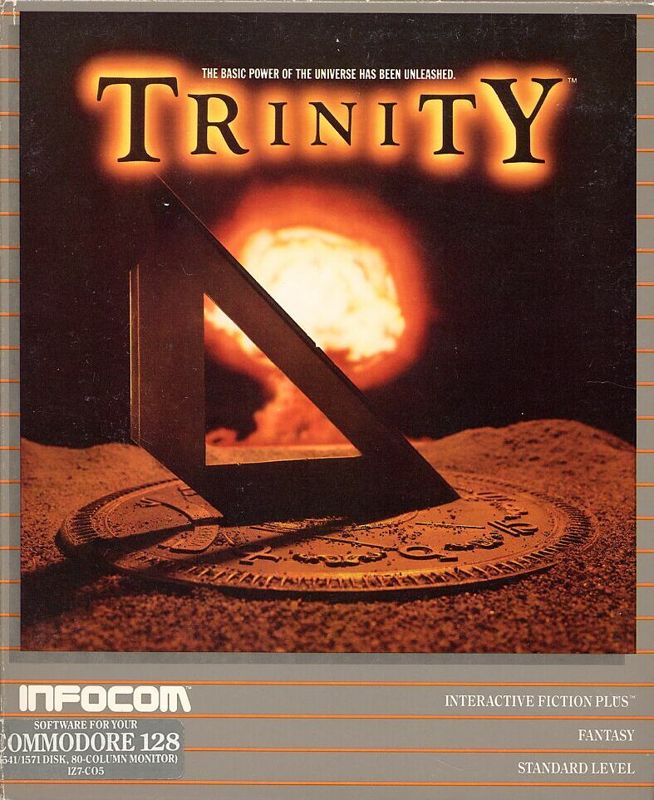
Trinity stands as a landmark in interactive fiction, offering a thought-provoking blend of historical drama and puzzle adventure. Its text-driven approach may feel retro to those accustomed to high-fidelity graphics, but the evocative prose and imaginative world-building more than compensate. Every puzzle solved and every decision made carries weight, lending each playthrough a sense of purpose.
The pacing is deliberate, alternating between moments of quiet contemplation and heart-pounding tension as missiles approach or clocks tick down. Veteran IF enthusiasts will appreciate the depth of the parser and the cleverness of the puzzles, while newcomers can be drawn in by the gripping story and clear, well-timed hints. The game’s structure rewards patience and curiosity, making discovery a genuine thrill.
Ultimately, Trinity is not just a game but an invitation to reflect on history and human agency. Its narrative resonance lingers long after the final door closes, encouraging players to consider the ripple effects of their in-game actions in the real world. For those seeking a cerebral, narrative-driven challenge, Trinity remains an essential journey through time and consequence.


Reviews
There are no reviews yet.