 Retro Replay Retro Replay gaming reviews, news, emulation, geek stuff and more!

Retro Replay Review
Gameplay
Turbo delivers a pure, high-octane arcade racing experience built around one core mechanic: outrun the clock. You begin each run with just 60 seconds on the clock, and every tenthousand points you accumulate grants you an extra minute of play. This simple yet powerful time-based loop keeps you on edge, forcing you to balance risk and speed as you weave through oncoming traffic and slower-moving vehicles. Precision timing is essential—each moment you spend recovering from a crash chips away at your remaining time.
(HEY YOU!! We hope you enjoy! We try not to run ads. So basically, this is a very expensive hobby running this site. Please consider joining us for updates, forums, and more. Network w/ us to make some cash or friends while retro gaming, and you can win some free retro games for posting. Okay, carry on 👍)
The two-lane road design encourages constant lane changes. One lane carries traffic moving in the same direction as you, and the other features oncoming cars. You must master shifting gears and easing off the accelerator—Turbo has no brake pedal—to thread your car through tight gaps. Mistimed maneuvers result in crashes that send you back to a standstill, costing valuable seconds and momentum. Getting back up to speed quickly becomes its own mini-challenge.
Beyond avoiding collisions, scoring additional points by overtaking vehicles is equally important. Turbo rewards not only distance covered but also the number and type of cars you pass. As you progress, you’ll learn the various traffic patterns, spotting clusters of slow vehicles that can provide scoring opportunities—and potential bottlenecks to navigate. The continuous feedback of time, speed, and score creates a compelling loop that hooks you from the first race to the last.
Graphics
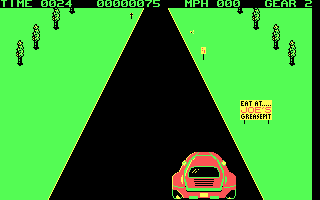
Turbo’s visuals capture the quintessential charm of early ’80s arcade titles. The road and roadside scenery are rendered in crisp, colorful sprites that scroll smoothly past the screen, giving a convincing illusion of speed. While the hardware limitations of the era constrain resolution and palette, the game uses clever design tricks—such as scaling car sprites as they approach—to convey depth and accelerate immersion.
The two-lane highway setting is simple but effective. Subtle details like roadside bushes, telephone poles, and distant mountains provide context without overwhelming the limited graphical budget. Oncoming cars and player vehicles are distinctively shaded, ensuring you can quickly spot potential hazards. Even after extended play sessions, the patterns and layouts feel fresh thanks to small variations in roadside objects and vehicle models.
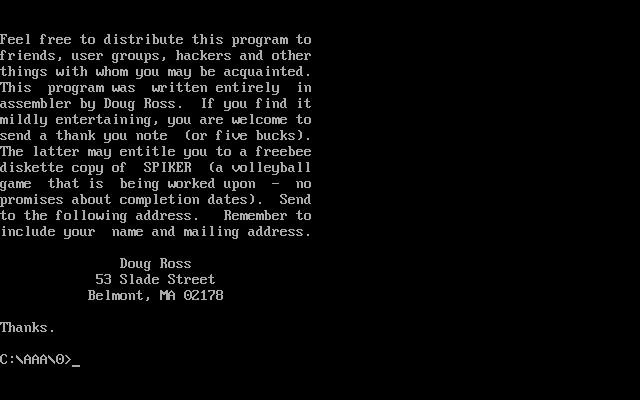
Turbo was written entirely in Assembly language, and its performance reflects that low-level optimization. Frame rates remain rock-solid even when multiple sprites crowd the screen, and input latency is minimal. These technical achievements might not be immediately obvious to newcomers, but they contribute to the game’s responsive feel and consistent challenge, making every twist and swerve count.
Story
Unlike modern racing titles that weave elaborate narratives or career modes, Turbo’s “story” is pure, old-school arcade ambition. There’s no drifting plot or rival drivers with backstories—your only goal is to push your skills to the limit and see how long you can survive against the relentless countdown. This stripped-down approach places raw gameplay front and center, delivering the adrenaline rush that coin-op enthusiasts crave.
In the absence of characters or cutscenes, Turbo invites you to project your own narrative onto the race. Are you a daredevil evading traffic on a desert highway? A courier on a deadline? Or simply a ghost in the machinery of the arcade, chasing high scores and glory? The open-ended premise allows for an internal storyline that evolves with each play, making each run feel personal even without a scripted plot.
For players seeking a deep lore or campaign progression, Turbo might feel spartan. However, its minimalist “story” is part of its enduring appeal. By focusing purely on mechanics and player skill, it harkens back to an era when every coin inserted was a blank slate for competition and self-improvement. That uncluttered design philosophy remains refreshing in today’s story-heavy landscape.
Overall Experience
As a package, Turbo stands as a testament to the enduring power of streamlined arcade design. Its simple two-gear, no-brake system is surprisingly nuanced, rewarding players who invest time in mastering throttle control and split-second lane changes. The addictive risk-and-reward cycle—crash and lose time, overtake cars to earn more—creates a pulse-quickening feedback loop that keeps you coming back for “just one more race.”
While modern gamers accustomed to sprawling open worlds or career modes might find Turbo’s bare-bones presentation lacking, fans of retro racing will appreciate its laser-focused challenge. The graphics and sound design, crafted in Assembly, may seem dated compared to contemporary standards, but they deliver a nostalgic charm and technical reliability that many newer titles struggle to match. Every visual glitch–free frame reinforces the game’s arcade pedigree.
Ultimately, Turbo is an ideal pick for collectors, arcade aficionados, and anyone looking to experience the roots of time-attack racing. Its razor-sharp controls, relentless pace, and timeless “beat-the-clock” formula deliver an experience that’s as exhilarating today as it was at launch. If you specialize in high-score hunting or simply crave an unfiltered dose of arcade adrenaline, Turbo is a classic that still accelerates the heart rate.


Reviews
There are no reviews yet.