 Retro Replay Retro Replay gaming reviews, news, emulation, geek stuff and more!
Retro Replay Review
Gameplay
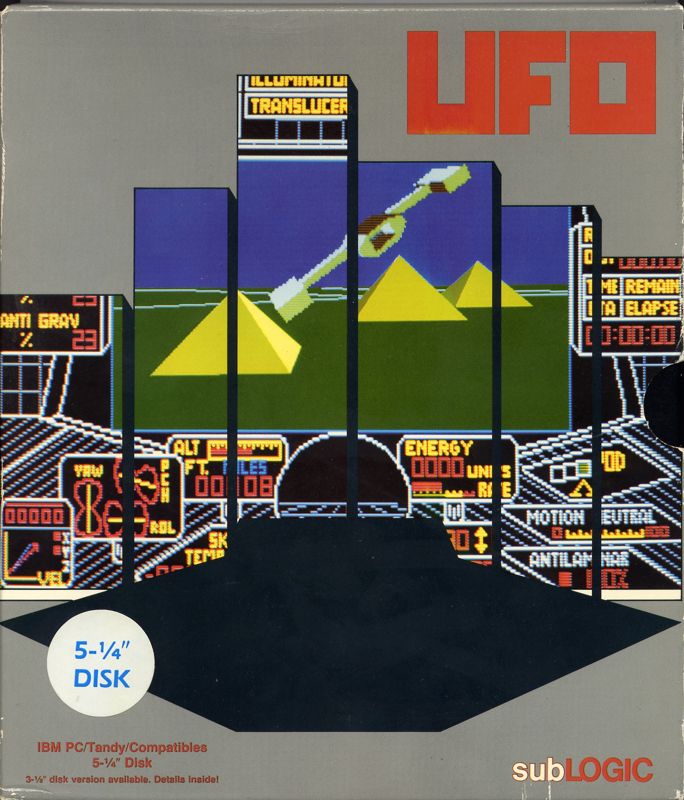
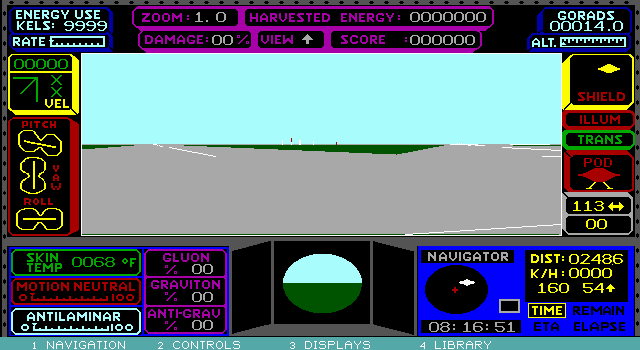
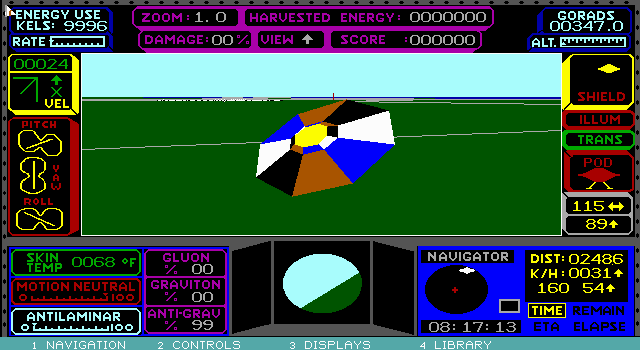
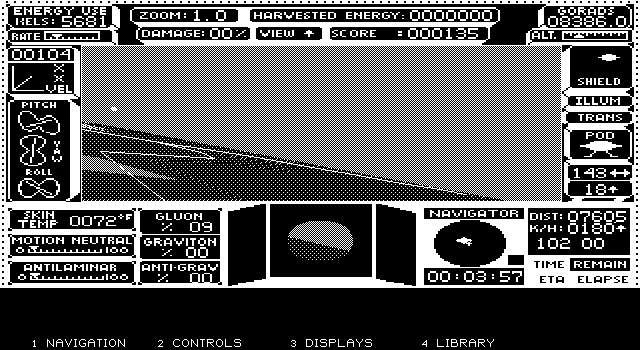
UFO places you in the cockpit of an extraterrestrial spacecraft with a control scheme that feels both oddly familiar and completely alien. Drawing on the helicopter-inspired mechanics of Bruce Artwick’s Flight Simulator series, the game challenges you to master pitch, roll, yaw, and thrust in three dimensions. Unlike a typical aircraft, your UFO responds to anti-gravity controls and thrusters simultaneously, meaning precision maneuvers—like skidding along the surface for a quick fuel scoop—require careful balancing of systems.
(HEY YOU!! We hope you enjoy! We try not to run ads. So basically, this is a very expensive hobby running this site. Please consider joining us for updates, forums, and more. Network w/ us to make some cash or friends while retro gaming, and you can win some free retro games for posting. Okay, carry on 👍)
The heart of the gameplay loop is a high-stakes fuel scavenging mission. You roam vast, procedurally rendered landscapes searching for fuel sources, using your translucer device to slip under human radar. Once enough fuel is harvested, you can return to your mother ship to restock supplies, upgrade your gluon disruptor propulsion, or deploy special equipment like illuminator beams and probes. The ability to juggle multiple tools—and decide when to engage shields or use teleportation—adds layers of strategy to what might otherwise be a straightforward flight sim.
One of UFO’s standout features is the anti-laminar transducer, which you can engage once you’ve gathered sufficient resources. Eliminating drag entirely opens up thrilling possibilities: you can zip across the map at breakneck speed, though risk of spinout forces you to maintain a steady hand on the controls. Coupled with realistic heat buildup on your hull, the game strikes an impressive balance between risk and reward, encouraging you to push your ship’s limits without frying your engine.
Graphics
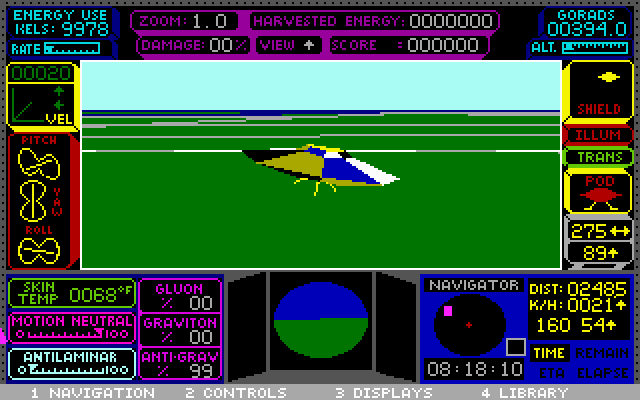
Visually, UFO relies on the same 3D terrain modeling engine that powered the early Flight Simulator titles, and it shows in the detailed landscapes stretching out beneath your craft. Rolling hills, forests, and cityscapes are rendered with a clarity that was groundbreaking at the time—and while modern standards have evolved, the crisp polygonal terrain still conveys a genuine sense of scale and altitude. The day-night cycle further enriches each flight, casting long shadows that affect your radar signature and difficulty of landing.
Your UFO itself is rendered with minimalist flair: smooth surfaces punctuated by glowing thrusters and subtle lighting effects. When you engage the translucer, the ship phases into near-invisibility, a neat graphical trick that reinforces the stealth mechanics. Special effects—like the ripple of a gluon beam or the shimmer of an illuminator pulse—add visual feedback that makes each action feel satisfying and impactful.
Compatibility with SubLogic Scenery Disks means terrain variety extends far beyond the base game. Players who invest in additional scenery packs can explore deserts, mountain ranges, and even fictional landscapes with unique landmarks. This modular approach to graphics keeps the world feeling fresh and encourages replayability, especially for those who relish discovering new fuel hotspots in less-charted territories.
Story
At its core, UFO casts you as an alien scout on a desperate mission to secure fuel for your species’ interstellar armada. Though the narrative is pared-down, every flight mission feels like a chapter in your covert operations against humanity. The sense of being an uninvited guest in Earth’s skies gives the story a playful cat-and-mouse tension, as you dodge military radars and scramble to extract precious energy before the authorities close in.
The minimalistic storytelling leaves room for player imagination: are you a peaceful explorer seeking resources, or part of a larger invasion fleet? Your decisions—whether to snatch civilian aircraft with your docking tractor beam or to avoid confrontation entirely—shape your personal narrative. This emergent storytelling approach makes each playthrough unique and keeps the stakes high without needing elaborate cutscenes or dialogue.
Supplementary logs and mission briefings hint at a broader galactic conflict, suggesting that Earth is but one refueling node in a vast cosmic network. Trading at the mother ship introduces snippets of lore—rumblings of resource shortages and rival alien factions. While not the centerpiece of the experience, these touches of worldbuilding deepen the immersion and give context to your fuel-gathering escapades.
Overall Experience
UFO strikes a rare balance between simulation depth and stealth-action thrills. Piloting your craft requires technical skill and patience, especially during docking sequences where thruster finesse—rather than brute antigravity power—wins the day. Meanwhile, the thrill of evading radar locks and darting under the planet’s defensive grid gives the game a constant undercurrent of tension.
The learning curve can be steep, particularly for those new to 3D flight sims. However, once you get comfortable juggling anti-gravity settings, thruster controls, and special devices like probes and shields, the sense of mastery is immensely rewarding. The modular design—complete with Scenery Disk compatibility—ensures you’ll find new challenges and territories to explore long after the main fuel missions feel routine.
For simulation enthusiasts and sci-fi fans alike, UFO offers a singular experience: part stealth game, part sandbox flight sim, all wrapped in an alien narrative that keeps you guessing. Whether you’re drawn to precision aerial maneuvers or the thrill of covert extraction, UFO delivers a rich, replayable adventure that stands the test of time. If you’re hunting for a flight simulator with a twist—and a dash of cosmic intrigue—this game is well worth investigating.

Reviews
There are no reviews yet.