 Retro Replay Retro Replay gaming reviews, news, emulation, geek stuff and more!
Retro Replay Review
Gameplay
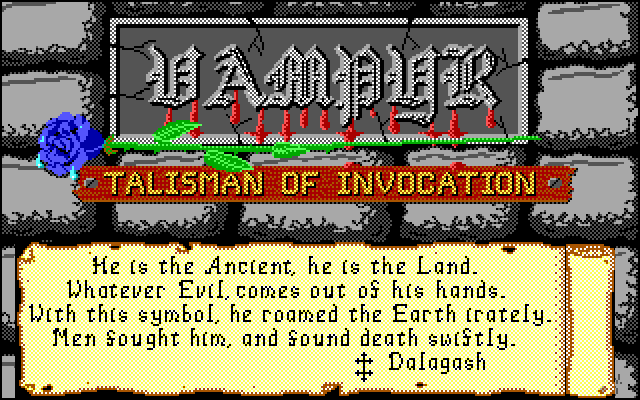
Vampyr: Talisman of Invocation places you in the role of a fledgling hero on a quest to save the realm of Quilinor from a looming evil. The core loop involves traversing a top-down overworld, delving into dungeons, and engaging in free-movement, tile-based combat. Enemies such as goblins, giants, and zombies patrol both the map and the dungeons, giving you the chance to prepare for encounters or attempt strategic withdrawals when outnumbered.
(HEY YOU!! We hope you enjoy! We try not to run ads. So basically, this is a very expensive hobby running this site. Please consider joining us for updates, forums, and more. Network w/ us to make some cash or friends while retro gaming, and you can win some free retro games for posting. Okay, carry on 👍)
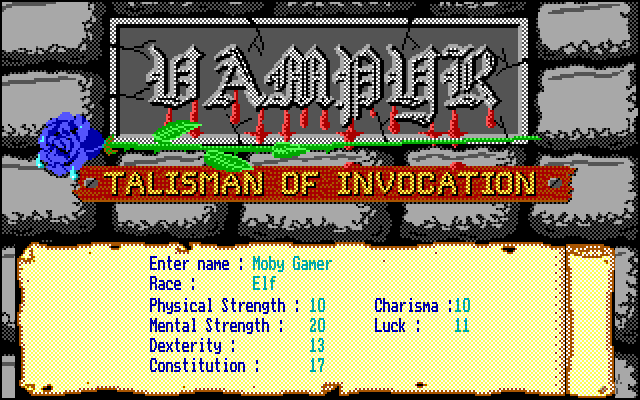
Character progression leans into traditional AD&D–style mechanics. At character creation, you distribute attribute points among Strength, Dexterity, Intelligence, and other familiar stats, then select from a suite of skills that include weapon proficiencies, alchemy, and lockpicking. This system rewards thoughtful builds: a rogue-oriented character can sneak past certain monsters or pick the locks of treasure chests and castle doors, while a warrior specializes in brute force—but finds some puzzles and locked areas frustratingly out of reach.
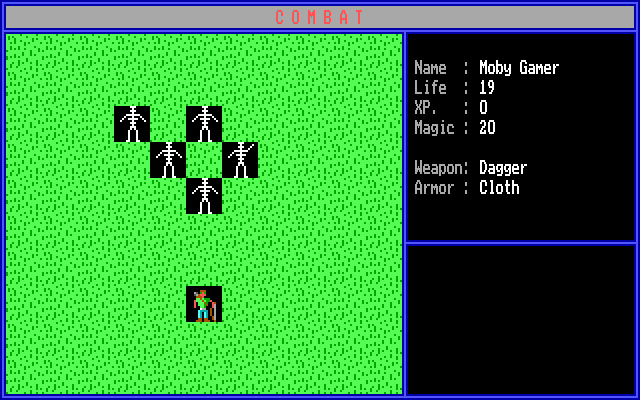
Combat is straightforward but satisfying. You click to move and attack, weaving in special abilities when they unlock at higher levels. Unlike some modern action RPGs, there’s no stamina meter or combo system—each swing or spell costs mana or fatigue, requiring you to manage resources carefully in longer encounters. The visible-on-map enemies add a layer of choice: do you risk a fair fight or circumvent a group entirely?
Exploration is a highlight, thanks to the game’s freeware model and open dungeon design. Each castle and underground cavern hides secret rooms, hidden treasures, and lore items. While the interaction possibilities are simpler than in Ultima V, discovering a well-guarded chest or using a newly acquired lockpick on a suspicious door still delivers an authentic old-school thrill.
Graphics
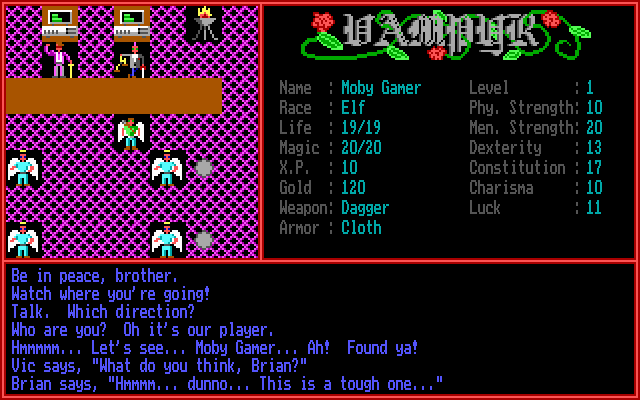
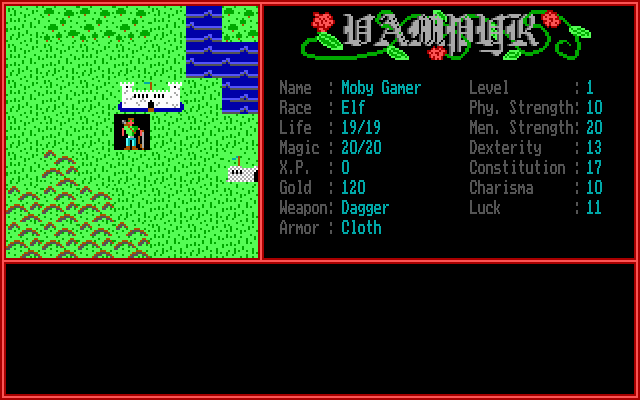
Visually, Vampyr: Talisman of Invocation is reminiscent of Ultima V, but with a more modest pixel budget. The tile sets are clear and functional, delineating walls, floors, and foliage with distinct color palettes. Town icons on the overworld map pop against rolling green fields, and dungeons adopt darker hues punctuated by torchlight effects that, while simple, effectively convey atmosphere.
Character sprites and monster animations are serviceable but not lavish. Heroes, goblins, and skeletons all have walk and attack frames, yet the transitions can feel jerky compared to commercial releases. That said, the small team’s artistry shines through in creature design: giants loom menacingly, and zombies shuffle with just enough detail to establish their undead nature.
Environmental variety is respectable. Quilinor hosts grasslands, rocky mountains, murky swamps, and medieval towns, each with its own tiles and palette. While the reuse of certain graphics is inevitable in a freeware project, careful palette shifts and the addition of set dressing—like barrels, signs, and crates—keep the world from feeling too repetitive.
Special effects, such as spell animations and damage flashes, are minimal but effective. A fireball lights up the room, a healing spell emits a green glow, and weapons briefly flash on contact. These touches, though rudimentary, reinforce the impact of your actions and help the game punch above its technical weight.
Story
The narrative thrust of Vampyr: Talisman of Invocation sees you as the chosen savior of Quilinor, summoned to thwart a mysterious, grave threat. While the plot doesn’t delve into elaborate twists or moral quandaries, it offers a classic fantasy framework that drives exploration and dungeon-crawling. Townsfolk provide rumors and quests, encouraging you to piece together the nature of the evil you face.
Dialogue is concise and occasionally flavorless, a byproduct of the one- or two-person development team. Still, NPCs deliver useful hints about secret passages or the weakness of a dungeon boss. Sidequests—such as recovering stolen relics or rescuing trapped villagers—add modest narrative variety, even if they seldom challenge your moral compass.
Boss encounters and story milestones are signposted clearly, giving players a sense of progression. Facing down a giant troll in its lair or confronting a necromancer in the deepest catacombs feels like a genuine narrative payoff. However, the lack of voice acting and the lean text presentation mean that much of the story’s emotional weight relies on your own imagination.
Overall, the story may lack the depth of a big-budget RPG, but for a free project crafted by two high-school students, it provides just enough context and motivation to keep you invested in Quilinor’s fate.
Overall Experience
Vampyr: Talisman of Invocation is a testament to what passionate amateur developers can achieve. As a freeware title, it offers hours of exploration, combat, and dungeon crawling without asking for a penny. The homage to Ultima is clear, yet the game carves its own identity through AD&D–style character building and a skill system that rewards diverse playstyles.
There are rough edges—sprite animations can be stiff, some quests are repetitive, and town interactions feel limited—but the strengths outweigh the flaws. If you grew up on Ultima or enjoy retro-styled RPGs, you’ll appreciate the approachable world map, visible-on-map enemies, and the joy of unlocking a previously sealed room with your lockpick skill.
The learning curve is gentle, with tooltips explaining attributes and skills, and save-anywhere functionality preventing punishing restarts. Newcomers to the genre will find it a friendly introduction to tile-based combat and open-world adventuring. More experienced players will enjoy optimizing builds and hunting down every last hidden treasure.
In sum, Vampyr: Talisman of Invocation is an engaging, old-school role-playing experience that delivers value well beyond its freeware price tag. Its blend of exploration, tactical combat, and light narrative makes it a worthy download for fans of classic RPGs and anyone curious about what small teams can accomplish when driven by creative passion.


Reviews
There are no reviews yet.