 Retro Replay Retro Replay gaming reviews, news, emulation, geek stuff and more!
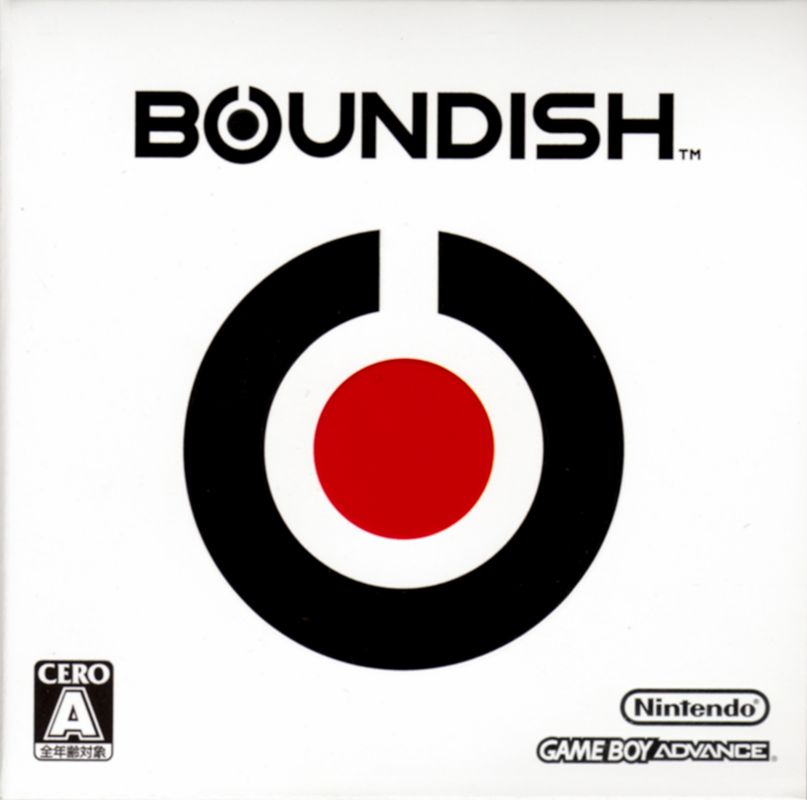





Retro Replay Review
Gameplay
Boundish offers a collection of five inventive two-player games that take the core concept of Pong and expand upon it with unique mechanics and varied objectives. Whether you’re competing against a CPU opponent or facing off head-to-head with a friend, each mini-game feels fresh and competitive. The controls are intuitive—Players move their paddles or characters with the D-pad and execute special moves with the A button—so jumping into any match feels instantly familiar yet strategically deep.
(HEY YOU!! We hope you enjoy! We try not to run ads. So basically, this is a very expensive hobby running this site. Please consider joining us for updates, forums, and more. Network w/ us to make some cash or friends while retro gaming, and you can win some free retro games for posting. Okay, carry on 👍)
In “Pool Flower,” you bounce the ball back and forth while floating circles drift across the field. Hitting these circles changes their color to match the last hitter, adding a territorial twist as you attempt to score by getting the ball past your opponent. “Box Juggling” diverges from Pong’s lineage by focusing on vertical juggling: one player keeps a box aloft, dodging stuns when the box collides with the head, and managing power-ups or extra boxes as the pace picks up. It’s a frantic survival challenge that rewards reflexes and timing.
“Power Slider” places players on opposite ends of a binocular-shaped arena, where each puck bounce leaves a hole in the floor to watch out for. Charging up shots by holding A just before impact unleashes powerful strikes that can change the flow of play. “Human League” plays like doubles tennis: two human-shaped paddles share each side, and coordinated movement is key as a missed return by the front paddle gives the back player a chance to salvage the rally. Finally, “Wild Go Round” spins the action around a rotating vinyl record; as the disk turns, physics shift, creating unpredictable bounces and scoring when the record’s label matches your player color. Each mode challenges players to adapt new strategies and keeps gameplay varied over long play sessions.
Graphics
Visually, Boundish embraces a minimalist aesthetic reminiscent of arcade classics while using vibrant palettes to distinguish players and interactable objects. Player one’s red and player two’s blue are instantly recognizable against the dark backgrounds, ensuring that even fast-paced rallies remain easy to follow. Subtle particle effects and color-shifting circles or record labels in certain modes add flair without cluttering the screen.
The animations are smooth and responsive: paddles slide effortlessly up and down, characters in “Box Juggling” exhibit weighty squash-and-stretch when they’re stunned, and the vinyl record in “Wild Go Round” rotates fluidly, giving a tangible sense of momentum. These touches make each mini-game feel polished, and the consistent frame rate supports tight controls, which is critical when every millisecond counts in a competitive match.
While there’s no elaborate 3D backdrops or cinematic cut-scenes, the simple geometric visuals and clean UI elements perfectly fit the throwback spirit of Boundish. Color-coded hit effects, smooth transitions between rounds, and clear score indicators ensure that nothing distracts from the core action—just two players, one ball (or box, or puck), and a battle of wits and reflexes.
Story
Boundish does not offer a traditional narrative or single-player campaign; instead, it channels the pure essence of early arcade gaming by focusing entirely on gameplay variety and competitive fun. The game’s homage to Pong and other pioneers of the medium serves as its unifying theme, connecting each mini-game as a modern twist on classic pastimes. This retro homage becomes the de facto “story”—a celebration of how simple mechanics can yield endlessly replayable experiences.
That said, there are little moments of context sprinkled throughout: the menus reference vintage consoles, and the selectable CPU difficulty levels carry tongue-in-cheek names that nod to arcade lore. Unlockable color palettes and themed table skins in the UI evoke different eras of gaming history, giving collectors and enthusiasts a light meta-narrative to explore.
Ultimately, any sense of progression comes from mastering each mode and outplaying opponents rather than following a scripted plot. While some players may miss character development or a structured campaign, Boundish’s emphasis on pure, mechanical storytelling—where the tale is written by every match’s back-and-forth drama—offers its own satisfying narrative punch.
Overall Experience
Boundish shines brightest in local multiplayer, where the immediacy of competitive play transforms each mini-game into a memorable duel. The variety of modes means sessions rarely feel repetitive; you can go from strategic aiming in “Pool Flower” to frantic juggling in “Box Juggling” within minutes. The pick-and-choose structure also makes it perfect for casual gatherings, letting players rotate through favorites or challenge themselves to tackle every mode in a row.
The CPU opponents provide an adequate solo experience, with adjustable difficulty that keeps practice matches engaging. However, the true magic happens when two players lock eyes over the same screen—there’s a tangible energy in landing a perfectly timed power shot in “Power Slider” or pulling off a last-second corner dash in “Human League.”
In terms of replay value, Boundish delivers. Leaderboards, skin unlocks, and the innate desire to outscore friends ensure that even after dozens of hours, the games feel just as thrilling as the first time. Whether you’re a Pong purist or someone looking for bite-sized competitive chaos, Boundish offers a polished, well-rounded package that honors gaming’s roots while delivering fresh, addictive twists.


Reviews
There are no reviews yet.