 Retro Replay Retro Replay gaming reviews, news, emulation, geek stuff and more!


Retro Replay Review
Gameplay
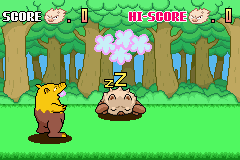
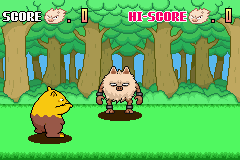
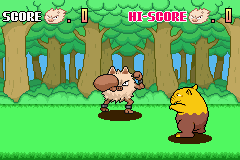
Dream Eater centers on the unique premise of playing as Drowzee, a dream‐eating Pokémon, whose sole mission is to hypnotize belligerent Primeapes and feast on their dreams. The core loop is deceptively simple: maneuver Drowzee to the left or right of a Primeape, cast hypnotic waves with the A button, and avoid detection. This left‐right positioning mechanic demands quick reflexes and precise timing, as a mistimed move can see Drowzee summarily punched off the screen.
(HEY YOU!! We hope you enjoy! We try not to run ads. So basically, this is a very expensive hobby running this site. Please consider joining us for updates, forums, and more. Network w/ us to make some cash or friends while retro gaming, and you can win some free retro games for posting. Okay, carry on 👍)
As you progress, each successful hypnosis and dream‐eating grants you a point and propels you to the next, increasingly alert Primeape. The speed and sensitivity of your targets ramp up steadily, keeping each new wave of foes fresh and challenging. Rather than relying on traditional health bars or complex combos, the game emphasizes pattern recognition—learn the Primeape’s gaze shifts and only attempt hypnosis when its back is turned.
Controls are straightforward, using only the D‐pad for movement and the A button for sending soporific mental waves. This minimal control scheme makes Dream Eater ideal for quick pick‐up‐and‐play sessions, but don’t let its simplicity fool you: as the primeapes accelerate, split‐second decisions become crucial. One missed opportunity means starting back at square one, injecting a satisfying arcade‐style risk‐and‐reward element.
Unlocking new rounds is handled through the Nintendo e‐Reader system: scan the long dot‐code on specific Aquapolis or Pokémon e‐Card Expansion 2 cards to access Dream Eater. This integration adds a collectible dimension—tracking down Drowzee (74a/147 or 40/92), Mr. Mime, Smoochum, Jynx, Hypno, or Espeon cards not only unlocks additional content but also encourages exploration of the broader Pokémon card series.
Graphics
Dream Eater’s visuals are crafted with the Game Boy Color’s palette constraints in mind, delivering charming, pixel‐perfect sprites. Drowzee’s droopy eyes and swaying hypnotic pose convey personality, while each Primeape bursts with angry, frenzied animation frames when it senses your approach. These expressive details make every near‐miss and successful hypnosis feel engaging, despite the small screen real estate.
The backgrounds are sparse but effective: a simple gradient or subtle pattern keeps the focus squarely on Drowzee and his targets, preventing visual clutter during tense moments. Occasional dream cloud effects swirl around seized Primeapes, illustrating the dream‐eating process in a playful, cartoonish style. These fleeting animations break up the action and reward players with satisfying visual feedback.
Scanning dot‐codes via the e‐Reader adds an extra layer to the graphical presentation. As you feed cards through the reader, on‐screen prompts and pixel art badges denote which Pokémon you’ve activated. This seamless blending of physical and digital artwork enhances the tactile joy of collecting and playing with cards, reinforcing Dream Eater’s place as a novelty title in Pokémon’s peripheral ecosystem.
Overall, while Dream Eater doesn’t push the hardware to its limits, it maximizes every color and pixel for a cohesive, charming presentation. Its concise art style complements the gameplay’s quick bursts, ensuring that graphics never detract from the hypnotic core mechanics.
Story
The narrative framework of Dream Eater is refreshingly straightforward: Drowzee has a voracious appetite for dreams, and his quarry—Primeapes—are some of the most ill‐tempered dreamers around. There’s no lengthy exposition or sprawling lore; instead, a brief intro establishes the premise and sets the stage for frantic, snack‐driven chases across dreamscapes that exist only in Primeape minds.
Although minimal, the story premise shines through the gameplay itself. Each successful dream feast feels like a small victory in Drowzee’s quest, and the rising challenge of angrier, faster Primeapes implies a narrative of escalating ambition. You sense Drowzee’s hunger and the mounting frustration of his targets alike, all communicated through tight, well‐timed animations and sound cues rather than text dumps.
Dream Eater’s storytelling relies on its arcade‐style simplicity: the plot is a vehicle to keep you moving from one hypnotic attempt to the next. It embraces its role as a bite‐sized diversion, eschewing complex characters or side quests in favor of a single, unifying dream‐eating goal. For fans expecting a deep narrative, Dream Eater may feel lightweight, but its concept is compelling enough to carry the action.
In the context of the Pokémon universe, Dream Eater stands out as a quirky, experimental spin‐off, tapping into the franchise’s fondness for Pokémon‐themed mini‐games. Its charm lies in delivering a tight premise with no filler, letting you dive straight into the dream‐devouring fun.
Overall Experience
Dream Eater offers a satisfyingly addictive arcade experience in bite‐sized portions. Its pick‐up‐and‐play design makes it perfect for short commutes or quick breaks, while the escalating difficulty ensures you’ll keep coming back to beat your high score. For players seeking a deeper adventure, the game’s brevity might leave them wanting more, but as a novelty mini‐game within the Pokémon e‐Reader lineup, it hits all the right marks.
The integration with Pokémon-e Aquapolis and Expansion 2 cards injects an engaging collectible angle. Hunting down the six necessary cards to unlock Dream Eater content transforms the game into a hobbyist’s quest—perfect for card collectors and completionists. Once you’ve scanned every code, the pure gameplay loop remains compelling enough to warrant repeated playthroughs.
Sound design is equally well‐suited to the experience: simple chiptune jingles signal successful dream feasts, while subtle rumblings warn of an approaching Primeape glance. These audio cues reinforce the visual indicators and keep you immersed in the rhythm of hypnosis and evasion without overwhelming the senses.
In summary, Dream Eater is an inventive, tightly focused mini‐game that leverages Pokémon’s collectible culture and basic but engaging mechanics. It might not satisfy those craving epic narratives or sprawling worlds, but for anyone looking for a quick, challenging, and whimsically themed diversion, Dream Eater is a delightful snack of retro arcade fun.


Reviews
There are no reviews yet.