 Retro Replay Retro Replay gaming reviews, news, emulation, geek stuff and more!


Retro Replay Review
Gameplay
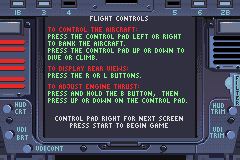
F-14 Tomcat on the Game Boy Advance delivers a surprisingly robust arcade-style flight experience that mirrors its SNES predecessor, Turn and Burn: No-Fly Zone. From the moment you take off, the controls are tight and responsive, thanks to a well-mapped D-pad and intuitive button layout. Piloting the F-14 feels weighty without feeling sluggish, striking a balance between accessible pick-up-and-play fun and the sense of authority you’d expect from a fighter jet simulator.
(HEY YOU!! We hope you enjoy! We try not to run ads. So basically, this is a very expensive hobby running this site. Please consider joining us for updates, forums, and more. Network w/ us to make some cash or friends while retro gaming, and you can win some free retro games for posting. Okay, carry on 👍)
The single-player campaign unfolds through a series of increasingly challenging missions, ranging from air superiority dogfights and ground-attack sorties to high-stakes interception runs. Each mission introduces new objectives—protect convoys, neutralize SAM sites, escort bombers—keeping the gameplay loop varied. Despite the portable form factor, mission briefings are clear, and HUD indicators provide vital feedback, ensuring you never get lost mid-flight.
One standout feature is the landing practice mode, which refines your skills on deck before critical missions. Touch-and-go drills and full-stop carrier landings both feature realistic glide angles and throttle management. This training segment adds depth and prepares you for later stages, where precision landings under pressure become essential for mission success.
Multiplayer support via the GBA Link Cable elevates replayability. Dogfighting a friend in split-screen may feel rudimentary by modern standards, but in 2001 it was revolutionary for a handheld. Exchanging tactics, blocking missiles, and executing formation maneuvers with another pilot injects fresh excitement long after you’ve cleared the single-player campaign.
Graphics
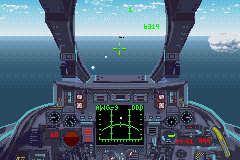
For a GBA launch title, F-14 Tomcat’s visuals are impressively sharp. The top-down perspective offers clear sightlines on enemy aircraft and ground targets. Sprites are detailed enough to distinguish between different jet types, SAM batteries, and naval vessels, while the color palette remains vibrant without overwhelming the small screen.
Although the GBA lacks true 3D hardware, developers ingeniously used sprite scaling and layering to simulate depth. Approaching targets grow in size, flares and missile trails leave dynamic streaks, and explosions bloom with convincing burst animations. Frame rate dips are rare, even during visually busy dogfight sequences, making the action fluid and responsive.
Environmental variety adds visual interest across theaters. You’ll fly over glittering ocean expanses, arid desert plains, and mountainous coastlines. Subtle details—like ship wakes in the water or shadows cast by passing clouds—enhance immersion. While distant terrain may appear blocky, it never detracts from gameplay clarity.
Compared to other GBA launch titles such as Iridion 3D, F-14 Tomcat opts for a more traditional 2D approach but still manages to feel cutting-edge for its time. Text overlays and status bars blend seamlessly with the action, ensuring you stay focused on the mission without cluttering the screen.
Story
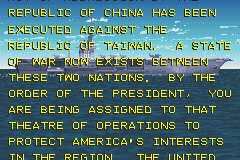
Departing from the loosely tied narrative of Turn and Burn, F-14 Tomcat introduces a geopolitical storyline set amid a hypothetical conflict between China and Taiwan. You assume the role of an elite F-14 pilot handpicked by the US government to safeguard American interests in the region. This new plot framework lends weight to each sortie, turning every engagement into a high-stakes diplomatic gambit.
Briefings are functional rather than cinematic—text blocks accompanied by simple images outline objectives and adversary profiles. While character development is minimal, the narrative stakes are clear: failure could escalate an already tense confrontation. This simplicity keeps the focus on action without overcomplicating the handheld experience.
Enemy pilots receive occasional radio chatter, heightening tension during close-quarters dogfights. Ground commanders relay status updates mid-mission, reminding you of time limits or shifting priorities. Although voice clips are absent, these scripted messages create a sense of dynamic battlefield communication.
By framing each mission within a broader conflict over Taiwan, the game adds thematic cohesion that was lacking in its SNES origin. The storyline won’t win any awards for depth, but it effectively underscores your role as a strategic asset, elevating routine target runs into impactful military operations.
Overall Experience
As one of the GBA’s launch titles from Majesco, F-14 Tomcat set an early benchmark for handheld flight games. Its blend of tight controls, varied mission design, and a staging narrative makes it more than a simple port—it feels tailor-made for a portable audience. Whether you’re a veteran flight-sim enthusiast or a newcomer seeking accessible aerial combat, there’s plenty here to engage.
The inclusion of landing practice and multiplayer modes demonstrates forward-thinking design, extending playthrough beyond the solo campaign. While modern gamers may balk at the absence of true 3D or voice acting, the core gameplay remains compelling and easy to pick up on the go.
Performance-wise, F-14 Tomcat runs smoothly and looks sharp on the GBA screen. Mission variety and escalating difficulty keep you returning for “just one more sortie,” while the link-cable battles offer unforgettable moments of competitive camaraderie.
Ultimately, F-14 Tomcat delivers a robust, pick-up-and-play flight experience that holds up decades after its release. Its straightforward storyline, enduring arcade-style gameplay, and thoughtful extras make it a worthy addition to any GBA library—especially for those craving fast-paced air combat in the palm of their hand.


Reviews
There are no reviews yet.