 Retro Replay Retro Replay gaming reviews, news, emulation, geek stuff and more!


Retro Replay Review
Gameplay
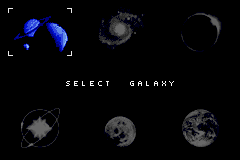
Orbient places you at the helm of a tiny celestial body with a deceptively simple objective: grow big enough to capture the sun in your orbit. From your first tentative steps in space, you’ll use the A Button to attract yourself toward the nearest planet and the B Button to repel away, creating a pendulum-like dance around your targets. This push-and-pull mechanic is easy to learn but hard to master, encouraging players to experiment with timing and positioning as they weave through dense fields of planets and satellites.
(HEY YOU!! We hope you enjoy! We try not to run ads. So basically, this is a very expensive hobby running this site. Please consider joining us for updates, forums, and more. Network w/ us to make some cash or friends while retro gaming, and you can win some free retro games for posting. Okay, carry on 👍)
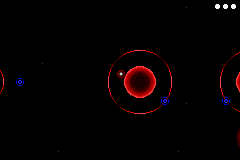
As you collect smaller planets and satellites, your star increases in size, opening up new opportunities for snaring larger objects. Attempting to collide with bodies bigger than you—or misjudging your trajectory around the sun—will result in a crash and cost you a life. This high-risk, high-reward system builds tension in every level, making each successful capture feel like a significant victory. Along the way, you’ll also spot bonus moons drifting through space; capturing these yields extra points and can tip the scales in your favor if you’re chasing a high score.
Difficulty ramps up smoothly: early stages feature sparse planetary clusters and forgiving gaps, while later levels teem with fast-moving objects demanding split-second decisions. Mastering the rhythm of attraction and repulsion is key to survival, as you’ll soon need to juggle multiple orbits simultaneously—snagging a bonus satellite here, dodging a massive planet there. Orbient’s gameplay loop is tight and satisfying, rewarding patience and precision with every orbit you secure.
For players seeking a deeper challenge, there’s an addictive scoreboard system that tracks your best runs, encouraging you to refine your technique and beat your personal records. Whether you have five minutes to fill or are settling in for an extended cosmic session, Orbient’s core mechanics remain as engaging on the hundredth playthrough as they were on the first.
Graphics
Orbient’s visual design leans into minimalist elegance, presenting planets, satellites, and the sun as luminous orbs set against the velvet-black backdrop of space. Each celestial body glows with crisp, vibrant colors—cool blues, fiery reds, mellow yellows—making it easy to distinguish friend from foe even in the heat of action. The stark contrast between your darkened star and the surrounding lights enhances spatial awareness, allowing you to plan complex orbital paths at a glance.
Animations flow smoothly, with particle trails and subtle halo effects that accentuate movements and collisions. When you successfully capture a planet, it merges seamlessly into your star with a brief pulsing glow, delivering sensory feedback that feels both weighty and gratifying. Conversely, crashing into an oversized object triggers a satisfying brief explosion, reminding you of the stakes without overstaying its welcome.
The user interface is deliberately unobtrusive: a simple life counter and a high-score display occupy minimal screen real estate, leaving the rest of the canvas wide open for your interstellar dance. Background music and ambient sound cues are likewise sparingly used, allowing the visual spectacle to take center stage. Overall, Orbient’s graphics strike a fine balance between simplicity and flair, ensuring clarity of play while retaining a polished, modern sheen.
Story
Orbient’s narrative is succinct and symbolic rather than literal, inviting players to interpret their cosmic journey through gameplay rather than cutscenes. You begin as a fledgling star, hungry for growth and facing the vast void of space. Each successful capture is a step toward cosmic prominence, an allegory for progression, ambition, and the delicate balance between appetite and survival.
Though there’s no extensive backstory or character development, the minimalistic setting sparks the imagination. The black expanse dotted with orbiting bodies suggests a larger universe teeming with life, secrets, and unseen challenges. By focusing on gameplay over story exposition, Orbient delivers an experience that feels both timeless and open-ended—perfect for players who prefer to craft their own narratives as they play.
Complementing the sparse narrative is a serene soundtrack that underscores your ascent from a minor celestial object to a commanding presence in orbit. Subtle crescendos play when you’re on the cusp of grabbing the sun, while more subdued tones accompany routine captures, reinforcing the emotional highs and lows of your stellar odyssey without words.
Overall Experience
Orbient excels as a pick-up-and-play arcade gem: its intuitive controls and clear visual language make it accessible to newcomers, while its layered mechanics and escalating challenges keep seasoned players coming back for more. Few games manage to feel both light and substantial, but Orbient strikes this balance beautifully. Every session feels purposeful, whether you’re chasing a personal best or simply relishing the flow of orbital navigation.
The game’s pacing is another highlight. Early levels act as a soft tutorial, easing you into the attract-and-repel dynamic. As you advance, the stakes rise organically, culminating in thrilling sequences where you juggle multiple orbits around increasingly aggressive planets. These moments deliver genuine adrenaline—akin to threading a needle at cosmic speeds.
Replayability is high, thanks to the universal appeal of high-score challenges and the delight of incremental improvement. With no overarching campaign to finish, Orbient’s longevity stems from your own drive to perfect each run. Whether you’re aiming for a quick five-minute session or a marathon attempt at the global leaderboard, this title stands as a testament to how elegantly simple mechanics can yield endlessly engaging gameplay.
For anyone seeking a minimalist yet deeply satisfying arcade experience, Orbient offers a stellar journey through space and strategy. Its blend of precise controls, striking visuals, and addictive challenge make it a must-play for fans of physics-based puzzles and high-score chases alike.


Reviews
There are no reviews yet.