 Retro Replay Retro Replay gaming reviews, news, emulation, geek stuff and more!
Retro Replay Review
Gameplay
A Ressha de Ikō MD delivers a robust and engaging real-time railroad simulation that strikes a fine balance between accessibility and depth. Players begin with a simple map and a handful of resources, and over the course of each scenario they must plan routes, build tracks, and optimize train schedules to turn profit and spur regional growth. The dual-phase day/night cycle provides a satisfying rhythm: lay down infrastructure in daylight, then refine your timetables under the cover of night.
(HEY YOU!! We hope you enjoy! We try not to run ads. So basically, this is a very expensive hobby running this site. Please consider joining us for updates, forums, and more. Network w/ us to make some cash or friends while retro gaming, and you can win some free retro games for posting. Okay, carry on 👍)
The scenario-based structure offers five distinct challenges, each escalating in complexity and scale. Beginners will appreciate the practice scenario that eases them into track-laying mechanics, while veterans will be tested by the highest-difficulty maps that demand meticulous planning and precise resource management. Adding to the replay value are three game-speed settings, allowing you to accelerate through slow-building networks or savor each incremental expansion in real time.
One of the most compelling aspects of the gameplay is the dynamic city growth around your rail lines. As stations spring up and towns flourish, your income increases, creating a rewarding feedback loop. Strategic station placement, judicious track upgrades, and timely schedule adjustments all factor into whether a region thrives or stalls. This emergent development system keeps each playthrough fresh and encourages creative solutions to logistical puzzles.
Graphics
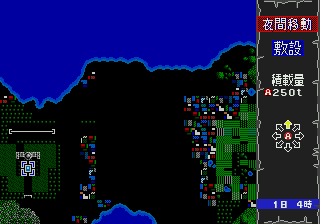
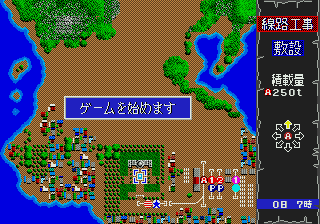
On the visual front, A Ressha de Ikō MD faithfully captures the charm of early 16-bit era simulations. The game presents an isometric overhead perspective, with crisp, colorful tiles that distinguish terrain types—farmland, urban blocks, hills, and water—at a glance. Trains glide smoothly along tracks, and the subtle animations of station platforms and growing buildings bring life to otherwise static maps.
While purists might point out the graphical limitations compared to modern titles, the deliberate pixel art style is both functional and nostalgic. Icons and menus are clearly labeled, and the contrast between track lines, station markers, and background scenery ensures that critical information never gets lost. Seasoned players will quickly appreciate the clarity of the interface, which doesn’t obscure the map even when densely populated with tracks.
Special effects are sparingly used but effective: nighttime schedule screens feature a darker overlay, helping the player focus on timetables and train icons without visual clutter. Water reflections, simple shadowing under trains, and blinking station lights all contribute to a cohesive aesthetic. Overall, A Ressha de Ikō MD’s graphics may feel retro, but they serve the gameplay impeccably and evoke a satisfying sense of progress as your rail empire spreads across the map.
Story
As part of the A-Train series, A Ressha de Ikō MD does not rely on a traditional narrative with characters and cutscenes; instead, its “story” is written by the player’s own decisions and strategic acumen. Each scenario sets out distinct geographic layouts and economic conditions—ranging from a sparsely populated frontier to an established urban network with stiff financial constraints. These scenarios serve as narrative scaffolding, presenting unique challenges and goals that drive the gameplay forward.
The implicit storyline emerges as towns blossom around your railway lines: a lonely station becomes a bustling commercial hub, and sleepy villages transform into industrial centers. Watching these developments unfold creates a compelling sense of agency—you’re not just building tracks, you’re shaping the economic destiny of entire regions. In this sense, the game’s story is less about scripted events and more about emergent outcomes based on your planning prowess.
Players who enjoy forging their own tales will find satisfaction in the sandbox-like freedom the game affords. Although there are no voiced characters or branching dialogues, the interplay between financial risks, land development, and technological upgrades yields a narrative as engaging as any plot-driven title. Every decision—where to place the next station, when to add a freight service, how to expand your rolling stock—contributes to an evolving tale of industrial progress.
Overall Experience
A Ressha de Ikō MD shines as a classic railroad simulator that remains surprisingly engaging decades after its original release. Its user-friendly interface, coupled with deep economic and logistical systems, makes it approachable for newcomers while offering enough strategic complexity to satisfy seasoned players. The satisfaction of watching a once-empty map come alive under your direction is as rewarding today as it was in its heyday.
Its modular scenario design and adjustable game speeds allow you to tailor the experience to your preferred playstyle—whether that’s a relaxed building session or a high-stakes logistical marathon. The real-time mechanics introduce a subtle tension that keeps you on your toes, especially when financial pressures mount or unexpected delays threaten your schedules. Every triumph feels earned, and every setback encourages you to refine your approach.
For retro gamers and simulation enthusiasts alike, A Ressha de Ikō MD offers a timeless blend of strategy, planning, and emergent storytelling. Its straightforward presentation belies a depth of systems that can keep you engrossed for hours on end. If you’ve ever dreamed of masterminding a rail network from the ground up—or simply enjoy watching digital cities grow in response to your logistical wizardry—this title remains a must-play classic in the A-Train lineage.


Reviews
There are no reviews yet.