 Retro Replay Retro Replay gaming reviews, news, emulation, geek stuff and more!
Retro Replay Review
Gameplay
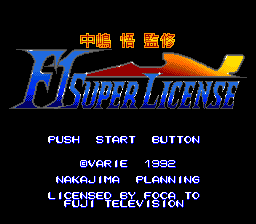
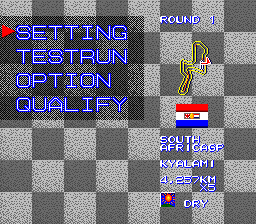
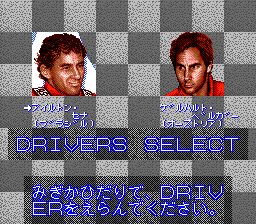
Nakajima Satoru Kanshū F1 Super License offers a robust and accessible racing experience through its three distinctive modes: GP mode, Spot mode, and Test mode. In GP mode, players embark on a full 16-race season where they choose their driver and team, manage race strategies, and chase the 1992 championship. This mode brings a satisfying sense of progression, as success on the track unlocks opportunities to fine-tune your car and climb the standings.
(HEY YOU!! We hope you enjoy! We try not to run ads. So basically, this is a very expensive hobby running this site. Please consider joining us for updates, forums, and more. Network w/ us to make some cash or friends while retro gaming, and you can win some free retro games for posting. Okay, carry on 👍)
Spot mode is a welcome addition for those who prefer quick races or want to challenge themselves on a specific circuit. With a full grid of AI opponents, you can recreate classic F1 battles or simply jump into the action without the commitment of a full season. Test mode, meanwhile, serves as an invaluable practice ground—here you can hone your skills, experiment with throttle control, and learn cornering lines before taking on the punishing GP schedule.
Between races, the game’s setup menu empowers players to adjust engine power, tire compounds, brake balance, suspension stiffness, and rear wing angle. While these options might seem daunting to newcomers, they reward experimentation by drastically affecting handling and lap times. This layer of customization gives the gameplay depth and encourages repeated runs to find the optimal setup for each track’s unique demands.
Graphics
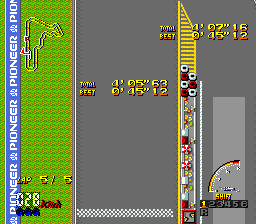
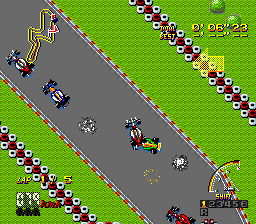
Visually, F1 Super License marks a return to the top-down perspective that made the original F1 Grand Prix a standout on the Mega Drive. The overhead view provides clear sightlines into upcoming turns and lets you appreciate the sweeping layouts of classic circuits. While lacking the immersive cockpit windows of its predecessor F-1 Hero MD, this angle emphasizes strategic positioning and rapid decision-making as you navigate tight chicanes and long straights.
Track details such as grandstands, pit buildings, and pit crews are rendered with crisp 16-bit sprites that retain the charm of the era. Car models are slightly simplified, but they’re color-coded and well animated, making it easy to identify rival teams and teammates at a glance. The smoke and skid-mark effects during slides are modest but effective, adding to the sense of speed when you’re pushing your car to its limits.
The user interface is clean and unobtrusive: lap times, position, and gear indicators sit neatly along the screen edges, ensuring you remain focused on the road ahead. Occasional frame rate dips can occur when multiple cars jostle for position in tight sections, but these moments are brief and rarely disrupt the flow of the race. Overall, the graphics strike a fine balance between playability and period-accurate presentation.
Story
As a simulation of the 1992 Formula One season, Nakajima Satoru Kanshū F1 Super License doesn’t spin a narrative in the traditional sense, but it does weave in the real-world context of that pivotal year. You’re immersed in an era dominated by Williams-Renault’s technical prowess, yet the game lets you step into any driver’s shoes—from championship favorites to mid-field battlers—crafting your own racing odyssey.
The game’s “story” emerges organically through the ebb and flow of the season: a surprise podium at Monaco, a mechanical failure at Monza, or a late-race charge at Spa-Francorchamps all contribute to a personalized championship tale. Each race outcome shapes your relationship with sponsors and the paddock’s whispered expectations, giving a sense of narrative momentum without scripted cutscenes.
Nakajima’s presence as the series’ overseer imbues the title with authenticity. Although you won’t find interviews or voice-overs, the official FOCA license ensures that team names, circuits, and driver rosters mirror reality. This commitment to faithful representation allows fans of the sport to feel genuinely connected to the high-stakes drama of Formula One in the early ’90s.
Overall Experience
Nakajima Satoru Kanshū F1 Super License stands as a fitting conclusion to the Satoru Nakajima F1 trilogy on the Mega Drive. Its blend of intuitive top-down racing, deep vehicle tuning, and authentic 1992 season content delivers strong replay value for both casual gamers and die-hard F1 enthusiasts. Whether you’re chasing the perfect lap time in Test mode or battling through a full GP calendar, the game offers a satisfying mix of challenge and reward.
While modern gamers accustomed to 3D graphics and dynamic cameras might find the perspective dated, the clarity it provides actually enhances strategic decision-making. The controls are tight, responsive, and customizable—allowing beginners to accelerate through corners without spinouts or letting veterans extract every tenth of a second from their car setups. The inclusion of save slots for GP mode and time records ensures your progress—and bragging rights—are preserved.
In conclusion, F1 Super License captures the essence of early-’90s Formula One with authenticity and accessible mechanics. It may not feature voice commentary or full-motion video, but its strength lies in addictive gameplay loops and the freedom to shape your own racing narrative. For retro racing fans or anyone intrigued by the heritage of Satoru Nakajima’s F1 legacy, this title remains a must-have on the Mega Drive platform.


Reviews
There are no reviews yet.