 Retro Replay Retro Replay gaming reviews, news, emulation, geek stuff and more!
Retro Replay Review
Gameplay
Star Trek: The Next Generation – Future’s Past offers a multifaceted gameplay experience that faithfully captures the feel of the beloved TV series. You’ll split your time between the bridge of the USS Enterprise, tactical ship-to-ship combat, and down-to-planet away missions. Each mode feels distinctive: commanding the bridge brings strategic depth, combat sequences deliver arcade-style thrills, and planetary excursions mix action with light puzzle solving. The variety ensures that no two missions ever feel identical.
(HEY YOU!! We hope you enjoy! We try not to run ads. So basically, this is a very expensive hobby running this site. Please consider joining us for updates, forums, and more. Network w/ us to make some cash or friends while retro gaming, and you can win some free retro games for posting. Okay, carry on 👍)
On the bridge, you have access to all primary stations: Conn, Communication, Sensors, Computer, Engineering, Briefing Room, Tactical, and Transporter. This setup faithfully mirrors The Next Generation’s command hierarchy. Setting a course, scanning alien worlds, allocating power to shields and engines, and coordinating away team beaming sequences all require thoughtful decisions. The interface is intuitive, but novices may find the numerous options overwhelming at first. Veterans of the franchise will appreciate the depth and authenticity.
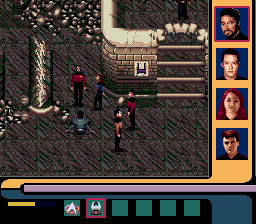
Away missions challenge you to assemble a four-member team based on individual strengths and special abilities. Dr. Crusher can heal teammates, Geordi and Data handle dark environments, and Data alone can survive without oxygen—these roles become critical in hazardous settings. Missions unfold from a top-down view, combining real-time skirmishes with environmental puzzles. Using your tricorder to find clues and interact with objects injects a satisfying sense of exploration and problem solving.
Ship-to-ship combat also uses a top-down perspective, emphasizing tactical positioning and resource management. You’ll fire phasers and photon torpedoes while monitoring shields and dodging incoming fire. Moments of high tension arise when your hull integrity dips below critical levels—should you push on or surrender? This risk-reward dynamic adds genuine stakes to each engagement.
While the core gameplay loop remains the same across SNES and Genesis, the Genesis version boasts a noticeably faster frame rate during combat, away missions, and even bridge operations. This speed boost makes resource allocation and battle reactions feel snappier, though the SNES version’s steadier pacing can appeal to players who prefer a more measured approach. Both versions deliver solid controls, but your preference for speed or precision may guide your platform choice.
Graphics
For a mid-’90s console title, Future’s Past delivers surprisingly detailed visuals that capture the aesthetic of Starfleet technology and alien worlds. Bridge screens are crisp and legible, with clear icons for each station. Away mission maps feature distinct floor tiles and environmental hazards, while starship sprites convey the sleek design of Federation and Romulan vessels. Though limitations of the era mean no high-resolution textures, the art direction does an admirable job of conveying the franchise’s look and feel.
On SNES, color palettes are rich and well-balanced. Romulan bases glow with ominous green hues, and planetary terrain offers enough variety to keep exploration interesting. The Genesis version trades some palette saturation for quicker animation, resulting in faster ship maneuvers and smoother character movement on planets. Those who prize performance over color depth may gravitate toward the Genesis port, while SNES players can appreciate slightly more vibrant backdrops.
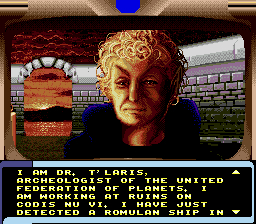
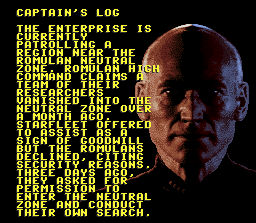
Animation during combat feels weighty and deliberate, with phaser beams and photon torpedoes leaving visible trails. Away teams animate basic attack and movement sequences clearly, though occasional frame drops can occur when multiple effects occur simultaneously. Bridge cutscenes—such as communications with the Romulans or Federation command—feature simple scrolling text and occasional character portraits, adhering to the hardware’s capabilities yet still delivering narrative punch.
Graphical differences in away mission maps between the two platforms are minor but noticeable: wall angles, object placement, and lighting cues may shift slightly. These alterations can affect how puzzles play out, requiring different paths or item usage. Ultimately, both versions present a cohesive visual experience, with only platform purists likely to dispute one over the other.
While neither port competes with 32-bit consoles, Future’s Past stands tall among 16-bit adventures. Its graphical fidelity, thoughtful color schemes, and faithful Star Trek flair make it one of the more polished titles of its generation. If you long for TNG visuals on classic hardware, this game checks that box admirably.
Story
The narrative premise is classic Next Generation intrigue: Romulans request permission to enter the Neutral Zone to search for missing researchers. The USS Enterprise is dispatched to monitor these activities and uncover the Romulans’ true motives. This setup immediately evokes the series’ trademark blend of diplomacy, espionage, and moral quandaries, placing you squarely in Captain Picard’s command chair.
Missions unfold in a linear fashion, but the writing consistently honors each scenario’s stakes. Bridge briefings feel authentic, with Starfleet Intelligence updates delivered through text scrolls that recall the show’s style. Dialogue options during comm calls occasionally influence minor outcomes, giving you just enough agency to feel like you’re steering the narrative rather than following a pre-set path.
Away missions often advance the plot, revealing fragments of the Romulan researchers’ fate. Environmental storytelling—abandoned labs, flickering consoles, or encrypted data logs—serves up intrigue and encourages careful tricorder scans. Every recovered data pad or holographic log deepens the mystery and drives you to piece together the Romulans’ hidden agenda.
Ship battles tie into the story by punctuating moments of diplomatic tension with sudden hostilities. Surprise skirmishes with Romulan warbirds heighten the sense of betrayal, emphasizing that peace on the Neutral Zone is as fragile as ever. The pacing between exploration, combat, and narrative exposition feels balanced, though a handful of fetch-quest detours can slow the plot mid-stream.
Ultimately, Future’s Past channels The Next Generation’s spirit rather than attempting grand, series-defining revelations. If you’re seeking philosophical debates or character-driven monologues, this title offers lighter fare—but it remains true to the franchise’s core themes of exploration, conflict, and honor.
Overall Experience
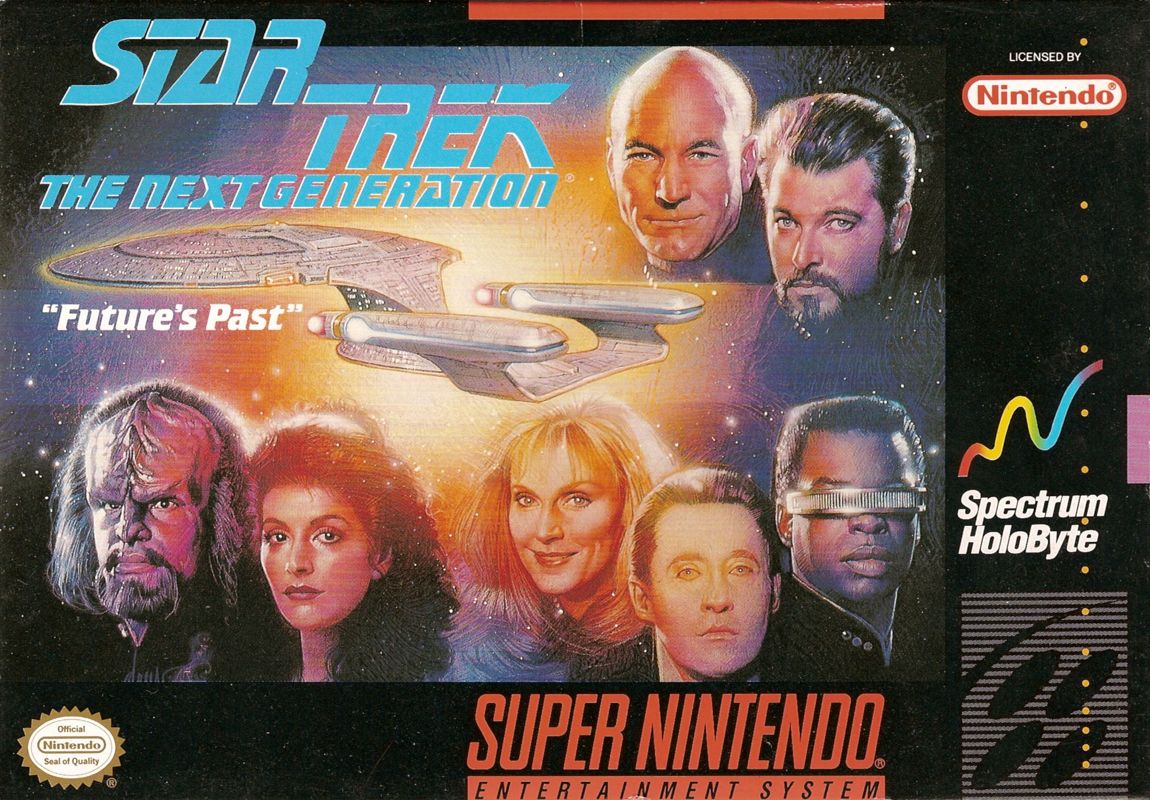
Star Trek: The Next Generation – Future’s Past stands as a compelling console adaptation that delivers varied gameplay, solid visuals, and a respectful nod to the series’ ethos. Whether you’re plotting a course on the bridge, duking it out with enemy vessels, or leading an away team into the unknown, the game presents distinct modes that keep the experience fresh over multiple missions.
The divergence between SNES and Genesis ports offers players a choice: pick the Genesis version for speed and responsiveness, or the SNES edition for slightly richer colors and steadier pacing. Both versions receive the same core content, ensuring that your platform decision comes down to personal preference rather than missing features.
Puzzle-driven away missions and strategic ship battles complement the narrative without ever overstaying their welcome. Occasional control quirks or frame-rate dips do little to derail the overall enjoyment. Instead, they serve as reminders of the hardware era and contribute to the retro charm.
For fans of Star Trek: The Next Generation, Future’s Past is more than a nostalgia trip—it’s a chance to step into the captain’s chair and tackle authentic Federation dilemmas. Newcomers can appreciate the game’s structured missions and clear tutorial guidance, although they may miss some of the deeper lore references.
Overall, Future’s Past successfully bridges the gap between arcade action and franchise fidelity, offering an engaging adventure that captures the spirit of Captain Picard and his crew. It may not revolutionize the genre, but it delivers a polished, enjoyable Star Trek experience on 16-bit hardware.


Reviews
There are no reviews yet.