 Retro Replay Retro Replay gaming reviews, news, emulation, geek stuff and more!
Retro Replay Review
Gameplay
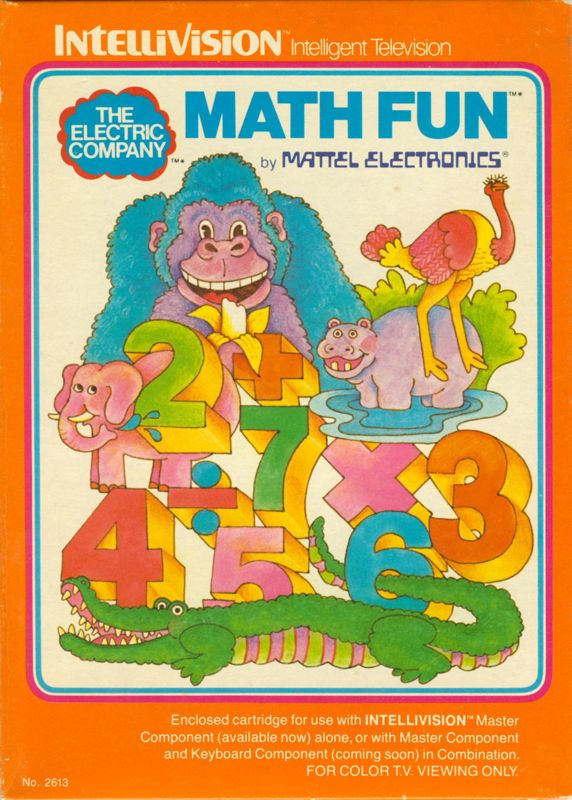
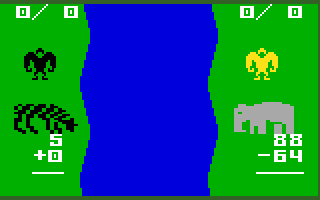
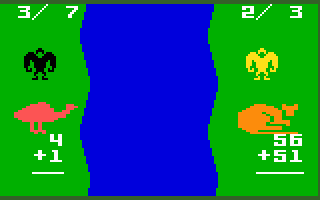
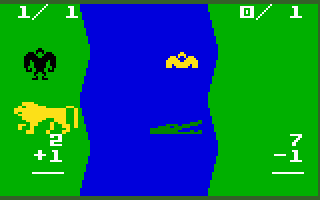
The Electric Company Math Fun offers a straightforward yet compelling gameplay loop that pits you against time and arithmetic. Players step into the role of a curious gorilla venturing through a lush jungle, where each step forward triggers an encounter with a math-challenged creature. To progress, you must solve the creature’s math problem as quickly as possible; a correct answer allows your gorilla to continue its trek, while an incorrect one sends it splashing into the river, halting its journey until you redeem yourself with another correct response.
(HEY YOU!! We hope you enjoy! We try not to run ads. So basically, this is a very expensive hobby running this site. Please consider joining us for updates, forums, and more. Network w/ us to make some cash or friends while retro gaming, and you can win some free retro games for posting. Okay, carry on 👍)
One of the standout features is its support for both single-player and two-player modes. In head-to-head mode, each contestant controls their own gorilla on parallel pathways, racing to answer math problems faster than their opponent. This competitive element injects a lively energy into the learning process, motivating players to sharpen their skills under pressure. The cooperative mode can also be seen when two players choose similar difficulty levels, allowing for shared achievements and friendly encouragement.
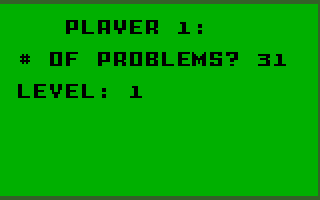
With eighteen adjustable difficulty levels, Math Fun accommodates a wide range of skill sets and age groups. Beginners can start with simple addition and subtraction before gradually moving on to multiplication, division, and mixed operations. The level selector for each player means that in multiplayer sessions, one child can tackle a higher grade level while the other works on more foundational problems. This flexibility ensures that both novice learners and more advanced students find the gameplay both challenging and rewarding.
Graphics
While Math Fun’s graphics may seem modest compared to modern gaming standards, its vibrant cartoon aesthetic remains charming and purposeful. The jungle backdrop is rendered in warm, inviting hues of green and brown, punctuated by brightly colored flora and fauna that frame each math encounter. This simple visual style keeps the focus on the educational content while still offering a delightful atmosphere for young players.
The gorilla characters are animated with smooth, exaggerated motions, making each correct leap or brief river plunge feel playful rather than punitive. Character sprites for the math-challenged creatures vary from mischievous monkeys to lumbering hippos, adding a touch of whimsy to every quiz moment. These endearing designs help reduce math anxiety by presenting questions in a familiar, game-like context rather than a sterile test environment.
On the technical side, animations are fluid enough to maintain engagement without unnecessary distraction. Sound effects—such as the splash of the river or the celebratory jingle after a correct answer—complement the visuals without overwhelming them. Though far from AAA polish, the graphics and audio design work in harmony to create an environment where learning feels like play.
Story
Math Fun doesn’t rely on an elaborate narrative arc; instead, it offers a light thematic framing that casts players as gorilla explorers on a quest to traverse the jungle. Each new math problem represents a natural obstacle in the gorilla’s path, reinforcing the idea that learning can be a journey filled with obstacles to overcome. This minimal story approach ensures that the educational focus remains front and center while still giving children a motivating context for their efforts.
The recurring motif of river crossings serves as both a playful setback and an opportunity for redemption. A wrong answer isn’t a game over, but a chance to try again, emphasizing persistence and resilience. This gentle narrative structure promotes a growth mindset: mistakes simply mean you need one more correct answer to get back on track, mirroring real-world learning where errors are stepping stones rather than dead ends.
Though Story Mode isn’t extensive, the simple premise of “journey through the jungle by mastering math” provides enough cohesion to keep learners invested. The absence of lengthy cutscenes or text walls keeps the momentum brisk, making it a suitable choice for short play sessions or classroom use where time is limited but engagement is key.
Overall Experience
The Electric Company Math Fun strikes a fine balance between education and entertainment. Its core mechanics are easy to grasp, yet the time-based challenge and competitive two-player option inject a sense of urgency that keeps learners engaged. The adjustable difficulty levels make it equally appealing to a broad age range, from early elementary students brushing up on basic operations to older kids seeking speed drills in more advanced arithmetic.
While the lack of a deep narrative or high-end graphics may deter gamers accustomed to lavish production values, Math Fun’s strengths lie precisely in its focused design. It’s an ideal tool for parents and educators who want an interactive supplement to traditional math drills. By gamifying problem-solving and rewarding quick thinking, the title transforms routine practice into an enjoyable pastime.
Ultimately, Math Fun delivers on its promise: it’s a fun, flexible, and pedagogically sound game that encourages repeated play. Whether used at home or in a classroom setting, it helps young learners build confidence in math through playful mechanics and a friendly jungle theme. For anyone seeking an engaging way to reinforce arithmetic skills, The Electric Company Math Fun offers a compelling package.


Reviews
There are no reviews yet.