 Retro Replay Retro Replay gaming reviews, news, emulation, geek stuff and more!
Retro Replay Review
Gameplay
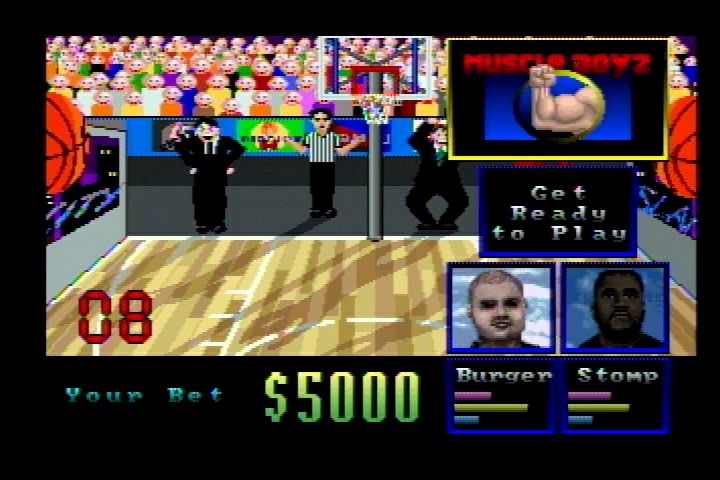
White Men Can’t Jump delivers an accessible yet surprisingly deep basketball experience by placing you right in the heart of streetball action. Players start by wagering cash on one-on-one or two-on-two matchups, with the amount you bet directly influencing the intensity of the game. The looseness of the rules—no strict foul calls beyond goal-tending and ball-clearing—encourages creative playstyles, from shoving opponents to perfecting steal timing and pulling off flashy trick shots.
(HEY YOU!! We hope you enjoy! We try not to run ads. So basically, this is a very expensive hobby running this site. Please consider joining us for updates, forums, and more. Network w/ us to make some cash or friends while retro gaming, and you can win some free retro games for posting. Okay, carry on 👍)
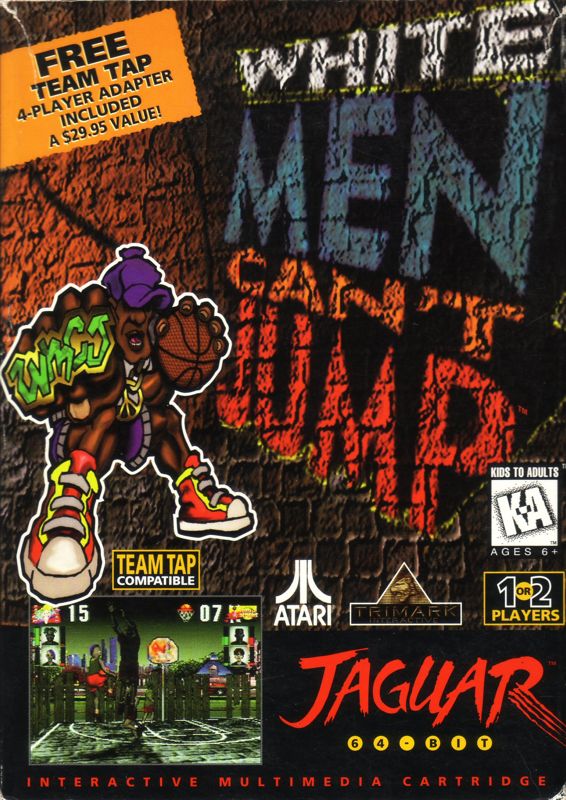
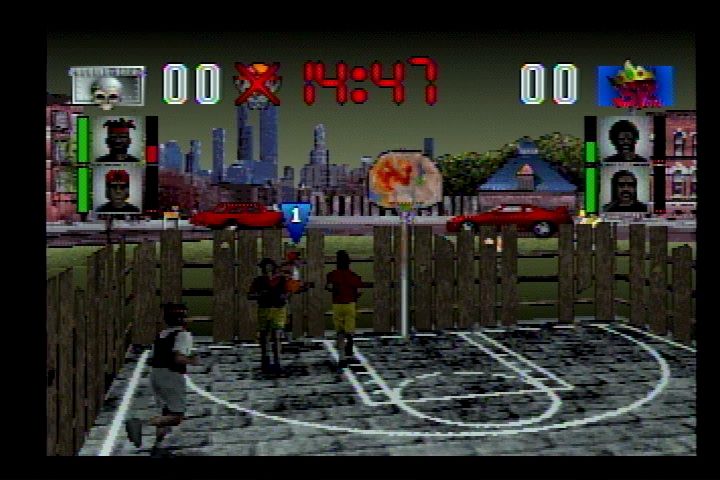
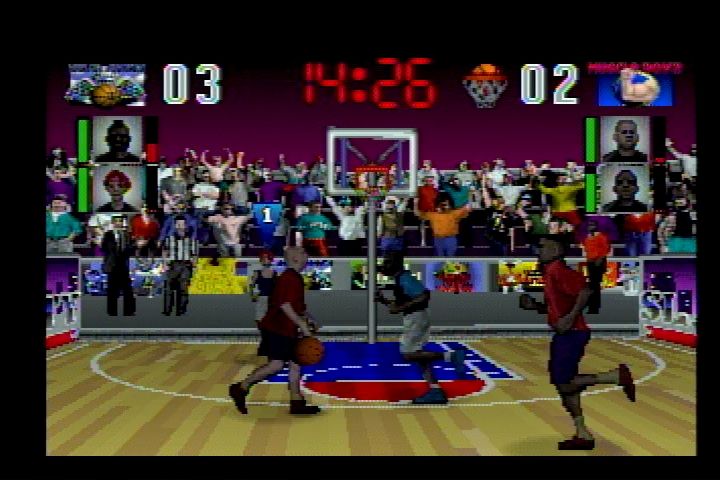
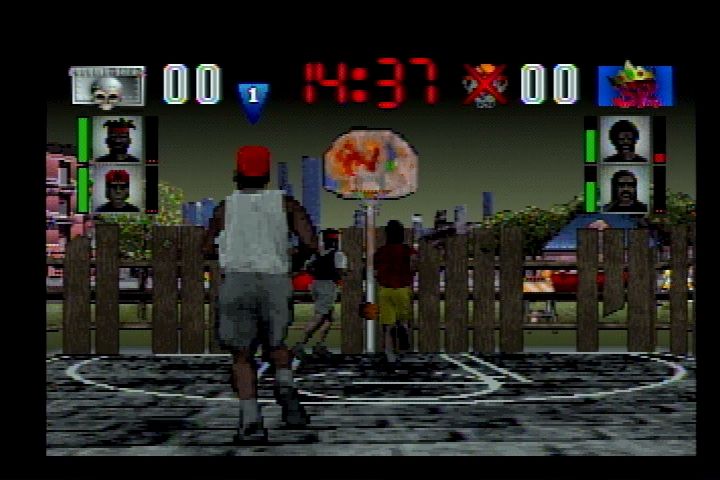
The camera is stationed at the half-court line but dynamically pans and zooms to keep up with the fast-paced exchanges beneath the rims. This viewpoint offers a clear view of player movement and allows you to anticipate cuts and screen plays, while occasional zoom-ins highlight high-flying dunks and dramatic ball steals. Controls remain responsive whether using a standard gamepad or the Jaguar Team Tap adapter for multiplayer, ensuring that dribbling, passing, and shooting all feel tight and intuitive.
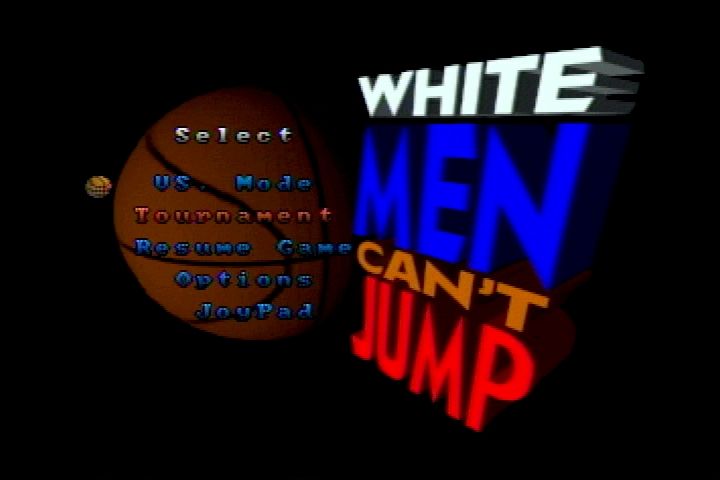
Tournament progression forms the backbone of the gameplay loop. Earning $5,000 in street matches grants you entry into the Slam City tournament, where stakes—and crowds—are even higher. The ability to save your progress in this mode is a welcome feature; it lets you pause your career trajectory without forfeiting hard-won cash. Single matches and custom game settings (time limits, scoring systems, control schemes) further tailor each session, making pickup games as rewarding as long-term playthroughs.
Graphics
Visually, White Men Can’t Jump captures the raw, sun-soaked courts of city parks and suburban gyms with convincing authenticity. The player models are well-defined, emphasizing exaggerated movements like ankle-breaking crossovers and high-arched jump shots. Each court environment features distinct graffiti, chain-link fences, and localized crowd reactions that breathe life into every alley and urban recreation center.
Animation quality shines when players interact physically—shoulder checks, shoves, and rebounds all exhibit smooth transitions and appropriate weight. The dynamic camera adjustments highlight these animations without ever sacrificing clarity. Occasional frame rate dips appear only during the most crowded tournament matches but rarely detract from the core action.
Lighting and shading work in tandem to evoke various times of day, from blistering afternoon sun to moody evening matchups under floodlights. Subtle details like dust kicked up from players’ shoes and occasional lens flares add polish to the presentation. While not a graphical showcase by modern standards, the art direction effectively conveys the grit and glamour of streetball culture.
Story
White Men Can’t Jump doesn’t rely on a deep narrative; instead, it leans on the familiar premise of hustling through street matches to earn a shot at glory. Drawing inspiration from the 1992 film, the game evokes the same sense of camaraderie and rivalry that made the original movie a cult classic. Cutscenes and brief character dialogues bookend tournament rounds, providing just enough context to keep you invested in your rise from unknown underdog to Slam City contender.
Character selection offers a modest amount of personalization, allowing you to choose from fifteen teams, each with its own playstyle and regional flavor. Though personalities remain archetypal—brash showman, silent enforcer, flashy sharpshooter—their dialogue and trash-talk bring color to every pickup game. Progression feels tangible: as your reputation grows, so do the stakes, reinforcing the narrative of an underdog grinding his way to the top.
While story-driven gamers may crave more plot twists, the simple “earn your way into the big tournament” framework suits the pick-up-and-play design. Moments of triumph—such as a buzzer-beater in a high-stakes match—carry genuine weight thanks to the modest storytelling scaffolding. In essence, the narrative complements rather than overshadows the gameplay, making it a seamless part of the overall experience.
Overall Experience
At its core, White Men Can’t Jump excels as a party game and a solo hustle simulator. The flexible match options accommodate quick bouts during a lunch break or marathon sessions with friends on the couch. The inclusion of up to four players via the Jaguar Team Tap adapter transforms living rooms into rowdy street courts, where bragging rights and virtual cash stack up in equal measure.
The risk-and-reward mechanic of wagering adds a thrilling edge to each encounter. Playing it safe on small bets can feel almost meditative as you practice moves and hone timing, while a big bet brings tension that few sports titles replicate. Saving your progress in tournament mode alleviates time constraints, allowing you to chip away at your career over multiple sittings without losing momentum.
Though not as feature-heavy as modern sports sims, this adaptation of White Men Can’t Jump captures the essence of street basketball and the spirit of its filmic roots. The intuitive controls, vibrant courts, and authentic sound design create a compelling urban playground. Whether you’re after casual hoops fun or a competitive gauntlet, the game delivers an engaging streetball package that stands the test of time.


Reviews
There are no reviews yet.