 Retro Replay Retro Replay gaming reviews, news, emulation, geek stuff and more!
Retro Replay Review
Gameplay
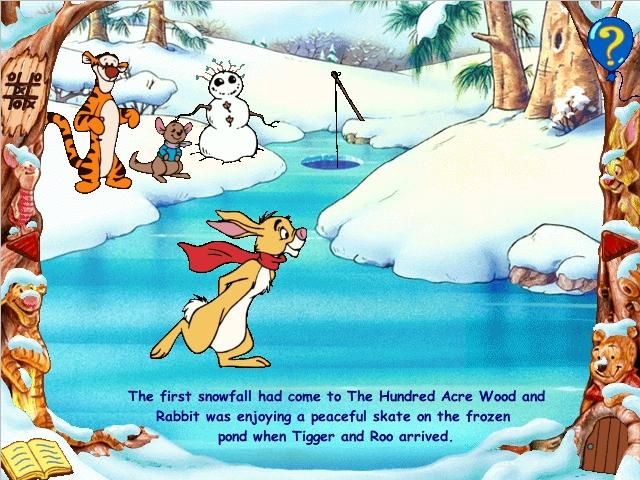
Disney’s Animated Storybook: Winnie the Pooh & Tigger Too takes the familiar page-turning mechanics of a digital storybook and layers in gentle interactivity that keeps young players engaged. Each screen functions as both a narrative beat and a small playground—text is highlighted word by word as it’s read aloud, guiding emergent readers through the tale while clickable hotspots animate beloved characters. Navigation is handled with simple arrow buttons, making it easy for children to move forward or back at their own pace.
(HEY YOU!! We hope you enjoy! We try not to run ads. So basically, this is a very expensive hobby running this site. Please consider joining us for updates, forums, and more. Network w/ us to make some cash or friends while retro gaming, and you can win some free retro games for posting. Okay, carry on 👍)
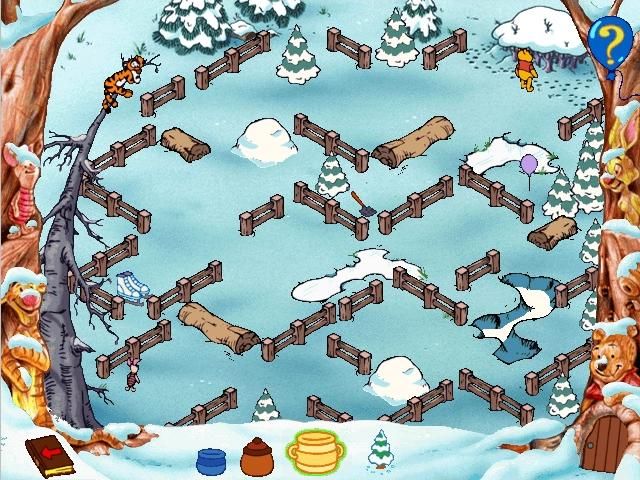
As players explore the Hundred Acre Wood, a glowing icon appears whenever a mini-game is available, seamlessly integrating gameplay without pulling kids too far from the story. The four mini-games each feature three difficulty levels, introducing mild challenges that grow with the player’s confidence. From memory matching with Tigger’s bounces to a simple maze guiding Pooh to his friends, these diversions reinforce pattern recognition, problem-solving, and patience.
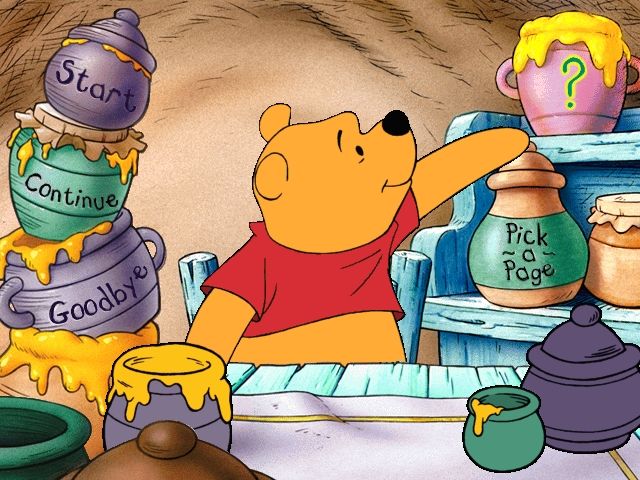
The controls are intuitive: click an object to trigger an animation, select a tool to overcome an obstacle, or choose a square on the Tic-Tac-Toe grid with a single tap or click. Transitions back to Pooh’s house—the home screen hub—are handled through a charming exit-door animation, where children can then select help, restart the story, jump to another chapter via map, or save their progress. The straightforward layout ensures even the youngest players can self-navigate without frustration.
Graphics
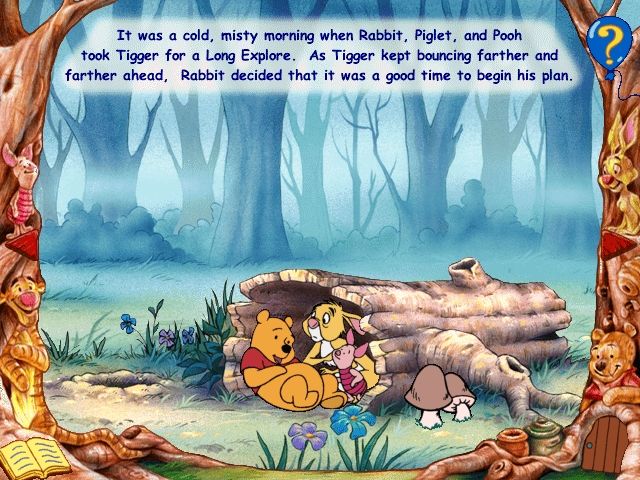
Visually, Winnie the Pooh & Tigger Too is a faithful recreation of the classic hand-drawn Disney style. Rich pastel backgrounds depict the gentle contours of the Hundred Acre Wood, while character sprites move with a satisfying bounce that captures each friend’s personality—Tigger’s springiness, Pooh’s honey-loving lumber, Piglet’s timid hop. The color palette is warm and inviting, evoking the watercolor look of the original animated shorts.
Interactive elements respond with small flourishes—leaves rustle when clicked, honey pots jiggle, and Tigger’s stripes ripple as he bounces. These details may seem minor, but they lend a tactile quality to each page and reward curiosity. Text highlighting is rendered in a contrasting hue that remains easy to read against the busy backgrounds, ensuring narration cues never get lost in the scenery.
Overall performance on modern hardware remains smooth, with no noticeable lag or stutter as you flip through pages or launch mini-games. The user interface design is uncluttered: simple buttons and icons float unobtrusively at the edges of the screen, allowing the story’s art to remain front and center. For a piece of software originally released in the late ’90s, its visual charm holds up remarkably well.
Story
The narrative centers on Tigger’s boundless energy and its unintended consequences for his friends in the Hundred Acre Wood. When Tigger’s bouncing becomes too much, Pooh, Piglet, Rabbit, Roo, and Christopher Robin collaborate to teach him that even good intentions can go awry. Along the way, Tigger learns about empathy, boundaries, and the give-and-take of friendship—timeless lessons delivered in a lighthearted, non-didactic way.
Storybook navigation mirrors the rhythm of a read-aloud session, with narration that doubles as a gentle performance. Each page’s text is concise, reinforcing vocabulary for early readers without overwhelming them. The voiceover work is genuine and warm, evoking familiarity for fans of the TV series and maintaining the story’s gentle pacing.
Embedded within the tale are natural teaching moments: Pooh’s patience in the maze mini-game underscores perseverance, Rabbit’s vegetable-matching challenge highlights order and categorization, and a friendly game of Tic-Tac-Toe with Roo encourages strategic thinking. These narrative-driven puzzles strengthen the bond between story and play, making each lesson feel earned rather than forced.
Overall Experience
Disney’s Animated Storybook: Winnie the Pooh & Tigger Too offers a sweet, low-pressure introduction to interactive storytelling for preschoolers and early elementary children. Its seamless blend of narration, clickable animations, and simple mini-games creates an immersive environment that both entertains and educates. Parents and teachers will appreciate the pacing, which respects short attention spans while encouraging repeat engagement.
Replay value is built into the adjustable difficulty levels of each mini-game, allowing families to revisit the title as children grow. Though brief by today’s standards, the story is complemented by hidden animations and subtle interactions that encourage exploration beyond a single playthrough. Returning to Pooh’s home hub for collectibles or help feels like returning to a familiar friend’s house, further cementing the cozy atmosphere.
While modern children accustomed to flashy 3D graphics or online multiplayer may find it quaint, the game’s nostalgic charm and educational emphasis make it a worthy addition for anyone seeking screen time with gentle morals. The combination of classic Disney artwork, polished voice narration, and thoughtfully designed interactivity ensures that Winnie the Pooh & Tigger Too remains a delightful journey through friendship and responsibility.

Reviews
There are no reviews yet.