 Retro Replay Retro Replay gaming reviews, news, emulation, geek stuff and more!
Retro Replay Review
Gameplay
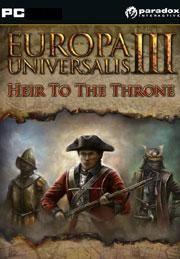
Europa Universalis III: Heir to the Throne builds on the intricate, open‐ended sandbox that the series is known for, placing you firmly in charge of a nation’s destiny. The expansion refines diplomacy by introducing a versatile casus belli system, which differentiates between motives for war—be it territorial expansion, dynastic claims, or religious crusades. Each type of casus belli now influences the terms of peace: you may gain more prestige from a just war or suffer greater infamy if your justification is weak, adding strategic weight to each conflict.
(HEY YOU!! We hope you enjoy! We try not to run ads. So basically, this is a very expensive hobby running this site. Please consider joining us for updates, forums, and more. Network w/ us to make some cash or friends while retro gaming, and you can win some free retro games for posting. Okay, carry on 👍)
In addition to external affairs, Heir to the Throne deepens internal politics with a robust succession mechanic. Should your ruler die heirless or underage, a regency period ensues, during which factions vie for influence and national stability can waver. Low‐legitimacy monarchs face pretenders and internal rebellions, turning routine stability management into a potential crisis. This feature adds an extra layer of challenge for both newcomers and veterans, as domestic unrest can erupt suddenly and reshape your long‐term plans.
Beyond war and succession, the expansion preserves the series’ core pillars—trade, colonization, state religion, and internal policy. You can still dictate economic development, craft diplomatic treaties, and guide the religious direction of your realm. However, the interlocking systems feel more cohesive: a powerful trade network can underwrite large armies, while flexible internal reforms can bolster your negotiating position abroad. The learning curve remains steep, but the reward for mastering these systems is a dynamism rarely found in strategy games.
Multiplayer sessions in Heir to the Throne benefit from these added mechanics, as rival players jockey for alliances, exploit succession crises, and leverage casus belli to settle scores. Whether you’re coordinating a coalition against an over‐mighty neighbor or orchestrating a marriage alliance that will outlive your chosen monarch, the expansion ensures that each diplomatic interaction carries real consequences, making every game session uniquely memorable.
Graphics
While Heir to the Throne does not revolutionize Europa Universalis III’s visual presentation, it offers subtle enhancements that improve usability and immersion. The iconic world map remains richly detailed, with clearly defined provinces and trade nodes. Terrain types—mountains, rivers, and forests—are accentuated by gentle shading, giving the strategic map a more three‐dimensional feel without sacrificing clarity.
The user interface sees incremental polish in this expansion. Tooltips are more informative, displaying not just raw numbers but contextual explanations for modifiers like legitimacy, prestige, and infamy. The revamped ledger screens and country profiles enable quicker comparisons between potential rivals and partners, streamlining routine management tasks. Though the core UI retains its complexity, these refinements help to flatten the initial learning curve.
Unit and flag icons have been tweaked for better readability at lower resolutions, a boon for players on less powerful systems. The new casus belli symbols are distinct and color‐coded, making it easy to track your justifications for war at a glance. Naval and army units, while still represented by counters rather than 3D models, carry distinct designs that correspond to national colors and unit types, reinforcing the sense of leading a real historical power.
Overall, if you approach Heir to the Throne expecting flashy graphics, you may be disappointed. However, the visual and interface improvements serve the game’s grand strategy focus: they keep complex information accessible and ensure that the map remains a living canvas for your geopolitical ambitions.
Story
Europa Universalis III has never been about a scripted narrative; instead, its strength lies in emergent stories born from player choices. Heir to the Throne amplifies this by weaving in dynastic drama and papal politics. Your kingdom’s narrative will pivot on succession crises, disputed claims, and the rise of pretenders—events you can influence but never fully control, ensuring that every campaign produces its own compelling saga.
The expansion injects historical flavor through flavor events that mirror real‐world medieval politics. You might receive a request from the College of Cardinals during a disputed papal election, or face a sudden rebellion when your ruler’s legitimacy is called into question. These events may not follow a rigid storyline, but they foster a living historical simulation where your decisions write the next chapter in Europe’s ever‐evolving power dynamics.
Religious conversion and the power of the Holy Roman Emperor also feed into your personal story. You can guide a reformation movement, clash with the papacy in Rome, or strive to become the Emperor yourself. Each choice resonates across decades, affecting alliances, sparking crusades, and shaping the cultural landscape of entire continents. The lack of a linear plot is not a drawback but a feature: it invites you to become the author of your own grand strategy epic.
Ultimately, the “story” of Heir to the Throne is as rich and unpredictable as the map of early modern Europe. Whether you end up founding an empire, restoring a fractured dynasty, or enduring a century of regencies and pretenders, your campaign will feel like a genuine historical chronicle, tailored by your ambitions and setbacks.
Overall Experience
Europa Universalis III: Heir to the Throne stands as a worthy expansion that accentuates the best aspects of its base game. The balanced focus on diplomacy, internal politics, and succession mechanics transforms what was already a deep grand strategy title into an even more nuanced simulation of early modern statecraft. Fans of the series will appreciate how minor tweaks coalesce into major strategic opportunities.
Newcomers should be forewarned: the depth in Heir to the Throne can be daunting. The interface is more approachable than ever, but mastering the interdependencies between prestige, legitimacy, infamy, and casus belli demands patience. If you relish long‐term planning and political maneuvering, however, the expansion rewards meticulous play with some of the richest emergent narratives in gaming.
Performance remains solid on most modern PCs, and the streamlined UI ensures you spend less time clicking through menus and more time crafting your empire. Mod support continues to thrive, with many community‐created scenarios tailored specifically to the Heir to the Throne mechanics. Whether you’re reenacting historical conquests or reshaping history entirely, the tools are at your disposal.
In summary, Europa Universalis III: Heir to the Throne refines and deepens an already ambitious grand strategy experience. Its enhancements may be incremental on a per‐feature basis, but together they produce a campaign environment that is more dynamic, challenging, and historically resonant. For anyone invested in the art of statecraft, this expansion is an essential addition to the EU3 collection.



Reviews
There are no reviews yet.