 Retro Replay Retro Replay gaming reviews, news, emulation, geek stuff and more!


Retro Replay Review
Gameplay
Exile III: Ruined World builds on the solid foundation of its predecessors with a deep, exploration-driven design that encourages careful planning and resource management. The underworld mechanics you mastered in Exile I return in spades, but this time your objective is to ascend to the surface before it crumbles. Every turn counts, whether you’re delving into monster-infested caverns or racing across barren plateaus in search of hidden portals.
(HEY YOU!! We hope you enjoy! We try not to run ads. So basically, this is a very expensive hobby running this site. Please consider joining us for updates, forums, and more. Network w/ us to make some cash or friends while retro gaming, and you can win some free retro games for posting. Okay, carry on 👍)
Combat retains its tactical, menu-based structure, rewarding well-prepared parties and clever use of buffs, debuffs, and environment-specific attacks. Unlike earlier titles, Exile III introduces dynamic weather effects that can hamper spellcasting or bolster ranged encounters, forcing you to adapt your battle strategies on the fly. The new “ruin roaming” mechanics also inject a sense of urgency—if you dawdle too long, environmental hazards such as collapsing terrain or toxic fog can turn a straightforward skirmish into a desperate struggle for survival.
Puzzle elements are woven throughout the world, from cryptic rune-locked doors to ancient machinery that must be powered in a precise sequence. Each puzzle feels organic, in that they often tie directly into the lore of the ruined surface cities you explore. If you’re a completionist, there are hidden side quests that unlock rare artifacts or secret NPC allies, adding hours of extra challenge and reward for those willing to scour every corner of the map.
Character progression is robust, featuring expanded skill trees and new “surface survival” abilities—like radiation resistance and makeshift crafting—that reflect the harsh conditions you face above ground. The satisfaction of developing specialized builds (for instance, a stealthy scout who can navigate crumbling rooftops unseen) is one of Exile III’s strongest hooks, ensuring that replaying with a different party composition remains compelling.
Graphics
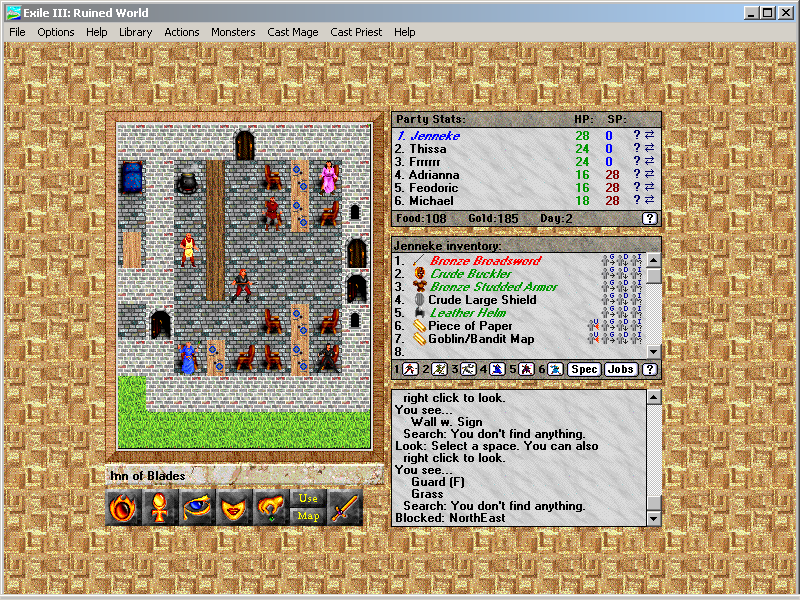
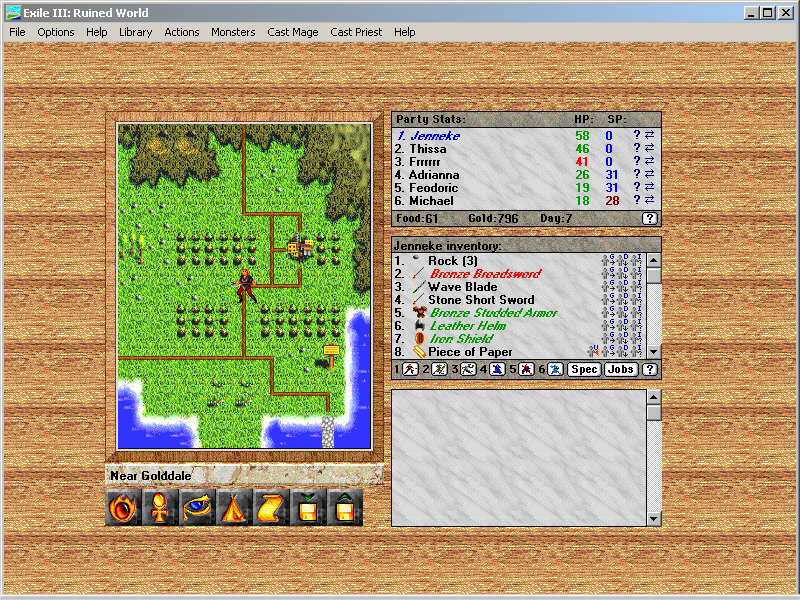
While Exile III embraces a retro, sprite-based aesthetic, it’s clear a significant amount of polish has been applied to textures, lighting, and environmental effects. The underworld passages are rendered in brooding, earth-toned tilesets, punctuated by flickering torchlight and ominous glowing runes. Once you break free to the surface, you’ll encounter vast vistas of red-hued deserts and shattered cityscapes, all of which convey a palpable sense of desolation.
Character and monster sprites have been updated with more animation frames, resulting in smoother movement and more expressive combat reactions. Watch as your party’s warrior staggers under a heavy strike or your mage’s robe billows dramatically before casting a powerful elemental spell. These small visual flourishes contribute significantly to the game’s immersive atmosphere.
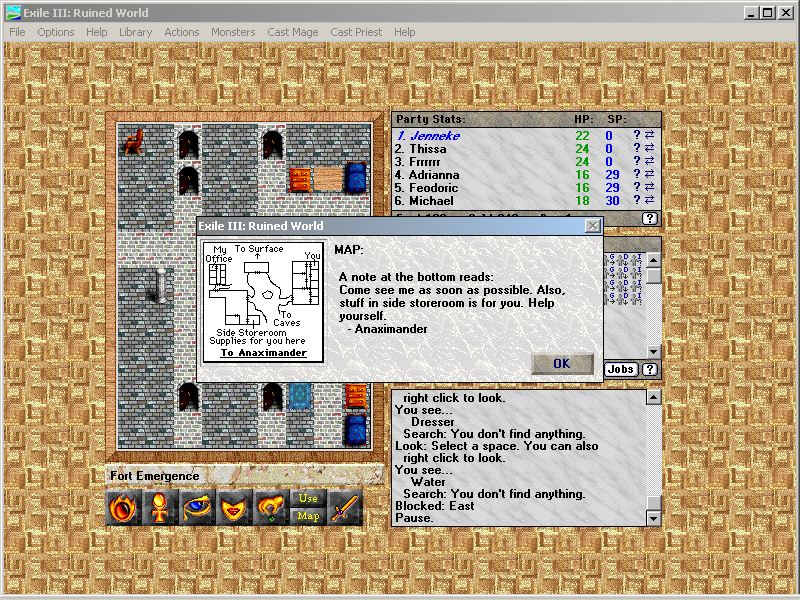
Special effects are used sparingly but effectively: dust storms can obscure vision during exploration, acid rain leaves corrosive trails in ruined plazas, and shadow mapping casts realistic silhouettes when you cross a dim archway. The UI—even though it retains a classic, grid-based design—has been made more legible with color-coded icons and tooltips that pop up on hover, ensuring you’re never left guessing what an unfamiliar glyph represents.
Overall, Exile III’s graphics strike a fine balance between nostalgic charm and modern finesse. Although it’s not pushing the envelope in terms of polygon counts, it excels in atmosphere and world-building, reminding players that evocative art direction often outshines raw technical prowess.
Story
Exile III picks up the saga directly after you claimed dominion over the Pit in Exile II. Now, having won your war against the Empire in the underworld, you set your sights on the fabled surface realms—only to discover they’re on the brink of annihilation. The game’s central mystery—what cataclysmic force is tearing the world apart?—drives every quest, from small-scale investigations in crumbling villages to epic confrontations at the foot of a dying volcano.
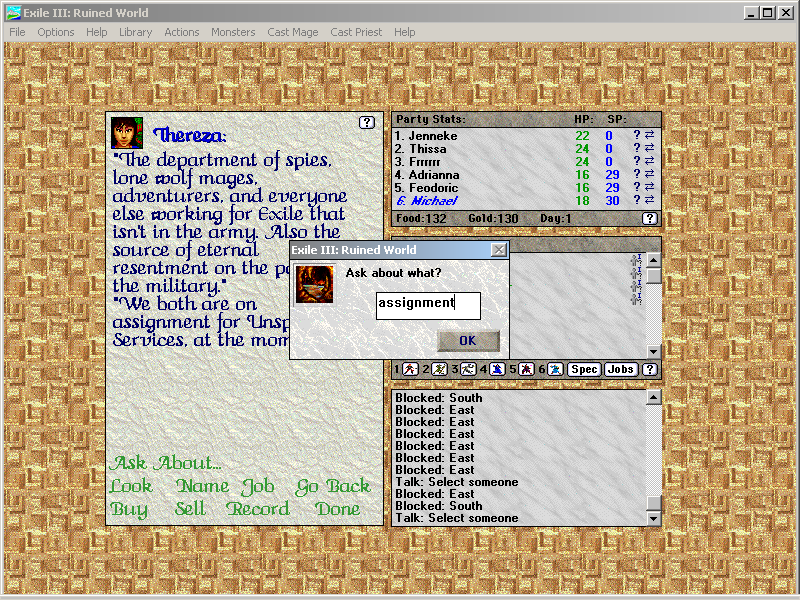
The narrative unfolds through a combination of journal entries, NPC dialogue, and environmental storytelling. For instance, you might stumble upon an NPC family sheltering in a half-sunken government bunker, whose frightened whispers reveal long-buried secrets about forbidden experiments. These vignettes deepen your investment in the fate of the surface, transforming abstract goals like “find the source of the ruins” into personal missions with human stakes.
Dialogue trees have been expanded and enriched with dynamic responses that can alter an NPC’s attitude toward you. Negotiate or intimidate your way past overzealous militia patrols, broker truces between warring survivor camps, or divert precious supplies to those in greatest need. These choices don’t just affect your standing; they can open or close entire questlines, leading to multiple potential endings that hinge on which factions you back.
Exile III also explores themes of redemption and the moral ambiguity of survival. Early lore scraps hint at an Empire experiment gone awry that may have precipitated the surface’s downfall. As you piece together clues— from ruined laboratories to half-decoded transmission logs—the line between hero and villain blurs, forcing you to question whether your ascent to power has inadvertently perpetuated the very devastation you seek to halt.
Overall Experience
From start to finish, Exile III: Ruined World offers a dense, richly detailed RPG experience that rewards patience and strategic thinking. Its pacing is deliberately measured, with frequent checkpoints that allow you to save progress without trivializing the ever-looming threat of environmental collapse. Even seasoned dungeon-crawlers will find themselves on edge when racing against the clock to breach a final gate before it seals forever.
The game’s learning curve is steep but fair. A comprehensive in-game codex tracks monster weaknesses, environmental hazards, and relevant story lore, so if you ever feel lost amid the shifting sands of the surface, you can quickly refer back to previous discoveries. A robust manual and tooltips guide new players through complex mechanics, yet veterans will appreciate the depth and nuance that emerges once you move beyond the early chapters.
Multiplayer co-op was not implemented, which may disappoint some fans who enjoyed teaming up in earlier Exile titles. However, the single-player campaign is so densely packed with exploration, NPC interaction, and branching storylines that you’re unlikely to notice the absence once you’re fully immersed. Occasional performance hitches in very large outdoor zones can occur on older hardware, but patches are already in the pipeline to address these issues.
In sum, Exile III: Ruined World stands as a triumphant continuation of a beloved series. It balances complex, time-sensitive objectives with immersive storytelling and atmospheric world-building, ensuring that your quest to reclaim the surface is as emotionally resonant as it is strategically demanding. For hardcore RPG fans seeking a challenging, lore-rich adventure, this ruined world may just be the perfect place to lose—and find—yourself.


Reviews
There are no reviews yet.