 Retro Replay Retro Replay gaming reviews, news, emulation, geek stuff and more!
Retro Replay Review
Gameplay
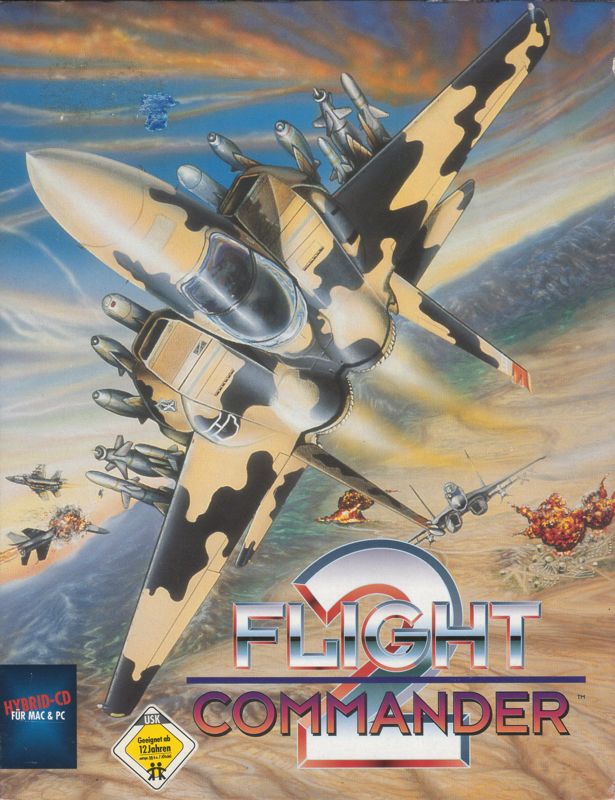
Flight Commander 2 puts you directly in the cockpits of a diverse collection of fighter jets, from early jet designs to cutting‐edge prototypes. Rather than controlling a single aircraft in an arcade‐style setting, you assume the role of squadron commander, issuing orders to anywhere from two to thirty planes in each engagement. The command interface splits each turn into an Order Phase—where you select maneuvers, designate targets, choose weapons, and assign altitude changes—and an Execution Phase, in which you watch your tactical decisions unfold.
(HEY YOU!! We hope you enjoy! We try not to run ads. So basically, this is a very expensive hobby running this site. Please consider joining us for updates, forums, and more. Network w/ us to make some cash or friends while retro gaming, and you can win some free retro games for posting. Okay, carry on 👍)
The depth of Flight Commander 2 comes alive when you switch between Basic and Advanced modes. Basic mode streamlines certain rules for quicker play, ideal for newcomers or shorter sessions, while Advanced mode layers on detailed considerations such as fuel consumption, missile lock probabilities, and close‐in dogfight parameters. An intermediate “Advantage Phase” further shakes up the dynamic by granting situational bonuses to airframes that have managed to outflank or surprise enemies.
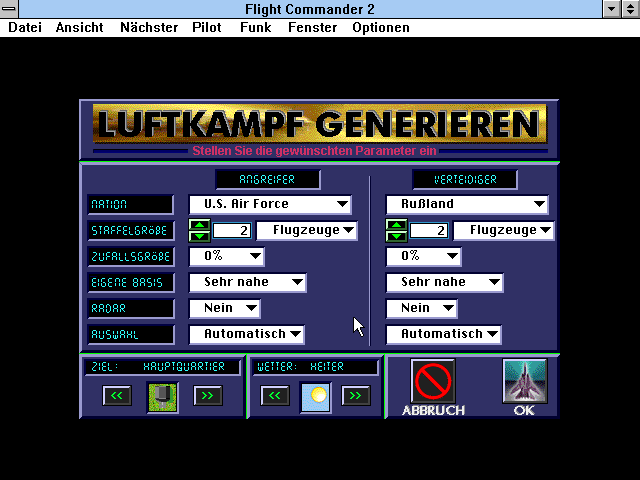
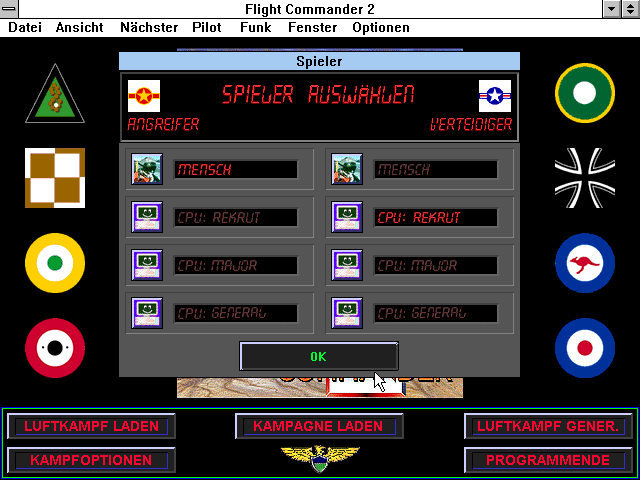
Beyond the rule set, Flight Commander 2 offers a wealth of mission options. Six well‐crafted historical campaigns recreate everything from the jet engagements over the Korean peninsula to the high‐tech duels of Desert Storm. If you crave unpredictability, the random mission generator will serve up unique scenarios on the fly. You can also tackle a suite of pre‐designed single missions or test your mettle against friends via e-mail or hotseat multiplayer, making for a game that’s as flexible as it is challenging.
Graphics
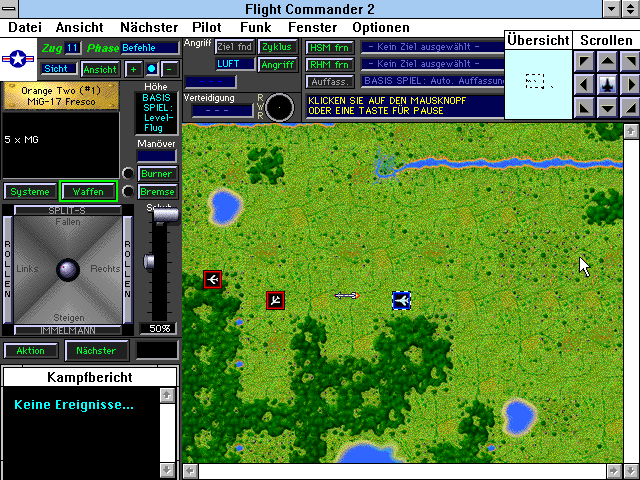
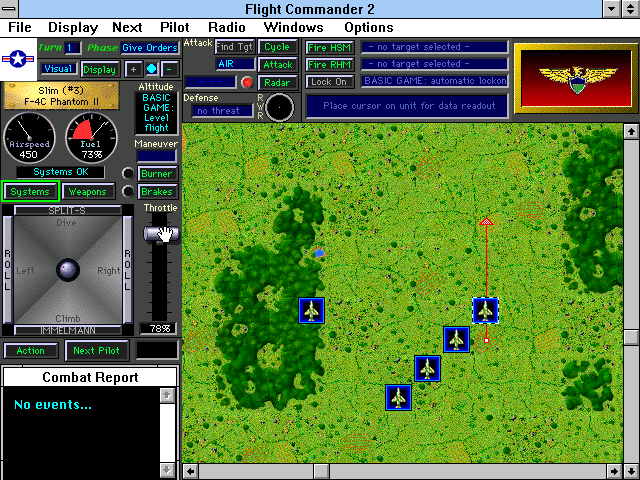
While Flight Commander 2 is primarily a tabletop‐style wargame, its visual presentation is surprisingly crisp for its genre. The tactical map is rendered in clean, easy‐to‐read symbols, with vector‐style icons representing your various fighters, bombers, and enemy contacts. Flight paths, altitude levels, and sensor arcs are all clearly delineated, allowing you to sketch out complex aerial maneuvers without squinting or consulting the manual every turn.
Aircraft silhouettes and terrain overlays are functional rather than photorealistic, but this minimalist approach keeps the focus firmly on strategy. Each jet has its own unique symbol and color scheme, making it simple to track multiple flights at once. Explosion markers, missile trails, and altitude bands animate smoothly during the Execution Phase, adding a touch of flair without overwhelming the tactical clarity.
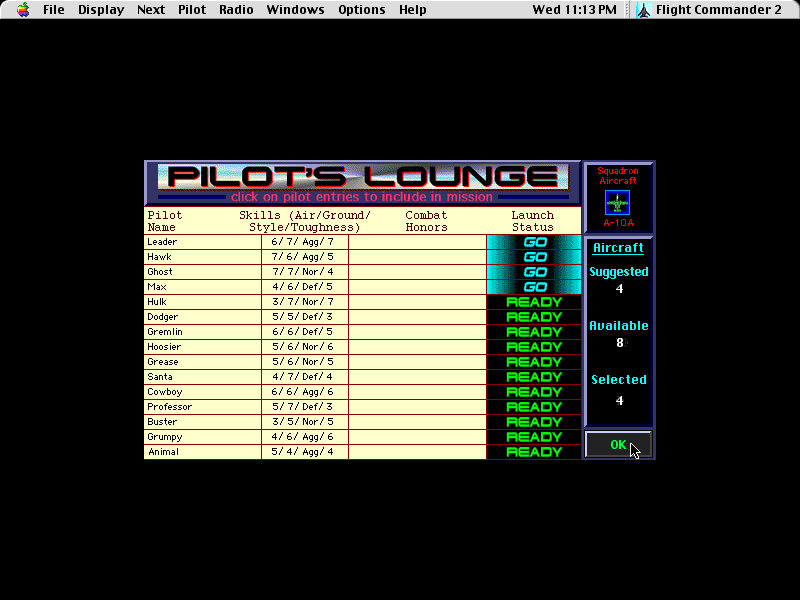
The user interface balances information density with accessibility. Contextual pop‐up windows display a plane’s flight envelope, weapon loadout, and engagement history, while a reference booklet built into the program provides detailed stats for all 100 available aircraft. Though the game shuns flashy 3D dogfights, its visual design excels at conveying critical data and letting you zero in on the decisions that really matter.
Story
Rather than weaving a fictional narrative, Flight Commander 2 invites you to relive—or rewrite—the storied history of jet‐powered air combat. The built-in campaigns transport you across three decades of warfare, from the first hot days of the Korean War to the desert scales of Operation Desert Storm. Each campaign chapter feels authentic, grounded in actual mission profiles, altitudes, and weapon systems that defined those eras.
For history buffs, the game’s extensive reference section doubles as a miniature encyclopedia. Detailed overviews cover the technical specifications and combat performance of every plane in the roster, along with synopses of real‐world engagements. You can read up on the sudden ambushes of MiG Alley or the sweeping strikes flown by F-15s over Iraq, then jump straight into simulations that let you test alternative tactics or “what if” scenarios set in a possible near future.
The thematic consistency across diverse theaters of war is a highlight—no matter the era, each mission feels grounded in real operational constraints. Fuel ranges, radar detection zones, and weapon reliability all shift as you move from one historical setting to another. This gives the game a coherent throughline, making your progression from early jets to advanced multi-role fighters feel like a genuine evolution of air combat doctrine.
Overall Experience
Flight Commander 2 stands out as a deeply satisfying tactical wargame for players who appreciate meticulous planning over twitch‐based controls. Its learning curve can be steep—especially in Advanced mode—but the payoff is enormous. Mastering the order of fighter deployments, altitude assignments, and weapon selections delivers thrilling “aha” moments as well as nail‐biting tension when things don’t go according to plan.
Replayability is through the roof thanks to its random mission generator and robust multiplayer options. Whether you’re facing off against an AI opponent in a historical campaign or trading hotseat turns with a friend, each engagement can unfold in unexpected ways. The inclusion of comprehensive reference materials further cements Flight Commander 2 as a perennial go-to for strategy enthusiasts who want to understand the “why” as well as the “how” behind every dogfight.
Ultimately, Flight Commander 2 offers a uniquely immersive blend of historical authenticity and tactical depth. It may not boast cutting-edge visuals or a Hollywood storyline, but for anyone seeking a rich, satisfying wargame that covers three decades of air combat, it delivers in spades. If you’re ready to trade joystick acrobatics for the art of command, this is one flight you won’t want to skip.

Reviews
There are no reviews yet.