 Retro Replay Retro Replay gaming reviews, news, emulation, geek stuff and more!



Retro Replay Review
Gameplay
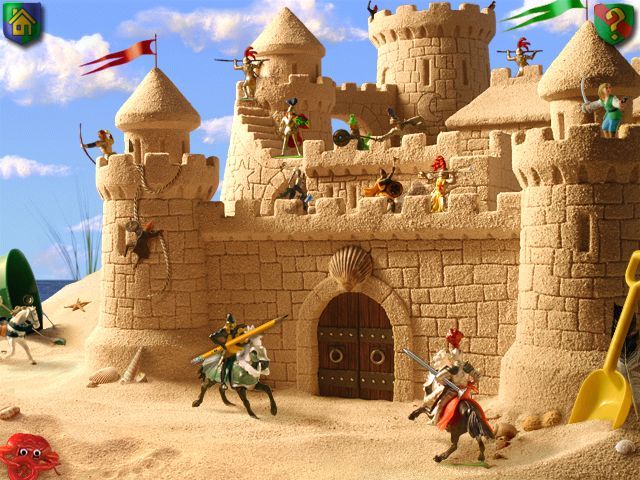
I Spy: Fantasy delivers a cleverly structured sleuthing experience that keeps young players engaged from start to finish. The game challenges children aged 6–10 to solve riddles in three enchanting realms: a Sand Castle, the Deep Blue Sea, and Outer Space. Each locale presents six hidden items tied to a mission—fuel crystals to power a shuttle, keys to free a princess, and pages of a mermaid’s book—making objectives straightforward yet rewarding.
(HEY YOU!! We hope you enjoy! We try not to run ads. So basically, this is a very expensive hobby running this site. Please consider joining us for updates, forums, and more. Network w/ us to make some cash or friends while retro gaming, and you can win some free retro games for posting. Okay, carry on 👍)
Replayability is built into the core design: each world can be revisited up to three times, with riddles growing progressively more difficult on subsequent runs. This layered approach not only sustains interest but also fosters critical thinking and memory recall, as players compare new challenges to what they’ve learned in earlier playthroughs. The on-screen narrator’s friendly voice adds personality to each clue, guiding children gently toward the solution without feeling overbearing.
Controls are intuitive: players simply click or tap on the hidden objects to advance. There’s no frustration-inducing timer or penalty for mistakes, which makes the experience accessible to younger gamers who are still developing fine motor skills. An unobtrusive hint system ensures that if a player is truly stuck, a nudge in the right direction prevents discouragement and keeps the adventure moving forward.
Graphics
Visually, I Spy: Fantasy stays true to the whimsical style of Jean Marzollo and Walter Wick’s beloved picture books. Each environment is rendered with rich colors and meticulous detail, inviting children to scour every nook and cranny for hidden treasures. The Sand Castle world shimmers in golden hues, while the Deep Blue Sea glows with shifting shades of aqua and cerulean, and Outer Space bursts with twinkling starfields.
The photographic-quality backgrounds feel almost tangible, encouraging players to lean in and examine the screen closely. Objects blend seamlessly into their surroundings, striking the perfect balance between visibility and challenge. Movement is smooth and responsive, with subtle animations—like a mermaid’s hair drifting in currents or the shimmer of crystal light—adding depth without distracting from the core puzzle.
While the game’s visuals are optimized for PC screens, they also scale nicely on tablets, making I Spy: Fantasy a versatile choice for both home and classroom settings. The clarity of the artwork ensures that even the smallest key or crystal is distinguishable once you know what to look for, so players can feel a genuine sense of accomplishment when they finally spot a tricky item.
Story
Although I Spy: Fantasy does not follow a traditional narrative arc, its three distinct missions provide a clear sense of purpose and progression. In the medieval Sand Castle, players embark on a rescue quest to free a princess from a dragon’s lair. Under the sea, a mermaid beckons them to recover lost pages from her magical book. And in Outer Space, the stakes are downright cosmic as children hunt for fuel crystals to power their shuttle home.
Each setting is introduced with a brief narration that sets the scene and stakes, making every riddle feel like a piece of a larger adventure. This episodic approach works well for the target audience, since children can complete bite-sized challenges in a single sitting but still feel motivated to return for the next triumph. The charming voice-over performances bring warmth and personality to each quest without ever overwhelming young listeners.
Although there’s no dramatic plot twist or character development in the conventional sense, the constant variety of tasks and escalating riddle difficulty keep the storyline fresh. Kids won’t just be clicking on hidden items; they’ll be invested in the outcome of each mission, imagining the princess’s relief, the mermaid’s gratitude, or the satisfaction of launching the shuttle into the night sky.
Overall Experience
I Spy: Fantasy stands out as an enriching puzzle game that balances challenge with fun, making it an excellent pick for families, educators, and casual gamers. Its combination of high-quality visuals, engaging audio narration, and cleverly crafted riddles ensures that players remain captivated through multiple playthroughs. The absence of time limits or negative consequences makes it welcoming for younger audiences while still offering sufficient depth to hold their interest.
From an educational standpoint, the game promotes observation skills, vocabulary building, and logical reasoning. Each riddle encourages children to parse descriptive language and translate it into a visual search, reinforcing reading comprehension alongside hand-eye coordination. The incremental difficulty ramps up just enough to foster a sense of achievement without tipping into frustration.
Ultimately, I Spy: Fantasy is more than just a hidden-object game—it’s an invitation to explore three fantastical worlds through the power of curiosity and deduction. Whether played solo or with an adult lending a helping hand, it provides countless hours of discovery and delight. For parents seeking a screen-based activity that’s both entertaining and mentally stimulating, this title is a treasure trove.



Reviews
There are no reviews yet.