 Retro Replay Retro Replay gaming reviews, news, emulation, geek stuff and more!
Retro Replay Review
Gameplay
Kid Chameleon delivers a brutally satisfying platforming experience that demands precision and adaptability. From the moment you pick up the controller, the absence of save points or password codes makes every jump and enemy encounter feel consequential. With over a hundred stages laid out in sequence, players must learn to master the timing of their moves, study each level’s hazards, and memorize the locations of secret pathways to progress.
(HEY YOU!! We hope you enjoy! We try not to run ads. So basically, this is a very expensive hobby running this site. Please consider joining us for updates, forums, and more. Network w/ us to make some cash or friends while retro gaming, and you can win some free retro games for posting. Okay, carry on 👍)
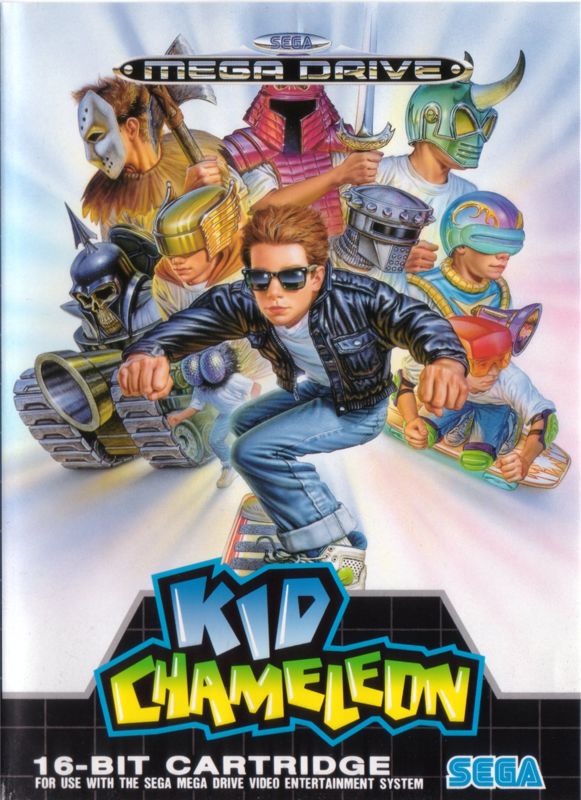
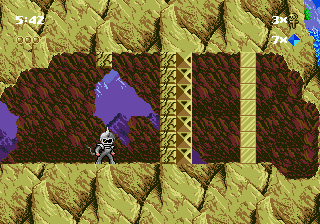
The true hook of the gameplay lies in the hero’s ability to don different helmets that transform him into unique forms, each boasting special abilities. Whether you’re speeding through levels as the roller-skating “Todd the Tortoise,” climbing walls as the “Cyclops Knight,” or flying freely as the “Skycutter,” these shape-shifts force you to think on your feet. Each power-up is thoughtfully designed to suit particular environment challenges, encouraging players to search high and low for every helmet.
Boss battles further reinforce the game’s emphasis on learning patterns and exploiting weaknesses. As you face off against wild creatures, robotic guardians, and giant samurai warriors, your success depends on selecting the right form and mastering each boss’s attack rhythm. The crescendo of tension before each major battle underscores how well Kid Chameleon balances risk and reward throughout its demanding run.
Exploration is also rewarded in unexpected ways—hidden doors, warp tiles, and bonus areas laden with extra lives offer relief from the game’s steep learning curve. While some might find the trial-and-error progression daunting, those who embrace the challenge will discover a deep, tactile platformer that keeps them coming back for more.
Graphics
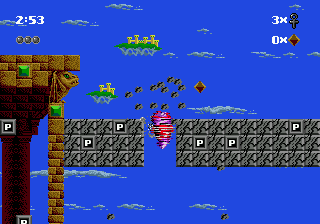
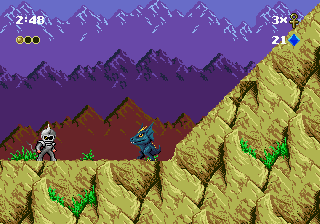
On the Sega Genesis hardware, Kid Chameleon shines with vibrant colors and well-animated sprites that bring each level to life. The game’s aesthetic ranges from medieval castles to futuristic cityscapes, lush forests, and even bizarre, nightmarish dimensions, ensuring visual variety across its expansive stage roster. Each environment is rendered with a bold palette that pops on screen, giving the game an instantly recognizable identity.
The character animations are smooth and expressive—Kid Chameleon’s diverse forms feature distinct movement patterns that communicate their unique abilities at a glance. Background elements, such as flickering torches, swaying vines, and shifting mechanical gears, add depth to each scene without cluttering the action. Occasional parallax scrolling further enhances the sense of immersion as you run and jump through dynamic landscapes.
Boss designs are particularly memorable, with imposing sizes and well-crafted color schemes that accentuate their threat level. From the spiked armor of the Basilisk Knight to the glowing eyes of the Robo Warrior, each opponent stands out as a visual highlight. Even in later stages, where difficulty ramps up, the crisp pixel work remains consistent, preventing visual fatigue during longer play sessions.
While modern gamers may notice the lack of high-definition textures, the game’s art direction holds up remarkably well. Its nostalgic charm and clear visual feedback ensure that every death and victory feels tied to the world on screen, making each level memorable long after the controller is set aside.
Story
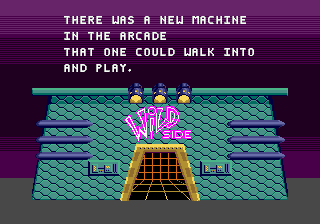
Kid Chameleon’s narrative is straightforward but effective: you play as Casey “Kid Chameleon,” who has plunged into the arcade cabinet’s virtual reality world known as the “Wild Side” to rescue children trapped inside. While the premise is delivered primarily through the game’s manual and title screen text, it provides enough context to justify the wild level designs and shape-shifting mechanics.
The lack of in-game cutscenes or dialogue places the emphasis squarely on gameplay, but subtle storytelling elements emerge through stage names and boss motifs. Each helmet you collect—ranging from the punk-rocking rollerblade mask to the fire-breathing dragon helm—hints at the diverse “themes” of the kids you’re rescuing. Discovering hidden routes often feels like uncovering the next chapter in this virtual saga.
Though minimalistic by today’s standards, the story serves its purpose: it fuels your motivation to push onward through each labyrinthine stage. The idea of rescuing classmates offers a satisfying goal in lieu of complex character arcs, keeping the momentum brisk and focused. The simplicity of the narrative also allows the game to introduce fresh environments and mechanics without being weighed down by elaborate lore.
Ultimately, Kid Chameleon’s storytelling is a reminder that a tight core concept can be more engaging than a convoluted plot. By merging the thrill of rescue missions with inventive level design, the game weaves an energetic albeit succinct tale that complements its challenging platforming.
Overall Experience
Playing Kid Chameleon today still feels like stepping into a relentless obstacle course that rewards tenacity and pattern recognition. The steep difficulty curve and lack of mid-game saves might deter casual players, but for platforming purists, each victory delivers an undeniable rush. Overcoming multi-screen levels without dying becomes a badge of honor—one that shows just how deeply the game hooks you.
Replay value is remarkably high thanks to the pursuit of hidden paths and the challenge of perfecting each run. Discovering a secret exit or stumbling upon an alternate branch not only keeps the experience fresh but also invites you to re-explore stages you thought you had mastered. Coupled with the inherent charm of its helmet transformations and varied environments, Kid Chameleon remains one of the Genesis’s most memorable platformers.
Of course, modern conveniences like save files and rewind features are absent, which can lead to frustration during longer sessions. However, for dedicated gamers willing to embrace that retro rigidity, Kid Chameleon offers uncompromising design that feels uniquely rewarding. Every section conquered feels like a personal triumph, and every new discovery sparks genuine excitement.
In the end, Kid Chameleon stands as a testament to creative level design and enduring challenge. Its blend of shape-shifting gameplay, colorful presentation, and straightforward rescue mission narrative combine into an experience that, even decades later, still captivates and tests the skills of platforming enthusiasts everywhere.



Reviews
There are no reviews yet.