 Retro Replay Retro Replay gaming reviews, news, emulation, geek stuff and more!

Retro Replay Review
Gameplay
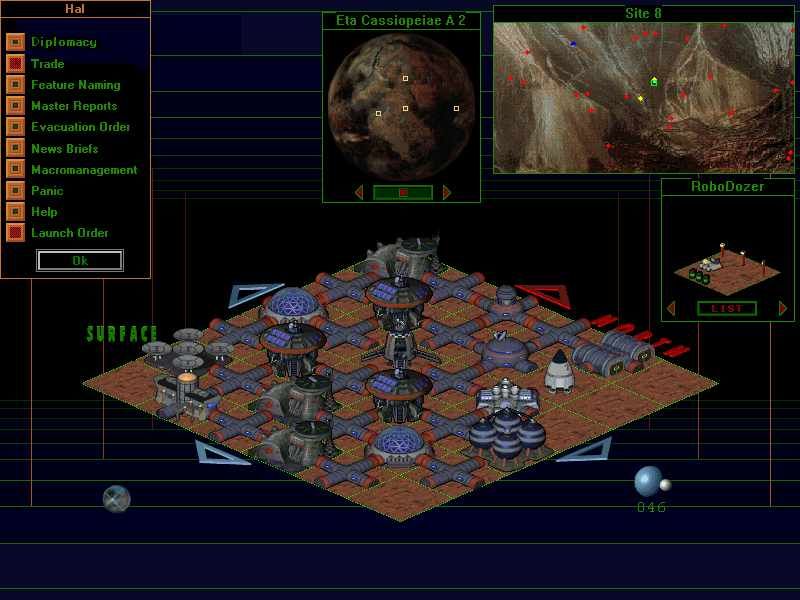
Outpost unfolds as a deep and rewarding city‐builder with a twist of survival strategy. You begin with a small cadre of colonists and a handful of prefabricated modules, tasked with turning a barren alien world into a thriving human settlement. The isometric viewpoint lends itself well to careful planning, allowing you to lay out habitats, power grids, and agricultural domes with precision. As resources such as water, oxygen, and raw minerals are finite on this new world, each decision carries weight. Balancing expansion with sustainability is at the core of the experience.
(HEY YOU!! We hope you enjoy! We try not to run ads. So basically, this is a very expensive hobby running this site. Please consider joining us for updates, forums, and more. Network w/ us to make some cash or friends while retro gaming, and you can win some free retro games for posting. Okay, carry on 👍)
The game’s day‐to‐day mechanics revolve around meticulous resource management. Harvesting local minerals, establishing hydroponic farms, and recycling waste all tie into interconnected systems that can either flourish or collapse if mismanaged. Random events—ranging from dust storms to alien wildlife incursions—force you to adapt on the fly. There’s also a robust research tree that lets you unlock advanced terraforming tools, renewable energy sources, and even experimental biotech enhancements for your colonists, adding long‐term strategic depth.
Beyond the macro‐management, Outpost offers direct control over individual colonists in an isometric third‐person perspective, reminiscent of SimCity but with more personal stakes. You can assign specialists to key roles—engineers to maintain life support, botanists to optimize crop yields, and security officers to guard perimeter defenses. Their morale, skill progression, and interpersonal relationships all feed back into your broader strategy. Fostering a healthy, happy population is as critical as laying down pipes and power lines.
Building progression also ties into narrative milestones. Completing your first fully self‐sustaining biome or surviving a critical system failure triggers story beats that keep the gameplay loop invigorating. The pacing is well‐calibrated: early phases demand conservative, risk‐averse play, while mid- and late-game invite bold terraforming projects and deeper exploration of the planet’s mysteries. For fans of intricate simulation and management titles, Outpost delivers nonstop challenges and a genuine sense of accomplishment.
Graphics
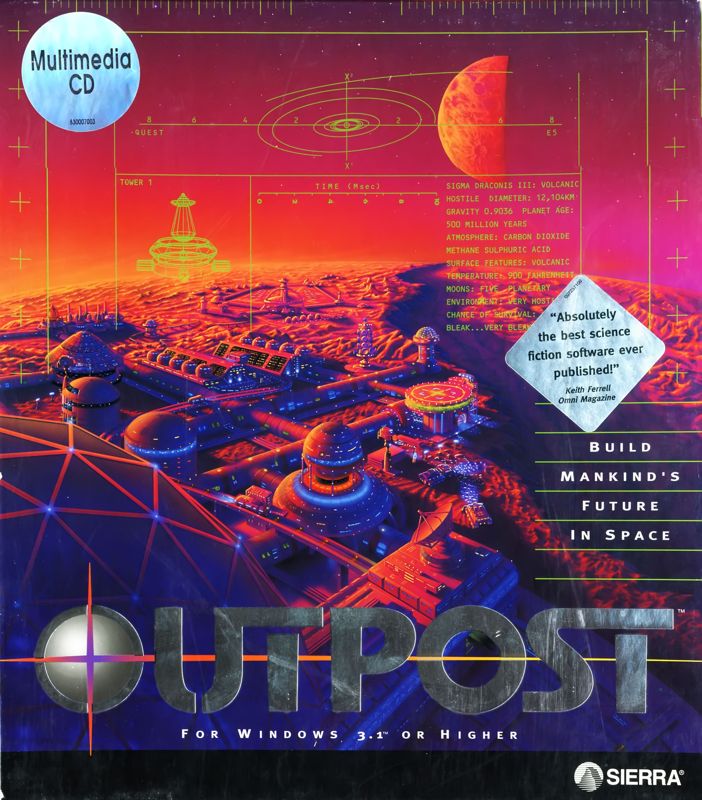
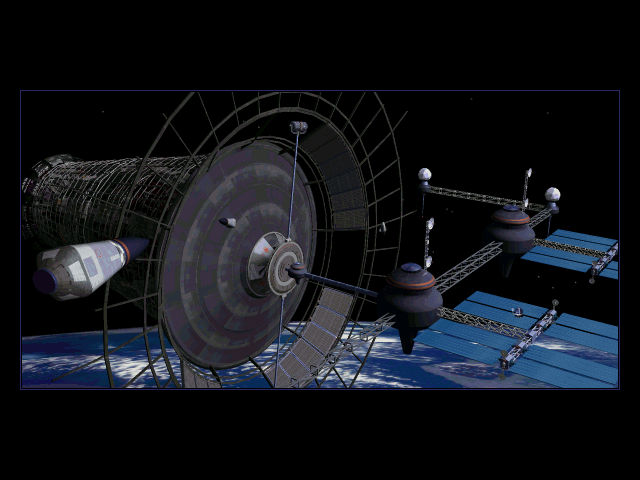
Graphically, Outpost excels in presenting a believable alien environment. The color palette shifts from dusty browns to vibrant bioluminescent hues as you unlock new terraforming techniques, visually rewarding your progress. High‐resolution textures on structures and terrain give a tactile feel to every building, while real‐time lighting and volumetric fog effects immerse you in dust storms or the eerie glow of a distant emerald forest.
The user interface is clean and intuitive, with modular panels that you can dock or hide depending on your workflow. Resource icons are crisp, and hovering over any building instantly reveals key stats—power draw, oxygen consumption, and upkeep costs—without cluttering the screen. A zoom feature lets you transition smoothly between overview planning and the isometric third-person vantage, so you can witness your colonists tending fields or repairing solar arrays firsthand.
Animations in Outpost are subtle but effective. Colonists walk with purpose, machinery hums to life, and environmental hazards like acid rain drip convincingly on domed structures. Cutscenes that advance the story employ dynamic camera movements within the same engine, seamlessly integrating narrative moments into the building simulation. The result is a cohesive visual experience that supports both the strategic and storytelling elements of the game.
Performance is generally stable on mid-range hardware, with options to tweak shadow quality, foliage density, and particle effects for optimal framerates. Even during large‐scale expansions—when hundreds of buildings and NPCs share the map—frame dips are minimal. The art team has struck a fine balance between fidelity and efficiency, ensuring the planet’s beauty never comes at the cost of smooth gameplay.
Story
The narrative backdrop of Outpost is compelling: Earth was obliterated by the asteroid Vulcan’s Hammer, and humanity’s final hope rests on your shoulders. From the moment you learn of the planet’s harsh conditions, you’re drawn into a tale of survival, sacrifice, and corporate intrigue. The corporation that funded the mission has its own agenda, and as you push deeper into uncharted territory, you uncover hidden agendas and technologies that raise ethical questions about humanity’s right to reshape a world.
Story progression is tied to mission objectives that act as milestones. Whether you’re establishing the first water treatment plant or discovering alien ruins, each success and setback drives the narrative forward. Dialogues with the corporate AI, field reports from your colonists, and data logs found in wreckage sites paint a rich tapestry of voices and perspectives. It’s not just about surviving on a new planet; it’s about rebuilding what was lost and deciding what kind of civilization you want to foster.
The pacing of story events strikes a nice balance: early chapters focus on practical survival, mid‐game thrusts you into moral dilemmas—should you overharvest a critical resource to speed growth?—and late‐game culminates in revelations that challenge everything you thought you knew about the mission. Occasional side quests delve into colonist backstories, lending emotional weight to your leadership decisions. By the end, you aren’t just a manager of resources, but a steward of human destiny.
What makes Outpost’s story stand out is its integration with gameplay. Major narrative beats coincide with new mechanics—discovering alien flora unlocks biotech options, while uncovering corporate archives unlocks espionage missions. This approach ensures that the story never feels tacked on; every piece of the narrative puzzle has a real impact on how you play and build.
Overall Experience
Outpost offers an engrossing blend of city‐building, survival strategy, and narrative depth. Each session feels meaningful: from the struggle of your first dust storm to the triumphant establishment of a self‐sufficient biosphere, the game elicits genuine emotional highs and lows. Its learning curve is approachable for newcomers, yet its layers of complexity provide veteran strategists with ample challenges.
Replayability is strong thanks to procedural world generation and multiple difficulty settings. Different planet types—icy tundras, acid marshes, and radioactive wastelands—require distinct strategies and keep subsequent playthroughs fresh. The modular research tree and branching story paths ensure that no two colonies develop the same way, encouraging experimentation and adaptation.
Though minor UI niceties—like more detailed tooltips or expanded colonist customization—could further polish the experience, these quibbles rarely detract from the core enjoyment. The soundtrack and ambient sound design round out the immersion, from the low hum of generators to the eerie calls of alien wildlife drifting through the settlement at dusk.
For players seeking a thoughtful, challenging, and beautifully realized colonization sim, Outpost is hard to beat. It honors the legacy of its city‐builder predecessors while carving out its own identity through a strong narrative backbone and robust survival mechanics. Whether you’re coordinating hydroponic farms or wrestling with moral dilemmas about humanity’s legacy, Outpost delivers countless hours of strategic satisfaction and storytelling intrigue.


Reviews
There are no reviews yet.