 Retro Replay Retro Replay gaming reviews, news, emulation, geek stuff and more!


Retro Replay Review
Gameplay
Sid Meier’s Civilization III remains one of the definitive turn-based strategy experiences, tasking you with leading one of 15 historic civilizations from the dawn of history through the modern era. Each faction—from the militaristic Aztecs to the scholarly Russians—boasts unique strengths, weaknesses, and a special unit that shapes the way you expand and defend your empire. This diversity encourages multiple playstyles: scientific empires may rush the Information Age, while warmongers focus on building a formidable army to conquer rivals.
(HEY YOU!! We hope you enjoy! We try not to run ads. So basically, this is a very expensive hobby running this site. Please consider joining us for updates, forums, and more. Network w/ us to make some cash or friends while retro gaming, and you can win some free retro games for posting. Okay, carry on 👍)
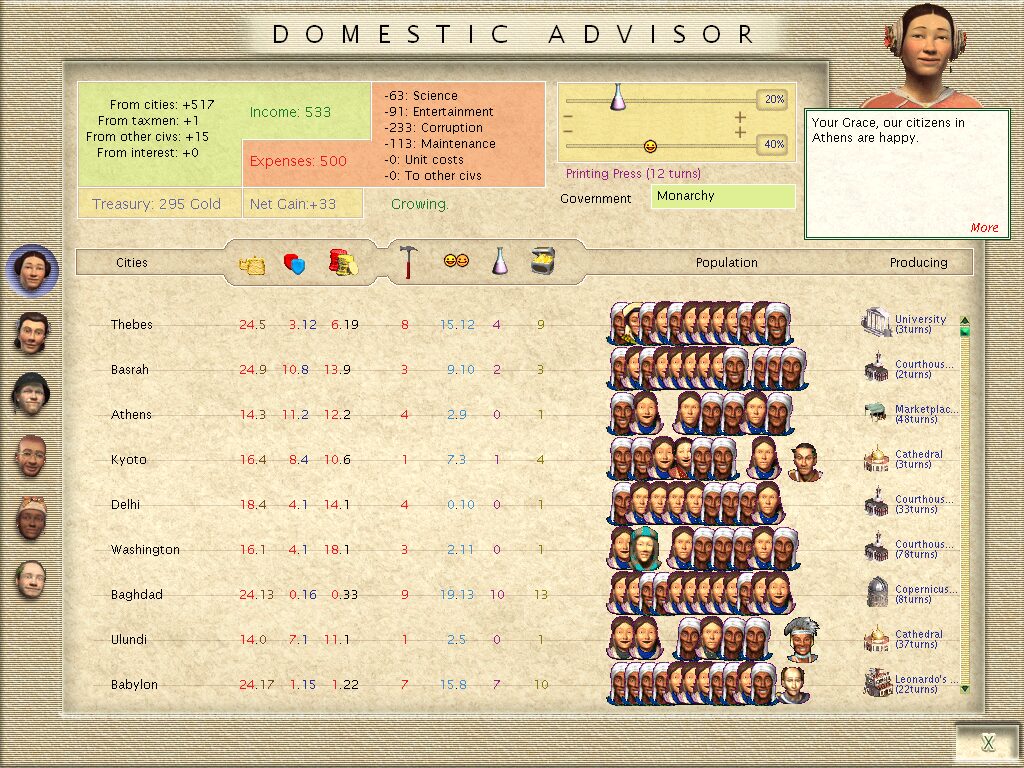
Building a sprawling civilization requires careful resource management and strategic foresight. You allocate citizens to food, production, commerce, or luxury resources, each decision affecting growth, happiness, and treasury. The expanded technology tree unlocks new units, government types, and wonders in each epoch, and technological priorities often dictate whether you can field a fast cavalry unit or research Banking to boost your economy.
New mechanics—like ‘great leaders’ who inspire cultural revolutions or war weariness that saps morale in prolonged conflicts—add layers of complexity. Diplomacy has grown deeper too: you can haggle over gold, technologies, and even urban borders, all while monitoring detailed advice panels for military, economic, and foreign affairs in the upper-right corner of the screen. With military, diplomatic, or cultural victory paths available, each session unfolds differently, offering immense replayability.
Graphics
For its time, Civilization III’s visuals struck a fine balance between clarity and charm. The isometric world map displays terrain, resources, and improvements in crisp, colorful tiles. City icons and unit sprites are distinct enough to manage armies at a glance, even on large maps, while wonder graphics lend each landmark a sense of grandeur as it appears on the globe.
The user interface underwent a meaningful overhaul compared to earlier entries: advisors now appear contextually in the top-right, offering guidance without losing screen real estate. Trade screens, city management menus, and the tech tree are intuitively laid out, though modern players might find the fixed resolution somewhat limiting. Nevertheless, clear visual feedback during battles, trade negotiations, and civic changes ensures you always know the impact of your decisions.
While the art style today feels dated next to high-definition 3D strategy titles, Civilization III’s aesthetic remains iconic. Many fans have produced unofficial high-resolution patches and UI mods that refresh the look without altering the core gameplay. For purists, the original graphics evoke nostalgia; for newcomers, they offer a straightforward, functional presentation that still communicates depth.
Story
Although Civilization III doesn’t present a single scripted narrative, its open-ended design weaves countless personal histories. Each playthrough reads like an alternate-history epic: will Rome emerge as a peaceful cultural beacon, or will the Mongols sweep across the map in a whirlwind of conquest? Your choices—from founding cities on resource-rich terrain to forging alliances or backstabbing neighbors—craft a unique saga every time.
The sense of progress as you guide your people from stone tools to spaceflight provides a unifying thread. Watching your first settler establish a humble village, then later sending a spaceship to Alpha Centauri (or hosting the United Nations) imparts genuine satisfaction. In lieu of a traditional plot, emergent storytelling shines: a surprise declaration of war, an unexpected scientific breakthrough, or a last-minute diplomatic victory can create unforgettable moments.
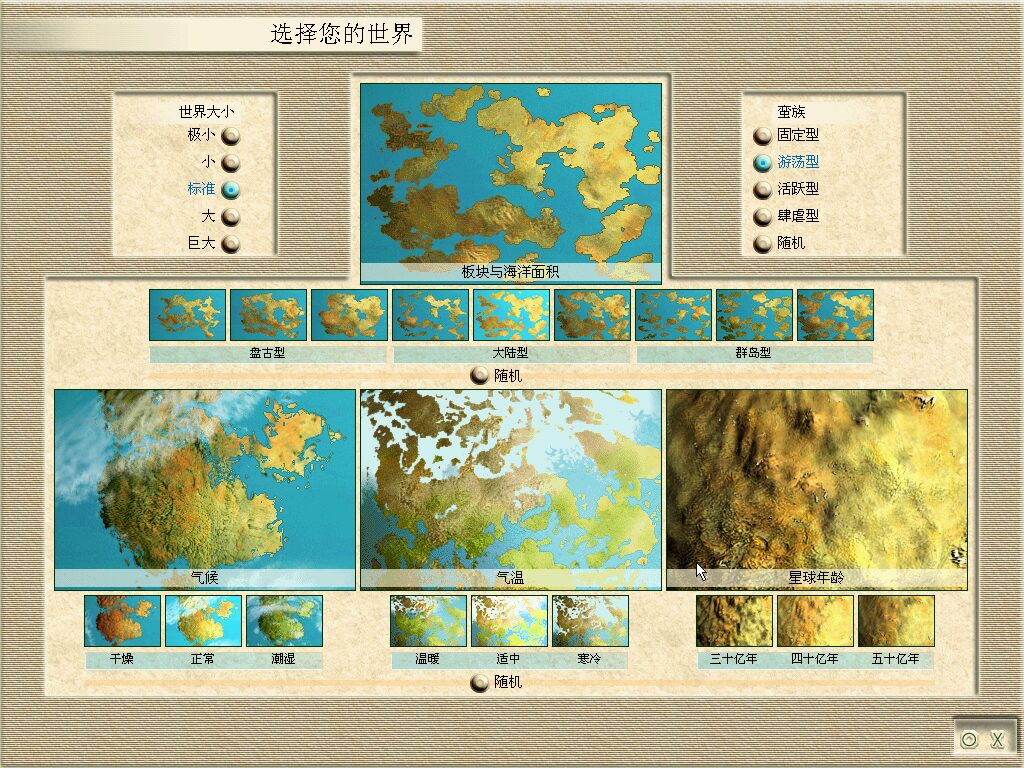
Scenario editors and random map generation further enrich the narrative possibilities. Want to reenact Alexander the Great’s conquests or explore a world of endless deserts? You can tailor the stage and watch history unfold—or be rewritten—under your stewardship. This chameleon-like capacity to tell new stories is at the heart of Civilization III’s enduring appeal.
Overall Experience
Civilization III delivers a deep, strategic playground that rewards patience and planning. Its layered mechanics—economic development, technological research, cultural influence, military conquest, and diplomacy—offer many paths to global dominance. Even years after launch, fans continue to debate the merits of different civilizations and trade-off decisions, a testament to the game’s intricate balance.
It’s not without flaws: the AI occasionally makes suboptimal decisions, and the learning curve can be steep for newcomers to 4X strategy. The dated resolution and sprite-based visuals may feel limiting on wide-screen monitors. However, these shortcomings are largely aesthetic or second-order compared to the core gameplay’s strength, and community patches alleviate many technical annoyances.
In sum, Sid Meier’s Civilization III stands as a timeless classic. Its strategic depth, emergent storytelling, and near-endless replayability make it essential for any strategy enthusiast. Whether you’re plotting a cultural empire or waging total war, this title offers a rich, engaging experience that laid groundwork for every 4X game that followed.


Reviews
There are no reviews yet.