 Retro Replay Retro Replay gaming reviews, news, emulation, geek stuff and more!



Retro Replay Review
Gameplay
The Count of Monte Cristo embraces the classic hidden object format while weaving in narrative-driven objectives that keep players invested. Each scene presents a meticulously designed tableau drawn from Alexandre Dumas’s novel, challenging you to spot and click a curated list of items before the timer expires. The time pressure combined with the threat of a 30-second penalty for each incorrect click injects a satisfying sense of urgency without veering into frustration, making every successful find feel like a small victory in Edmond Dantès’s quest for justice.
(HEY YOU!! We hope you enjoy! We try not to run ads. So basically, this is a very expensive hobby running this site. Please consider joining us for updates, forums, and more. Network w/ us to make some cash or friends while retro gaming, and you can win some free retro games for posting. Okay, carry on 👍)
Beyond the core hidden object screens, the game introduces a variety of mini-games that serve as palate cleansers between chapters. Familiar puzzles—such as Sudoku, sliding-tile, and jigsaw challenges—offer a pleasant change of pace, while tile-matching sequences add a touch of casual strategy. Although these interludes are entirely optional (with the choice to skip at the cost of ten minutes off your main timer and the loss of all hint charges), they enhance the overall rhythm, preventing gameplay fatigue and reinforcing the feeling of gradually piecing together Dantès’s elaborate vengeance.
The hint system plays a pivotal role in balancing difficulty, granting you five emerald charges that spotlight one hidden object’s exact location when needed. Collecting extra gems on bonus scenes at the outset of each chapter encourages thoroughness and rewards exploration. This thoughtful design ensures that both newcomers to the hidden object genre and seasoned enthusiasts can tailor their experience—opting for a more forgiving, story-centric approach or diving headlong into a timed challenge for bragging rights.
Graphics
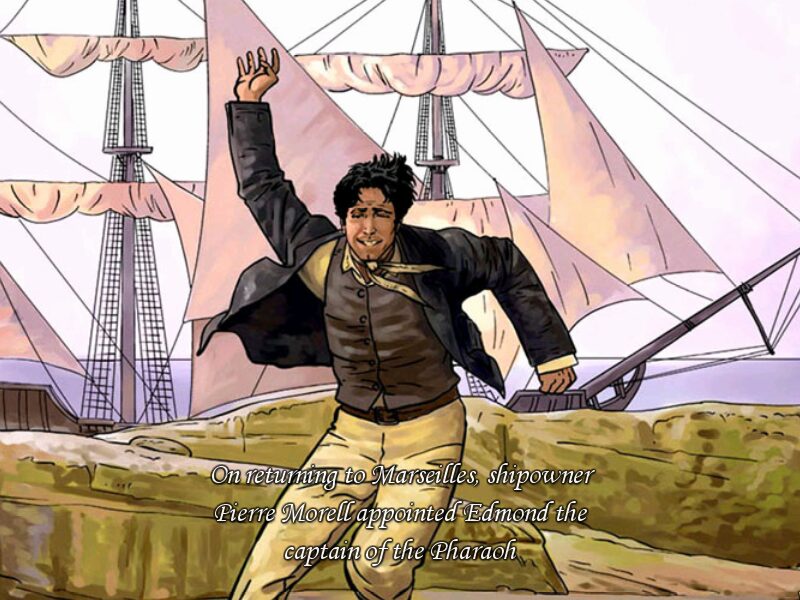
Visually, The Count of Monte Cristo excels at transporting players into 19th-century France. Each scene is rendered with a painterly finesse—vibrant colors, intricate textures, and period-accurate details bring taverns, mansions, prison cells, and coastal vistas to life. The art team’s commitment to historical authenticity shows in the ornate furniture, vintage clothing, and architectural flourishes scattered throughout every environment.
Animated transitions subtly enrich the atmosphere without detracting from gameplay. Flickering lanterns, drifting dust motes, and swaying banners add realism and deepen immersion. Although the animations are deliberately understated to avoid distracting from hidden object hunts, their presence underscores the game’s dedication to creating a living, breathing world that evolves as Edmond unravels the conspiracy against him.
On the technical side, performance remains consistently smooth across mid-range hardware. Load times between scenes and mini-games are brief, and the interface is clean and responsive. The cursor’s magnifying glass effect, combined with shape-shifting silhouettes upon successful clicks, provides satisfying audiovisual feedback. Overall, the game’s visual and technical polish complements its narrative ambition, making it a standout among casual hidden object titles.
Story
Adapted from Alexandre Dumas’s timeless classic, the game faithfully captures Edmond Dantès’s transformation from a wrongfully imprisoned sailor into the cunning Count of Monte Cristo. The narrative unfolds in eight self-contained chapters, each centered on a key figure implicated in the protagonist’s betrayal. Through a combination of hidden object investigation and puzzle-solving, you gradually peel back layers of deception, uncovering intimate secrets and long-buried motives.
While the dialogue is streamlined for a casual gaming audience, it retains the novel’s dramatic flair and themes of revenge, justice, and redemption. Brief cutscenes and character portraits introduce each suspect with enough personality to keep players curious—whether it’s the scheming Fernand Mondego or the conniving Danglars. This approach strikes a fine balance between accessibility and literary depth, making the story approachable even for those unfamiliar with Dumas’s work.
Progression feels meaningful, as each chapter’s revelations feed directly into Edmond’s emotional journey. Bonus scenes not only serve gameplay purposes but also offer narrative vignettes that enrich the backstory. By the final act, the cumulative effect of your sleuthing and puzzle prowess culminates in a satisfying resolution that honors the spirit of the original novel without overwhelming casual gamers.
Overall Experience
The Count of Monte Cristo is a compelling blend of hidden object challenges, narrative intrigue, and classic puzzle mechanics. Its steady pacing, balanced difficulty curve, and elegant visuals make it an ideal pick for players seeking an immersive, story-driven casual game. Whether you’re motivated by the thrill of the hunt, the satisfaction of puzzle mastery, or the allure of a literary adaptation, this title offers a robust package that caters to varied tastes.
In terms of replayability, optional mini-games and collectible hint emeralds encourage players to refine their strategies and achieve faster completion times. However, even a single playthrough delivers several hours of engaging content, with diverse locations and puzzles ensuring that repetition never sets in. The skip feature for mini-games adds further flexibility, allowing you to tailor the challenge to your preferences.
Ultimately, The Count of Monte Cristo stands out in the casual gaming market through its faithful homage to one of literature’s great epics. By combining accessible gameplay with period-accurate aesthetics and a well-crafted narrative arc, it delivers a memorable experience that both history buffs and puzzle lovers will appreciate. For anyone seeking an elegant hidden object adventure infused with literary gravitas, this title is a rewarding journey worth embarking upon.



Reviews
There are no reviews yet.