 Retro Replay Retro Replay gaming reviews, news, emulation, geek stuff and more!




Retro Replay Review
Gameplay
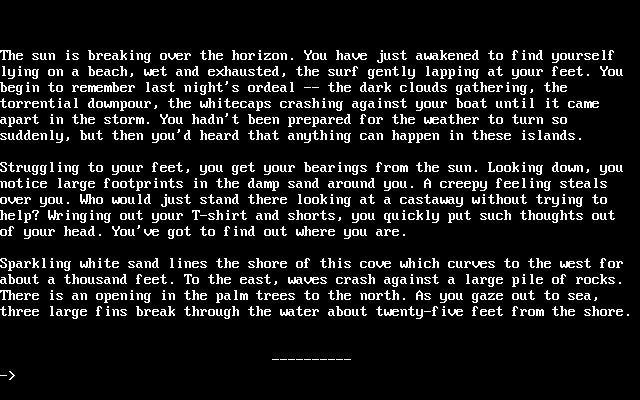
Voodoo Island puts you in the role of an intrepid adventurer determined to thwart Dr. Beauvais’s sinister rituals before he can unleash an unspeakable curse upon the world. The core of the experience is a text‐parser interface reminiscent of Angelsoft’s earlier title, Forbidden Castle, allowing you to type natural commands like “examine voodoo doll” or “mix mandrake with rum.” Unlike many timed puzzles of its era, Voodoo Island gives you unlimited turns, encouraging methodical exploration and experimentation without the pressure of a ticking clock.
(HEY YOU!! We hope you enjoy! We try not to run ads. So basically, this is a very expensive hobby running this site. Please consider joining us for updates, forums, and more. Network w/ us to make some cash or friends while retro gaming, and you can win some free retro games for posting. Okay, carry on 👍)
Navigation relies on a compass‐based movement system—north, south, east, west—combined with up/down options for climbing ridges or descending into hidden caverns. As you chart the island’s map, you’ll encounter environment‐driven puzzles: a locked jungle shrine that opens only when you realign ancient totems, or a rickety bridge you must reinforce with locally sourced vines. Inventory management feels organic, with a ten‐item limit that forces you to choose between a protective amulet and an extra supply of sacred herbs.
Puzzle design ranges from straightforward fetch quests—finding ingredients for a ritual brew—to complex logic challenges, such as interpreting cryptic voodoo chants scribbled in Dr. Beauvais’s journal. Because there’s no turn limit, you can safely test every hypothesis without fearing game‐over screens. The parser is notably receptive to synonyms (“take” vs. “get”) and understands compound commands, making the process of trial‐and‐error less frustrating than in other contemporaries.
Graphics
Despite being primarily text‐driven, Voodoo Island sprinkles in hand‐drawn illustrations that capture the eerie beauty of a Caribbean isle steeped in dark magic. Each location opens with a black‐and‐white sketch—moss‐draped banyan trees, crumbling stone altars, and Dr. Beauvais’s opulent beachfront laboratory. Though simple, these visuals add depth to the narrative and help ground your imagination in a tangible setting.
The interface window is clean and minimalist, with the main text pane occupying most of the screen and a smaller sidebar displaying your current inventory and map. On higher‐resolution systems, the interface scales gracefully, ensuring text remains crisp and illustrations retain their fine line work. There’s no animated flair, but selective use of well‐timed screen flashes or static overlays when a trap is sprung keeps the atmosphere from feeling stale.
Sound effects are sparing but effective: the distant tolling of a ritual gong, the hiss of swamp gas, or the unsettling laughter of unseen cultists. A looping Caribbean‐inspired background track provides ambiance without overwhelming the text. While the audio is not the star of the show, these touches enhance immersion, turning what could be a purely cerebral exercise into a mildly cinematic adventure.
Story
The narrative thrust of Voodoo Island centers on stopping Dr. Beauvais, a rogue scientist‐cultist combining voodoo sorcery with twisted inventions. You learn of his malevolent scheme through newspaper clippings, cryptic diary entries, and rumors spread by island locals. As you piece together his endgame, the stakes steadily escalate from rescuing kidnapped villagers to preventing the summoning of an ancient spirit that could level entire cities.
Characters are fleshed out through vivid descriptions and well‐written dialogue. A kindly shaman guides you with moral quandaries, while Beauvais’s henchmen prowl the jungle with masks and machetes, forcing you to choose between subtle infiltration or bold confrontations. The interplay of science and supernatural adds a refreshing twist: beakers bubbling with glowing concoctions, mechanical voodoo dolls that mechanize curses, and an underground lab built into a volcano’s flank.
Plot pacing is deliberate, matching the game’s unhurried puzzle structure. Early scenes establish the island’s oppressive atmosphere, then build toward a finale in Beauvais’s hidden stronghold. Though some exposition is delivered via lengthy text dumps, the writing is evocative and never loses its sense of tension. By the time you face the final ritual, you’re emotionally invested in both saving the island’s inhabitants and safeguarding the world at large.
Overall Experience
Playing Voodoo Island feels like stepping into a pulpy adventure novel where your wits are the only weapon you’ll need. The absence of a turn limit transforms exploration into a leisurely pursuit; you can scour every nook and cranny for clues or simply admire the evocative setting. This design choice makes the game accessible to both hardcore puzzle‐solvers and casual adventurers who prefer to savor the narrative at their own pace.
The intuitive parser and solid hint system (delivered via an in‐game “help” command rather than external supplements) keep frustration low. If you’re stuck, creatively phrasing your query often yields a nudge in the right direction without spoiling the solution outright. Replay value is moderate: once you know the key ingredients and ritual steps, the thrill of discovery lessens, but uncovering all flavor texts and alternative dialogue paths can prolong enjoyment.
Ultimately, Voodoo Island delivers a memorable trip into dark sorcery, balanced by logical puzzles and a strong story. Its blend of Angelsoft’s dependable parser mechanics, atmospheric graphics, and rich narrative make it a standout title for fans of classic interactive fiction. Whether you’re a veteran text‐adventure enthusiast or a newcomer curious about pre‐point‐and‐click era design, Voodoo Island offers a satisfying voyage into voodoo mystery and island intrigue.



Reviews
There are no reviews yet.