 Retro Replay Retro Replay gaming reviews, news, emulation, geek stuff and more!



Retro Replay Review
Gameplay
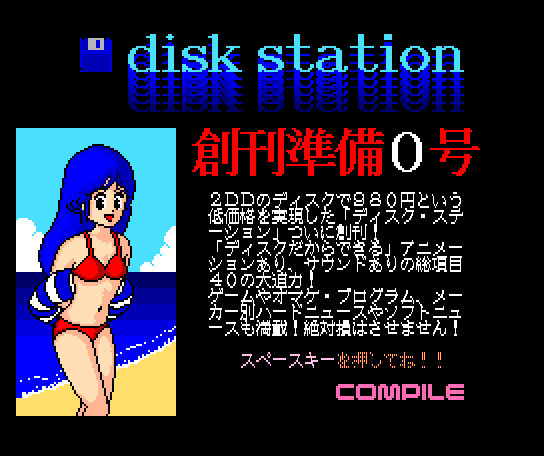
Disk Station #0 offers an eclectic mix of interactive and non-interactive experiences, making it feel more like a digital playground than a conventional game. From the moment you load the disk, you’re greeted by editorial pages that set the tone for exploration and creativity. As you progress, you encounter a BASIC-written paint program—simple but surprisingly engaging—that invites you to experiment with your own pixel art. This starter activity may feel basic, yet it perfectly encapsulates the magazine’s DIY spirit.
(HEY YOU!! We hope you enjoy! We try not to run ads. So basically, this is a very expensive hobby running this site. Please consider joining us for updates, forums, and more. Network w/ us to make some cash or friends while retro gaming, and you can win some free retro games for posting. Okay, carry on 👍)
The meat of the disk is its collection of demos and mini-games. On page 7, a time-limited demo of Aleste delivers fast-paced shooting action, giving just enough bullets and power-ups to whet your appetite. Page 24 brings a solitaire demo from Game Arts, where the Klondyke variant feels familiar yet polished. Both snippets demonstrate that Compile isn’t just curating content—they’re showcasing high-quality builds that hint at the full releases.
Original touches bolster the replay value: a branching multiple-choice story on page 27 immerses you in Takashi’s comedic quest for the mythical “Super Ultra Last Long Special Real Big Baseball,” while the retro remake of Hustle Chumy on page 29 supplies quick, arcade-style fun. Hidden away is a Moonlander-inspired landing-pad jumper, plus “Mouse Games” that demand deft pointer control. The variety keeps you clicking through cylinders, eager to see what interaction awaits next.
Graphics
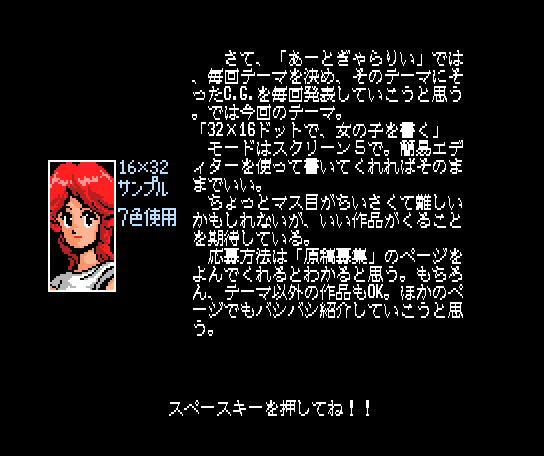
Visually, Disk Station #0 balances functional clarity with bursts of artistry. The editorial and informational pages sport crisp text and well-organized layouts that recall traditional print magazines, but rendered in pixel-perfect fidelity. The art gallery on page 6 provides striking monochrome illustrations, setting a high bar for reader submissions in future issues.
The BASIC paint program may look rudimentary—blocky shapes and a limited palette—but it’s intentionally straightforward, reflecting both the technical constraints and the ethos of early disk-based creativity. When you switch to the Aleste demo, however, you’re treated to vibrant shoot-’em-up backdrops and smoothly animated sprites. It’s a vivid reminder of what the FM-PAC cartridge can deliver when developers push the hardware.
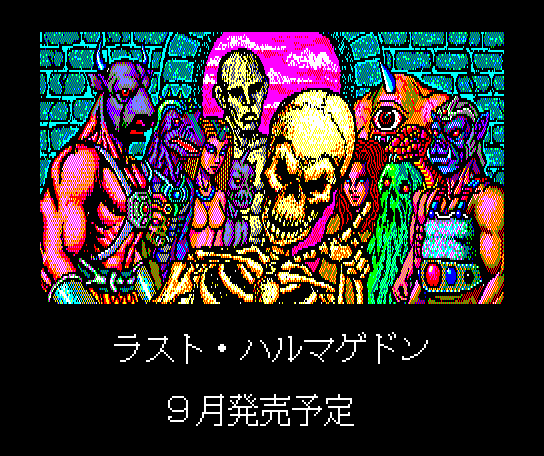
Preview screenshots of Last Armageddon and Akambe Dragon are cleanly presented, with enough detail to tease atmospheric worlds and character designs. The Solitaire Royal demo uses simple card art that’s clear and easy on the eyes, while Hustle Chumy’s retro aesthetic feels authentically nostalgic. Across all sections, the graphics serve each feature’s purpose—be it editorial clarity or arcade adrenaline—without overstaying their technical welcome.
Story
Though Disk Station #0 isn’t a narrative-driven title in the traditional sense, it weaves its own meta-story of a budding community. The opening editorials invite readers to participate, framing the disk as a living publication that grows with every new submission. You get the sense that you’re not just a consumer—you’re a potential contributor in Compile’s unfolding saga.
The multiple-choice short story starring Takashi plays like a humorous side quest. Its lighthearted tone and playful options demonstrate that even within a disk magazine, interactive storytelling can thrive. Choices range from the absurd (stealing the baseball) to the earnest (writing a heartfelt letter), and each decision leads to a different punchline, giving the vignette genuine replay value.
Beyond that, the previews for Last Armageddon and Akambe Dragon hint at grander narratives yet to come. While non-interactive, these screens and blurbs evoke sprawling, post-apocalyptic RPG drama and fantasy adventure, respectively. The promise of deeper plots and character arcs in upcoming full releases adds an undercurrent of anticipation that enriches the disk’s overall narrative tapestry.
Overall Experience
As a preview issue, Disk Station #0 excels at delivering a sampler platter of what Compile—and its partners—have in store. The 40-cylinder disk can feel packed, yet never overwhelming; you’re guided seamlessly from editorial page to paint program to game demo, all within a few clicks. This sense of curation makes exploration both intuitive and rewarding.
Enthusiasts of retro gaming and software preservation will appreciate the blend of technology demonstrations (FM-PAC cartridge explanation), developer insights, and playable content. The interactivity isn’t just a gimmick—it underscores the magazine’s mission to foster a creative community. By encouraging reader submissions and showcasing firsthand demos, Disk Station #0 feels like a collaborative celebration of home-brew software culture.
Ultimately, Disk Station #0 stands out as more than a floppy-disk novelty. It’s a curated microcosm of 1980s computer magazine culture, enhanced by playable demos and original mini-experiences. For collectors, tinkerers, and curious gamers alike, it offers a unique—and unexpectedly deep—journey through the early days of disk-based entertainment. Whether you’re looking to sample upcoming hits or try your hand at BASIC art, this preview issue delivers hours of nostalgic fun.



Reviews
There are no reviews yet.