 Retro Replay Retro Replay gaming reviews, news, emulation, geek stuff and more!

Retro Replay Review
Gameplay
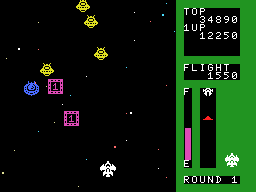
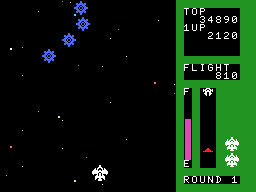
Space Trouble immediately sets itself apart with its central mantra: “Don’t shoot!” On the surface, it resembles a traditional arcade shooter, but every bullet you fire drains a sliver of your precious fuel reserve. This fundamental twist forces you to carefully weigh offense against survival, turning each encounter into a tense, resource-management puzzle rather than a mindless shoot-’em-up. You’ll need to plan your shots strategically, choosing when to expend fuel on an enemy or when to evade and conserve.
(HEY YOU!! We hope you enjoy! We try not to run ads. So basically, this is a very expensive hobby running this site. Please consider joining us for updates, forums, and more. Network w/ us to make some cash or friends while retro gaming, and you can win some free retro games for posting. Okay, carry on 👍)
The level design emphasizes this balance from the very first asteroid field. You’ll weave in and out of rocky masses, dodging collisions and hunting for scattered fuel canisters to keep your craft alive. Occasionally, power-ups appear that enhance your “flight record,” which converts to points at level’s end. These fleeting bonuses tempt you into riskier maneuvers—darting into tight spots or lingering under enemy guns—to maximize your score.
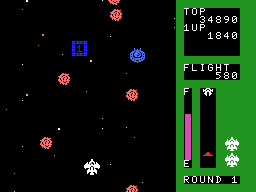
As you advance through subsequent fields, new obstacles emerge. Flying saucers weave erratically, mines drift unpredictably, and pulsating organic blobs demand repeated hits to break apart. Enemy ships adopt unique AI behaviors—some relentlessly pursue you, while others flit around to avoid your shots. This variety keeps the core loop fresh, forcing you to constantly adapt your tactics and fuel budget, and churns out a satisfying sense of progression.
Graphics
Space Trouble’s graphical style strikes a smooth balance between retro charm and modern polish. The asteroids and obstacles flaunt a subtle texturing that captures the roughness of space debris, while enemy vessels glow with neon outlines against the void. Though the color palette leans toward dark, moody tones, occasional bursts of bright particle effects—engine trails, explosion flares, and power-up glows—lend visual clarity to the action.
The game’s transition from simple asteroids to flying saucers and organic blobs is accompanied by thoughtful visual cues. Saucer hulls sport metallic sheens and moving lights that signal their erratic flight patterns, while the blobs undulate in real time, suggesting a living menace. These shifts in design keep your eyes engaged, ensuring you never quite settle into rote memorization of hazard shapes.
Particle effects deserve special mention: every shot delivers a small plume of sparks, and each destroyed obstacle showers you in debris that momentarily floats against the starry backdrop. Docking animations at the mother ship sequence are equally meticulous, with warning lights flashing and a telescoping docking arm extending. These flourishes, while not revolutionary, give Space Trouble a vibrant, tactile feel.
Story
While Space Trouble forgoes a deep narrative, it weaves a minimalist tale through its mission structure. You play as a lone pilot venturing deeper into an uncharted asteroid complex to reach a distant colony stranded on the far side of the sector. Each field you clear represents a milestone closer to your objective, and the stakes become palpable as fuel runs low and obstacles grow more menacing.
The mother ship sequences, which appear after every four fields, double as narrative waypoints. Docking requires exacting precision, and mishaps are portrayed in brief, dramatic cut-ins as your ship shudders and sparks. When successful, the teleportation effect and ambient voice prompts reinforce the idea that you’re approaching a sanctuary point—and that failure truly means oblivion.
Though there are no lengthy cutscenes or voiced dialogues, Space Trouble’s world is sketched in concise text prompts and environmental storytelling. The gradual introduction of organic blobs hints at alien lifeforms adapting to the mining of asteroids, and the mix of drifting mines suggests a prior conflict. This sparse approach suits the tight, ten-minute-per-field gameplay, allowing you to fill in the backstory without breaking the pacing.
Overall Experience
Space Trouble delivers a compelling package that challenges both twitch reflexes and strategic thinking. Its hallmark fuel-management mechanic transforms each firefight into a high-stakes decision: expend fuel for safety, or risk navigating closer to hazards in the hope of scavenging more. The tension this creates is equal parts thrilling and nerve-wracking, giving the game a memorable identity among space shooters.
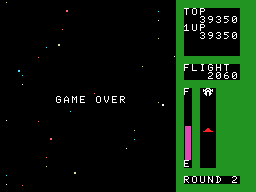
The pacing is near-perfect for short sessions. Fields take just long enough to build suspense, and the mother ship docking breaks serve as rewarding milestones. Leaderboards track your flight records, encouraging repeated runs to outdo your high score. Fans of score-attack titles will appreciate this blend of quick restarts and incremental mastery.
While the lack of a sprawling narrative might disappoint story-hungry players, those seeking a pure arcade experience will find Space Trouble immensely satisfying. Its blend of polished graphics, varied enemies, and clever resource constraints creates a cohesive whole that feels both familiar and fresh. Overall, Space Trouble is a standout indie gem that will keep you revisiting the void time and again.


Reviews
There are no reviews yet.