 Retro Replay Retro Replay gaming reviews, news, emulation, geek stuff and more!



Retro Replay Review
Gameplay
Donkey Kong Classics offers a seamless blend of two arcade legends—Donkey Kong and Donkey Kong Junior—bringing classic platforming action to the NES. Players will find the tight, responsive controls they expect from Nintendo’s early endeavors, allowing precise jumps, climbs, and barrel dodges across each stage. The original Donkey Kong challenges you to ascend scaffolding, leap over rolling barrels, and outsmart the hulking titular ape, while Donkey Kong Junior shifts the perspective, tasking you with rescuing the ape from Mario’s clutches.
(HEY YOU!! We hope you enjoy! We try not to run ads. So basically, this is a very expensive hobby running this site. Please consider joining us for updates, forums, and more. Network w/ us to make some cash or friends while retro gaming, and you can win some free retro games for posting. Okay, carry on 👍)
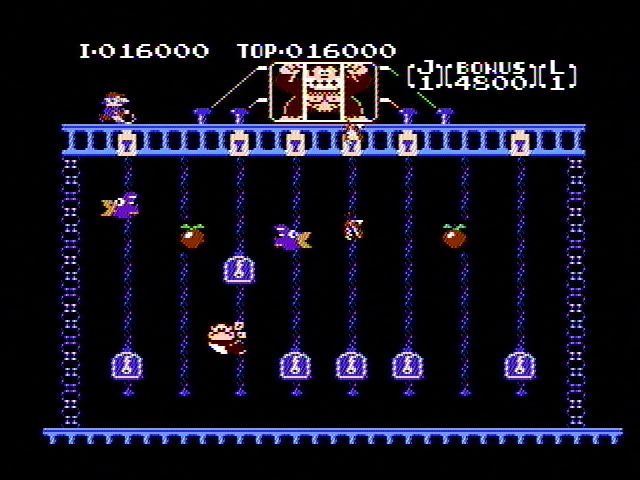
Difficulty ramps up steadily, with each level introducing new hazards that keep the gameplay engaging. In Donkey Kong, timing is everything as fireballs and falling girders complement Donkey Kong’s barrel assaults. Donkey Kong Junior flips the script, adding vines, springs, and patrolling enemies that require quick reflexes and strategic movement. Fans of high-score chasing will appreciate the multiple routes and secret mechanics, such as bonus items and hidden nests, that reward exploration.
The dual-game setup extends replayability immensely. Whether you’re revisiting familiar levels or tackling them for the first time, the compilation feels fresh due to the switch in protagonists and objectives. Multiplayer options remain basic—alternating turns for high scores—but the addictive “just one more try” loop is intact. Overall, the gameplay stands the test of time, offering both nostalgia and challenge to new players and veterans alike.
Graphics
On the technical front, Donkey Kong Classics stays true to the vibrant pixel art of the original arcade cabinets, adapted cleverly for the NES hardware. The sprite work is crisp, with Donkey Kong’s signature red girders and Mario’s red-and-blue palette delivered in bold, eye-catching hues. Enemies and environmental details—like the classic rivets and conveyor belts—retain their arcade charm, although occasional sprite flicker is noticeable on busier screens.
Donkey Kong Junior introduces a slightly more varied color palette, reflecting the lush jungle settings and mechanical cages that define its stages. The vines sway with fluid animation, and Junior himself moves with satisfying responsiveness that belies the system’s limitations. While the resolution is lower than the arcade originals, the art direction ensures each level is instantly recognizable and visually appealing.
Transitions between levels are handled smoothly, with simple yet effective screen wipes that maintain momentum. Backgrounds are sparse but functional, keeping the focus on gameplay hazards and platform layouts. Fans seeking a retro aesthetic will appreciate the authenticity of these visuals, which deliver a nostalgic trip without feeling dated or sluggish.
Story
By modern standards, the narrative in Donkey Kong Classics is minimal, yet it remains a cornerstone of early video game storytelling. The original Donkey Kong frames Mario’s quest to rescue Pauline from the clutches of an oversized gorilla. This damsel-in-distress framework laid the groundwork for countless platformers to follow, turning a simple premise into an iconic gaming moment.
Donkey Kong Junior offers a fresh twist by casting Junior as the hero, determined to free his father from Mario’s imprisonment. This role reversal not only deepened the world’s lore but also showcased Nintendo’s willingness to experiment with character dynamics even in the 1980s. Despite sparse in-game text, cutscenes before and after each level convey the stakes and provide a rudimentary but effective story progression.
While neither game offers complex dialogue or branching narratives, the emotional pull of rescue and revenge, combined with memorable character designs, gives both titles surprising narrative weight. Players are motivated not just by high scores but by a genuine desire to see the story through to its conclusion, making every victory feel earned.
Overall Experience
Donkey Kong Classics stands as a testament to Nintendo’s early prowess in creating compelling, bite-sized gaming experiences. The value proposition of two full titles on a single cartridge is still impressive, and both games hold up remarkably well. Whether you’re after tight platforming, high-score competition, or a slice of gaming history, this compilation delivers in spades.
The difficulty curve may feel steep to modern gamers, but it’s part of the charm. Learning enemy patterns, mastering jump physics, and memorizing hidden bonuses all contribute to a satisfying sense of progression. Occasional frustration gives way to triumph when you clear a notoriously tough stage, which encapsulates the enduring appeal of these classics.
Ultimately, Donkey Kong Classics is more than a nostalgic relic; it’s a vital piece of the medium’s evolution. Its straightforward mechanics, iconic characters, and enduring challenge ensure it remains a worthy addition to any retro gaming library. For newcomers curious about gaming’s roots or veterans seeking to revisit a formative era, this collection offers an unparalleled platforming experience.


Reviews
There are no reviews yet.