 Retro Replay Retro Replay gaming reviews, news, emulation, geek stuff and more!
Retro Replay Review
Gameplay
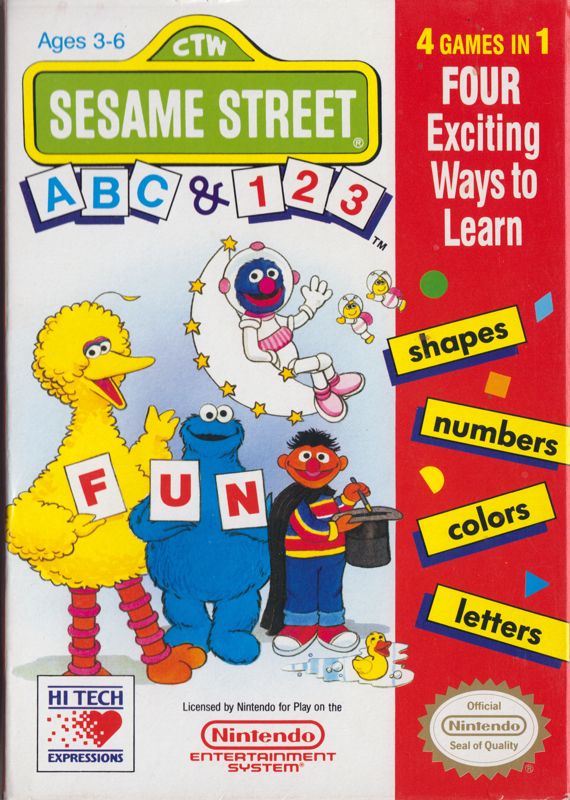
Sesame Street 1 2 3/A B C brings two classic NES titles together in one bundle, offering young players engaging educational challenges centered on numbers and letters. In “Sesame Street 1 2 3,” kids guide Big Bird through various stages where they collect counting blocks and solve simple addition or subtraction problems. The game uses approachable mechanics—jumping, item collection, and interacting with friendly characters like Oscar and Bert—to reinforce basic math skills.
(HEY YOU!! We hope you enjoy! We try not to run ads. So basically, this is a very expensive hobby running this site. Please consider joining us for updates, forums, and more. Network w/ us to make some cash or friends while retro gaming, and you can win some free retro games for posting. Okay, carry on 👍)
Meanwhile, “Sesame Street A B C” focuses on the alphabet. Players steer Elmo around colorful stages, picking up letter tiles in order and spelling simple words with the help of familiar faces like Cookie Monster and Grover. Each level introduces new letters, gradually building phonics understanding as children match uppercase and lowercase pairs, identify initial sounds, and complete word-building mini-games.
Controls are intuitive and responsive, a crucial factor when young hands are at the controller. Both games employ straightforward directional input and a single “action” button to jump or pick up items. This simplicity keeps children from feeling overwhelmed, allowing them to focus on learning objectives rather than mastering complex mechanics. Occasional time limits add subtle pressure, encouraging repeated playthroughs and reinforcing lessons through repetition.
Replayability is built into the progression system: each successful completion awards the player with a Sesame Street “High Five!” token. Collecting all tokens unlocks bonus content and harder variations of the puzzles. This reward loop motivates kids to revisit levels and refine their counting or reading skills, making the compilation both educational and entertaining.
Graphics
Graphically, these NES titles reflect the hardware’s 8-bit charm. Sprites are bright and simple, yet instantly recognizable—Big Bird’s yellow silhouette, Elmo’s red fur, and Cookie Monster’s blue doughy grin all pop against the pastel backgrounds. The environments are drawn in bold primary colors, mirroring the look of the TV show’s iconic street set and keeping the visual style consistent with Sesame Street’s brand identity.
Backgrounds feature repeating tile patterns that suggest brick sidewalks, brick walls, and sky-blue horizons. While NES limitations mean there’s little parallax scrolling or dynamic lighting, the designers cleverly use color contrasts to keep stages visually distinct. For example, math stages might have a warm orange hue, while alphabet levels favor cooler blues or greens, reinforcing the theme of each game.
Cutscenes are minimal but sweet: brief panels show character greetings and simple text prompts, all rendered in chunky, pixelated fonts. These interludes add a sense of progression without bogging down the action. The visual feedback for correct answers—sparkles, smiling characters, and a triumphant jingle—keeps the experience positive and encourages kids to keep going.
Even by modern standards, the graphics hold nostalgic appeal. While lacking the polish of contemporary educational titles, the retro aesthetic has a timeless quality that both kids and parents can appreciate. It’s easy to imagine someone who grew up watching Sesame Street on TV feeling a warm sense of recognition when they first see the game’s pixel art characters come to life.
Story
As educational compilations, these games don’t follow a traditional narrative arc. Instead, each stage is framed as a simple task from the Sesame Street gang: Big Bird needs help counting steps to find his lost book, or Elmo is on a quest to spell out the cookies that Cookie Monster has hidden. This loose story structure provides enough context to make the activities feel purposeful without distracting from the core learning objectives.
Character cameos serve as light motivators rather than driving characters in a deep plot. When you finish a level, you might see Oscar grumbling about too many numbers or Grover cheering you on for spelling “CAT.” These short interactions evoke the friendly, educational tone of the TV show and remind children they’re learning alongside beloved Muppets.
There’s no overlying villain or dramatic conflict—learning itself is the “challenge.” This absence of high stakes suits the target audience perfectly, who benefit most from a calm, supportive environment. The games’ storybook simplicity means children won’t get frustrated by plot twists or lose interest in complex world-building; they can focus on mastering letters and numbers at their own pace.
Ultimately, the narrative is a gentle framework meant to guide young learners through sequential lessons. While it won’t rival the epic storytelling found in modern RPGs or adventure games, it succeeds in making education feel like a friendly Sesame Street episode where the goal is fun and learning together.
Overall Experience
Sesame Street 1 2 3/A B C is a delightfully nostalgic package for parents who remember the original NES titles, yet it remains a perfectly serviceable educational tool for today’s children. The compilation’s biggest strength lies in blending fundamental math and reading lessons with simple platforming mechanics, ensuring that learning never feels like a chore.
From a technical perspective, the games run smoothly on both original hardware and modern emulators, preserving the tight controls and snappy feedback that are crucial for young players. The soundtrack consists of cheerful chiptune renditions of familiar Sesame Street themes, adding to the overall positive atmosphere and helping maintain engagement through repetitive educational activities.
Parents and educators will appreciate the clear learning objectives and built-in rewards that encourage repeated play. There’s a tangible sense of progression as children work through the stages: early levels introduce single-digit counting or basic letters, while later challenges mix in simple math problems or multi-letter words. This gradual difficulty curve mirrors best practices in early childhood education.
Overall, Sesame Street 1 2 3/A B C offers a charming, effective way to introduce young gamers to foundational skills. Its blend of approachable gameplay, retro visuals, and beloved characters makes for an experience that’s as enjoyable as it is educational. Whether you’re a nostalgic adult or a parent seeking quality edutainment, this compilation delivers a healthy dose of Sesame Street magic in a compact NES package.


Reviews
There are no reviews yet.