 Retro Replay Retro Replay gaming reviews, news, emulation, geek stuff and more!



Retro Replay Review
Gameplay
Space Shuttle Project places you in the hot seat as a NASA Commander overseeing every critical phase of a shuttle mission. From pre-launch preparations to the final touchdown, the game breaks down each segment into bite-sized mini-games that test memory, precision, and timing. Whether you’re juggling fuel lines and crew manifests in Stage 1 or matching power bars and arrow indicators during launch in Stage 2, the variety of tasks keeps you on your toes.
(HEY YOU!! We hope you enjoy! We try not to run ads. So basically, this is a very expensive hobby running this site. Please consider joining us for updates, forums, and more. Network w/ us to make some cash or friends while retro gaming, and you can win some free retro games for posting. Okay, carry on 👍)
The pacing of the gameplay is brisk and progressively challenging. Early missions ease you into the mechanics—fueling the shuttle, securing astronauts, and running basic diagnostics—before ratcheting up the difficulty with tighter time limits and more complex extravehicular activities. Stage 3’s satellite deployment and space-station construction puzzles are particularly engaging, as they combine spatial awareness with resource management under the constant threat of oxygen depletion or floating debris.
Reliability of controls is paramount in a simulator of this nature, and Space Shuttle Project delivers a responsive experience. The lift controls, D-pad mini-games, and power-bar stops all feel intuitive, though mastering the subtle timing windows takes practice. With only five allowable mistakes per mission, the game strikes a balance between accessible entry points and a steep learning curve that will satisfy players seeking genuine astronaut-level tension.
Graphics
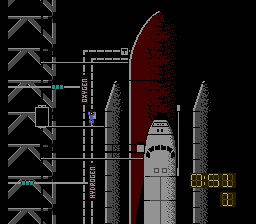
While not pushing the boundaries of modern graphics, Space Shuttle Project embraces a charming retro aesthetic reminiscent of classic arcade and early home-computer titles. Sprites are crisp and color-coded clearly, ensuring you always know which switch controls hydrogen versus oxygen or where each crew member waits to board. The clean HUD design helps you track time limits, remaining oxygen, and mission objectives without overwhelming on-screen clutter.
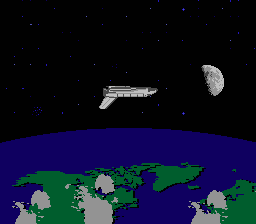
Detail shines through in the mission backgrounds: the launch pad’s gantry, the void of space peppered with debris, and the runway touched by sunset. Transitions between stages are simple but effective, with brief animations depicting SRB separation or EVA astronauts floating free—enough to convey scale without bogging down performance. Even on modest hardware, the game runs smoothly, making it a solid pick for retro enthusiasts and newcomers alike.
Sound design complements the visual style with beeps, countdown tones, and atmospheric whooshes. Though minimalistic, the audio cues are well-timed, alerting you to successful mini-game completions or impending failures. The background music is subtle, lending a sense of mission-critical focus rather than pounding your eardrums, and underscores the game’s simulator roots.
Story
Space Shuttle Project’s narrative framework is straightforward: you are the Commander entrusted by the Launch Director to orchestrate a series of increasingly complex shuttle missions. There’s no sprawling sci-fi epic or villainous adversary here; instead, the game derives its story from authentic NASA procedures, weaving a tale of responsibility, precision, and teamwork. This approach will particularly appeal to players fascinated by real-world space exploration.
Each of the six missions adds a fresh twist—satellite deployments, space station assembly, on-orbit repairs, and even a daring cosmonaut rescue. Though the storyline is delivered in minimal text, the variety of mission briefs and password saving system (tying back to your shuttle designation) creates a sense of continuity and progression. You feel like you’re part of a genuine shuttle program, earning new clearances and responsibilities as you succeed.
The lack of melodrama or character development might be a letdown for gamers seeking a cinematic narrative, but for simulation purists, this stripped-down approach enhances immersion. You aren’t playing for Cutscene X or NPC Y; you’re playing because you want that next perfect launch, flawless EVA, and textbook landing. The story is about process and achievement rather than plot twists.
Overall Experience
Space Shuttle Project is a niche gem that successfully blends educational simulation with arcade-style mini-games. Its structured, stage-based design ensures each mission feels distinct, challenging, and rewarding. Whether you’re a space enthusiast eager to learn rocket staging procedures or a retro gamer craving tight controls and escalating difficulty, there’s plenty here to keep you engaged.
The game’s brevity—six missions with password saves rather than save files—may leave completionists wanting more, but high-score chasers and perfectionists will appreciate the “only five fails” rule that demands near-flawless execution. Replayability is strong: mastering every mini-game under pressure feels like a personal achievement, and beating your own best times provides a compelling reason to revisit earlier missions.
In conclusion, Space Shuttle Project offers a solid balance of challenge, authenticity, and old-school charm. It isn’t for everyone—those looking for narrative depth or photorealistic graphics may come away disappointed—but for players drawn to methodical, skill-based simulators, this title delivers an immersive ride from fuel-up to touchdown. Strap in, Commander: liftoff awaits.


Reviews
There are no reviews yet.