 Retro Replay Retro Replay gaming reviews, news, emulation, geek stuff and more!

Retro Replay Review
Gameplay
Metroid Prime: Hunters shifts the series’ focus squarely onto high-octane first-person shooting, making it one of the most action-driven entries in the franchise. From the very start, Samus has access to her full suite of abilities—Morph Ball, Scan Visor, and Grapple Beam—while you still need to locate new beam upgrades scattered across the Alimbic Cluster. This structure balances immediate firepower with the signature Metroid-style exploration, as you navigate winding corridors, secret passages, and environmental puzzles that guard the relics you seek.
(HEY YOU!! We hope you enjoy! We try not to run ads. So basically, this is a very expensive hobby running this site. Please consider joining us for updates, forums, and more. Network w/ us to make some cash or friends while retro gaming, and you can win some free retro games for posting. Okay, carry on 👍)
Single-player missions are punctuated by surprise encounters with rival bounty hunters, each boasting distinct weapons and tactics. These AI adversaries can show up seemingly out of nowhere, forcing you to stay on your toes even after you’ve unlocked every beam type. While some clashes feel like set-piece battles, others arise organically within puzzle zones, giving the campaign a refreshing unpredictability that keeps veteran Metroid fans engaged.
Where Hunters truly shines is in its robust multiplayer suite. Using local wireless or Nintendo Wi-Fi Connection, you can dive into seven different modes—Nodes, Survival, Bounty, Prime Hunter, Battle, Capture, and Defender—each offering unique objectives and rule sets. The variety ensures that no two matches feel the same, whether you’re trying to control key points on the map or hunt down specific opponents for extra points.
Controls on the Nintendo DS take some acclimation, with the d-pad steering Samus and the touchscreen handling aiming and visors. Initially, you might fumble as you switch between beams or zoom in for a crucial headshot, but a few hours in, the interface becomes second nature. The tactile feedback of the stylus aiming enhances precision in both solo battles and frantic multiplayer skirmishes, making every shot feel satisfying.
Graphics
Given the DS hardware constraints, Metroid Prime: Hunters manages to deliver surprisingly lush environments and detailed character models. The top screen renders the main action with crisp polygons and respectable draw distances, while the bottom screen handles visors, map layouts, and inventory management without significant slowdown. Lighting effects—especially the eerie glow of ancient Alimbic relics—imbue many chambers with a foreboding atmosphere.
Textures occasionally exhibit the blockiness expected of a handheld title from the mid-2000s, but clever use of color palettes and dynamic lighting masks most shortcomings. Outdoor areas feature vibrant hues—icy caverns of Tirsa Heights, dusty ruins of Weavel’s Dench—while interior complexes rely on stark contrasts between fiery lava flows and shadowed passages. Such diversity keeps each level visually distinct.
Character animations are smooth for the hardware, particularly during boss confrontations where scanned data feeds you snippets of the hunter’s combat lore. While Samus’s movement can feel slightly stiff compared to her fluid GameCube outings, the visceral impact of her cannon blasts and the fluid trajectories of enemy projectiles preserve the series’ cinematic flair.
Multiplayer arenas range from sleek tech-facility corridors to ancient temples, each stage expertly crafted to accommodate the DS’s dual screens. Some environments use verticality to full effect, forcing players to consider multi-level sightlines in competitive play. Overall, Hunters proves that with clever art direction and smart optimization, handheld graphics can still pack a punch.
Story
Metroid Prime: Hunters slots neatly between the events of Metroid Prime and Metroid Prime 2: Echoes, expanding the lore of the Alimbic civilization. Samus Aran receives a cryptic transmission hinting at “ultimate power” hidden within the desolate Alimbic Cluster, a region rumored to house artifacts far beyond Federation comprehension. This setup provides a solid narrative framework that drives the single-player exploration.
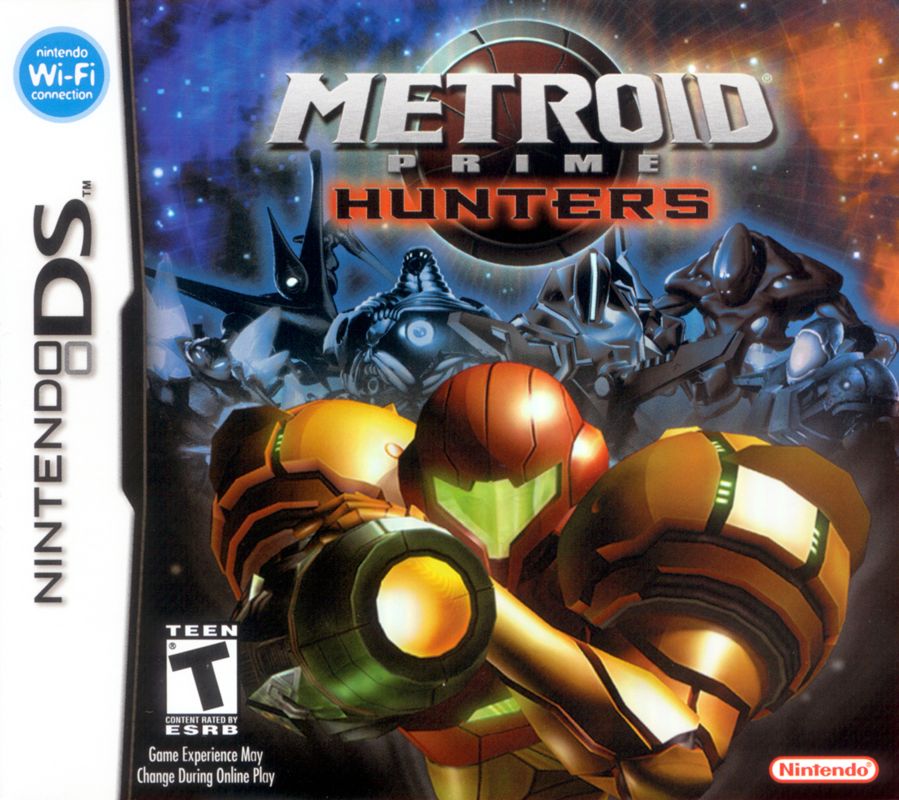
Complicating matters are six other bounty hunters, each lured by the same promise of power. Characters like Noxus, with his brute strength, and Spire, whose techno-organic abilities blur the line between machine and life, introduce varied perspectives and occasional cameos during your mission. Their motivations—ranging from political gain to personal vendettas—add depth to what might otherwise be a straightforward fetch quest for relics.
Cinematic cutscenes and datapad logs flesh out the backstory, offering glimpses into Alimbic history and hints about Samus’s future encounters. Although dialogue is sparse compared to narrative-heavy titles, each encounter with a rival hunter serves as a mini-boss fight and reveals just enough about their origins to spark player curiosity.
Ultimately, Hunters’ story excels at sustaining momentum rather than delivering an earth-shattering plot twist. It bridges two major installments of the Prime saga, enriching the timeline and fleshing out supporting characters without overshadowing Samus’s own journey. Players invested in Metroid lore will appreciate the connective tissue this game provides.
Overall Experience
Metroid Prime: Hunters offers a compelling blend of exploration, precision shooting, and competitive multiplayer—quite an accomplishment on the Nintendo DS’s modest hardware. The single-player campaign might lean more heavily on straightforward gunplay than past entries, but the inclusion of rival hunters and clever level design lends the adventure both tension and replayability.
The multiplayer suite stands out as one of the system’s best online experiences, with varied modes that keep sessions fresh and engaging. Whether you’re a casual player seeking quick deathmatch rounds or a competitive sharpshooter hunting for leaderboard dominance, Hunters delivers. The wireless voice chat feature—enabled via friend codes—adds a social dimension rarely seen in DS titles.
While the narrative doesn’t revolutionize the Metroid mythos, it fills in crucial gaps between Prime and Echoes, giving fans additional context and motivation to revisit this galactic hot spot. Graphically, Hunters punches above its weight, and the controls, after a brief learning curve, feel tight and responsive—both for single-player puzzles and head-to-head firefights.
For newcomers, Hunters presents a robust introduction to Metroid’s signature mix of atmosphere and action, with the multiplayer component serving as a delightful bonus. Seasoned veterans will find enough challenges, hidden secrets, and lore revelations to justify multiple playthroughs. Overall, Metroid Prime: Hunters stands as a testament to how portable entries can expand beloved franchises without sacrificing quality or depth.


Reviews
There are no reviews yet.