 Retro Replay Retro Replay gaming reviews, news, emulation, geek stuff and more!

Retro Replay Review
Gameplay
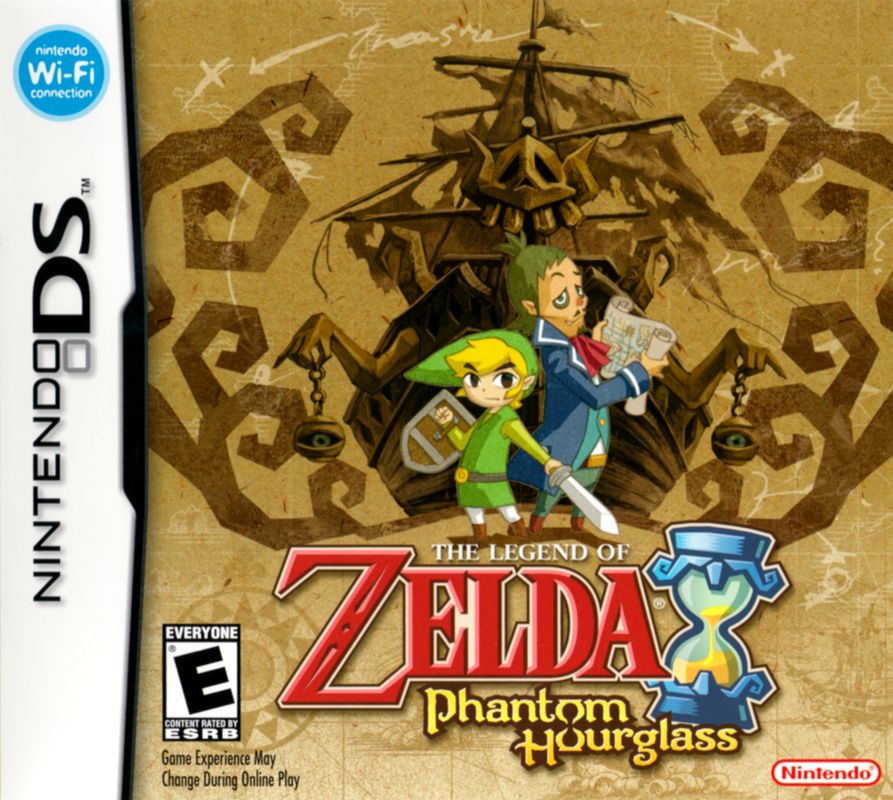
The Legend of Zelda: Phantom Hourglass reinvents the classic Zelda formula by placing the entire control scheme on the Nintendo DS touch screen. Players guide Link’s every step by tapping on the lower screen, and most combat actions—from sword slashes to shield blocks—are executed with simple stylus gestures. This hands-on approach makes each encounter feel tactile and immediate, whether you’re fending off Moblins or slicing through swarms of bats.
(HEY YOU!! We hope you enjoy! We try not to run ads. So basically, this is a very expensive hobby running this site. Please consider joining us for updates, forums, and more. Network w/ us to make some cash or friends while retro gaming, and you can win some free retro games for posting. Okay, carry on 👍)
Combat is intuitive yet surprisingly deep. Drawing a short line in front of Link performs a sword strike, while more complex gestures unleash special moves like a spin attack. You’ll quickly learn to draw circles to somersault past enemies or trace the path of your boomerang for precise throws. This method of control takes some getting used to, but once mastered, it provides a fresh and satisfying way to engage in battle.
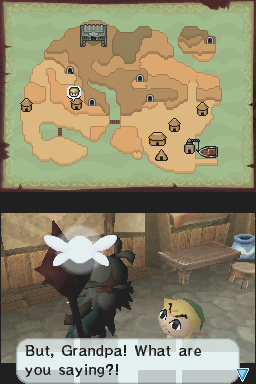
Exploration extends beyond dungeons into open seas. Sailing between islands hinges on drawing a course on the world map, and you can adjust your path on the fly by tapping to avoid obstacles or pursue treasure. The sea itself hides secrets: you can drop a fishing line with the stylus, reel in rare fish, and even mark hidden coves and enemy patrols by scribbling notes directly onto your map. These features encourage careful observation and make each voyage feel dynamic.
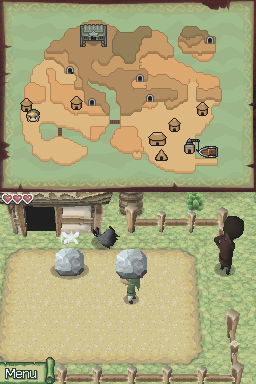
Dungeon design also capitalizes on the DS’s dual screens. Puzzles frequently span both screens, requiring you to tap switches, rotate blocks, or combine items in inventive ways. While some puzzles can feel repetitive, the overall variety—ranging from weight-sensitive platforms to water-level manipulation—keeps the experience engaging from start to finish.
Graphics
Visually, Phantom Hourglass inherits the cel-shaded charm of Wind Waker but translates it into a compact top-down perspective suited for portable play. Character models—especially Link and Tetra—retain their expressive, cartoon-like features, making conversations and cutscenes feel lively even on the DS’s small screens.
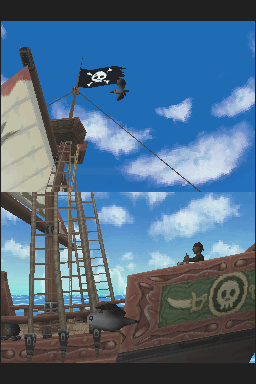
The environments are richly detailed despite hardware limitations. Islands each boast unique palettes: lush jungles glow with emerald foliage, desert outposts shimmer in golden sands, and ghostly ruins emit an eerie green hue. Water effects under the ship’s hull shimmer convincingly, and subtle weather changes—from calm seas to stormy gales—add atmospheric depth to your journey.
Boss battles serve as graphical highlights, with larger-than-life foes rendered with bold colors and dramatic animations. When a boss unleashes a devastating attack, the screen shakes slightly, and dynamic camera angles on the top screen accentuate the tension. These moments fuse visual flair with gameplay stakes, underscoring the high points of Phantom Hourglass’s presentation.
While the DS hardware means the resolution is modest, clever art direction ensures each frame feels vibrant. Textures remain crisp, and the user interface—especially the on-screen map and item menus—stays clear and legible throughout. This balance of style and functionality showcases what the DS can achieve in the right hands.
Story
Phantom Hourglass picks up immediately after the events of Wind Waker. Link, Tetra, and their pirate crew are charting new waters when they encounter a spectral ship drifting at sea. Tetra’s curiosity draws her aboard, but she vanishes, leaving Link to dive after her—and wash ashore on an uncharted island.
Stranded without his crew, Link soon meets Ciela, a ghostly companion who guides him toward rescuing Tetra and unravelling the curse of the mysterious Temple of the Ocean King. The narrative unfolds through island-hopping adventures, each new land revealing clues about ancient civilizations and the malevolent forces that seek to enslave the world’s waters.
Character interactions bring warmth and humor to the journey. Tetra remains the bold, witty captain fans adore, while the new ally Linebeck provides comic relief with his exaggerated cowardice and penchant for treasure hunting. These banter-filled moments punctuate the more somber revelations about the temple’s dark history, striking a balance between lighthearted fun and epic stakes.
Although the story follows a familiar Zelda template—rescue, exploration, final confrontation—it’s enriched by the DS’s intimate presentation. Dialogue bubbles, stylus-drawn notes, and animated portraits make each plot beat feel personal, as if you’re charting the tale alongside Link in the palm of your hand.
Overall Experience
The Legend of Zelda: Phantom Hourglass offers one of the most inventive portable Zelda adventures to date. Its touch-based controls breathe new life into combat and exploration, transforming familiar mechanics into stylus-driven interactions that feel both novel and rewarding. While the reliance on gestures may frustrate purists who prefer traditional button schemes, most players will appreciate the fresh perspective on puzzle-solving and traversal.
The game’s pacing strikes a satisfying balance between dungeon crawls, sea voyages, and story progression. Each segment introduces new mechanics—from refined sailing controls to fishing mini-games—that keep the experience varied. The integration of map annotations creates a sense of discovery and personalization, inviting you to chart your own path and remember hidden secrets.
Graphically, Phantom Hourglass captures the signature Zelda charm within the DS’s constraints. Cel-shaded visuals, expressive characters, and dynamic boss encounters feel both cohesive and memorable. Combined with a soundtrack that blends adventurous motifs with eerie temple themes, the presentation immerses you in a world ripe for exploration.
Overall, Phantom Hourglass stands out as a bold experiment in handheld game design that largely succeeds. It honors the beloved Zelda legacy while embracing the unique possibilities of the DS hardware, delivering an adventure that remains entertaining, challenging, and full of heart. For both longtime fans and newcomers seeking a portable epic, this voyage across uncharted waters is well worth embarking upon.



Reviews
There are no reviews yet.