 Retro Replay Retro Replay gaming reviews, news, emulation, geek stuff and more!
Retro Replay Review
Gameplay
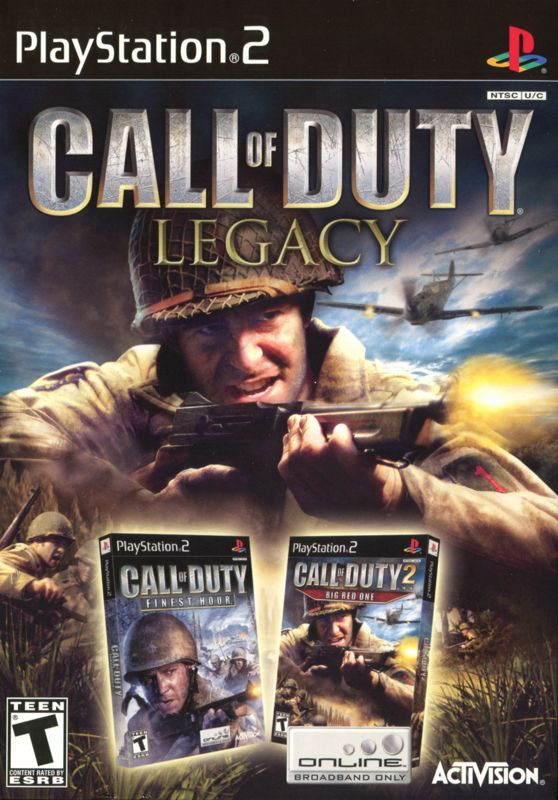
Call of Duty: Legacy brings together two classic console shooters—Call of Duty: Finest Hour and Call of Duty 2: Big Red One—into one collection that showcases the evolution of the franchise’s gameplay mechanics. From the tight, corridor-based firefights of Finest Hour to the more expansive, squad-oriented missions of Big Red One, this compilation highlights contrasting approaches to World War II combat. Players will find familiar run-and-gun action alongside vehicle sequences, stealth sections, and objective-driven scenarios that keep each chapter feeling distinct.
(HEY YOU!! We hope you enjoy! We try not to run ads. So basically, this is a very expensive hobby running this site. Please consider joining us for updates, forums, and more. Network w/ us to make some cash or friends while retro gaming, and you can win some free retro games for posting. Okay, carry on 👍)
In Finest Hour, mission design leans heavily on scripted setpieces and memorable vignettes—storming beaches under withering fire, racing tanks through enemy lines, and parachuting behind enemy lines. These sequences are paced to deliver cinematic thrills, though the responsive but slightly floaty aiming can feel dated compared to modern shooters. The variety of mission objectives—from sniper covers to demolitions—ensures that combat rarely grows stale.
Call of Duty 2: Big Red One refines that formula with more cohesive squad commands and improved enemy AI. You’ll flank entrenched positions with your squadmates, call in mortars, and cooperate in multi-stage assaults on fortified targets. The pacing here is more deliberate, rewarding tactical positioning and use of cover. However, the lack of online multiplayer in this re-release means you’ll be focusing solely on the single-player campaigns, which remain the true heart of these experiences.
Graphics
Visually, Legacy is a time capsule of mid-2000s console hardware. While neither title matches the fidelity of contemporary shooters, both games retain a raw, gritty aesthetic that suits their World War II settings. In Finest Hour, metallic clangs, dusty warzones, and basic lighting effects evoke a sense of era-appropriate authenticity. Textures can appear blurry up close, but dynamic smoke, muzzle flashes, and explosion effects still hold up when viewed from the intended console distance.
Big Red One ups the ante with improved environmental detail—rubble-strewn streets, muddy fields, and ruined villages feel tangibly war-torn. Character models exhibit more varied animations and facial expressions, and particle effects like flying debris and tracer rounds add visual weight to gunfights. Although the game’s frame rate can dip during particularly chaotic encounters, the overall presentation remains serviceable and retains a nostalgic charm for longtime fans.
The compilation does not include modern upscaling or texture packs, so buyers should temper expectations. However, for those who appreciate a historical lens on shooter design, the graphics serve their purpose well. Distinct art direction and period-accurate architecture keep the immersion intact, even when compared to today’s photorealistic standards.
Story
Call of Duty: Legacy weaves together multiple theaters of World War II through the eyes of soldiers from different Allied forces. Finest Hour takes you across the American, British, and Soviet fronts, offering four standalone campaigns that touch on major battles like the defense of Stalingrad and the Normandy landings. The narrative is told through brief mission intros and debriefs, emphasizing action over character development.
In contrast, Big Red One follows a single U.S. squad as they advance from North Africa to the heart of Germany. This focused approach allows for stronger emotional beats—bonding with squadmates like Cpl. Horton and Pfc. Cloud as you endure the harsh realities of war together. Voice acting and scripted dialogue bring personality to your AI companions, making each firefight feel more personal and rooted in camaraderie.
Neither game attempts to tackle the full complexity of World War II, but both strike a balance between historical context and adrenaline-pumping scenarios. Cutscenes are concise, delivering just enough exposition to keep you invested before plunging you back into the fight. For players interested in a straightforward, action-driven retelling of WWII events, the stories here serve as effective backdrops for the combat.
Overall Experience
As a compilation, Call of Duty: Legacy offers a compelling package for fans of classic shooters and series completists alike. The two campaigns deliver roughly 10–12 hours of single-player action, spanning varied locales and combat styles. Despite the absence of modern bells and whistles—such as online multiplayer, achievement integration, or graphical enhancements—the core gameplay remains satisfying for those who appreciate the series’ roots.
One of Legacy’s greatest strengths is its historical range. Players traverse snow-bound villages, desert outposts, and urban ruins, encountering different enemy tactics and environmental hazards along the way. This variety helps maintain momentum throughout, even if some missions feel more memorable than others. The pacing balances large-scale assaults with quieter infiltration segments, ensuring that the adrenaline never fully fades.
Ultimately, Call of Duty: Legacy is best suited for players seeking nostalgia or a window into the franchise’s early console efforts. Newcomers may find the dated mechanics and visuals a barrier, but veteran fans will appreciate revisiting these defining moments. As an affordable package that chronicles the series’ evolution in the mid-2000s, Legacy stands as a worthwhile purchase for those curious about where Call of Duty began and how it has grown into the juggernaut it is today.


Reviews
There are no reviews yet.