 Retro Replay Retro Replay gaming reviews, news, emulation, geek stuff and more!
Retro Replay Review
Gameplay
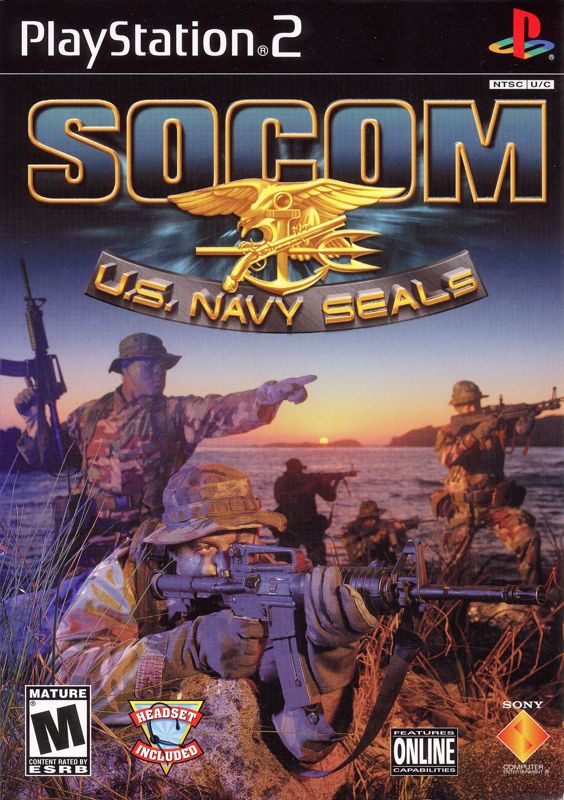
SOCOM: U.S. Navy SEALs centers around commanding a four-person elite squad through a series of high-stakes military missions. From the outset, you’ll appreciate the depth of the in-game command system, which allows you to direct your team using a drop-down menu or the included voice headset. Whether you’re ordering teammates to move to designated points—marked by military codes like Delta, Bravo, Charlie, and Foxtrot—or instructing them to lay down suppressive fire, the intuitive interface ensures these tactics feel natural and impactful.
(HEY YOU!! We hope you enjoy! We try not to run ads. So basically, this is a very expensive hobby running this site. Please consider joining us for updates, forums, and more. Network w/ us to make some cash or friends while retro gaming, and you can win some free retro games for posting. Okay, carry on 👍)
The game’s mission design spans diverse locales, including dense jungles in Thailand, arid deserts in Turkmenistan, and humid rainforests in the Congo. Each environment presents unique tactical challenges, from navigating winding paths amid heavy foliage to clearing compounds under the scorching sun. Your squad’s AI partners are generally responsive, adapting to enemy positions and executing cover-fire orders effectively, though there are occasional moments when pathfinding can lead to minor delays.
Equipment selection plays a pivotal role in gameplay strategy. With over 30 real-life military weapons at your disposal—ranging from the SOCOM Pistol to sub-machine guns, machine guns, and precision sniper rifles—you’ll need to tailor your loadout to each mission’s objectives. Switching between automatic weapons for close-quarters combat and scoped rifles for long-distance takedowns enhances the tactical feel, while the voice-command feature adds immersion by letting you bark real-time orders to your squad without fumbling through menus.
Graphics
On the PlayStation 2 hardware, SOCOM delivers solid visuals that hold up surprisingly well today. The environments are richly detailed, from moss-draped trees in the Thai jungle to weathered rock formations in Turkmenistan. Textures may appear dated by modern standards, but the level of detail in foliage, sand, and water reflections creates convincing battle zones that draw you into each mission.
Character models and animations strike a balance between realism and performance. Your SEAL team moves deliberately with clear, purposeful motions as they breach doors or take cover behind debris. Gunfire flashes, muzzle smoke, and bullet tracers are crisp and satisfying, lending authenticity to every engagement. Dynamic lighting enhances immersion, especially during dusk or dawn missions where shadows can be used to your tactical advantage.
Online multiplayer sections mirror the single-player’s graphical fidelity, with map designs that translate well to competitive play. Frame rate remains stable in most scenarios, even when multiple players engage in firefights with grenades, machine-gun fire, and vehicles on screen. The clear heads-up display (HUD) keeps track of objectives and team commands without cluttering the view, ensuring you stay focused on the action.
Story
The narrative framework of SOCOM: U.S. Navy SEALs is functional yet effective. You assume the role of a SEAL team leader, tasked with disrupting terrorist operations and rescuing hostages across the globe. Briefings before each mission set the stakes and outline objectives, providing enough context to motivate you without slowing down the pace.
While the game doesn’t rely on cinematic cutscenes or elaborate character backstories, it uses in-mission radio chatter and encrypted communications to build tension. Hearing your squadmates report enemy positions or request support injects urgency into every firefight. The lack of a heavily scripted storyline actually works in the game’s favor, emphasizing emergent tactical scenarios over linear storytelling.
Immersion is further reinforced by the authenticity of equipment callsigns, mission code names, and the tone of voice-overs. The constant interplay of command directives and enemy intel makes you feel like an integral part of a top-secret special forces operation, and organically weaves the narrative through gameplay rather than pausing for lengthy exposition.
Overall Experience
SOCOM: U.S. Navy SEALs offers a robust single-player campaign that typically spans 10–12 missions, each varying in length and complexity. Replayability is high, as players often revisit missions to improve completion times, experiment with different loadouts, or chase hidden objectives. The blend of stealth, direct assault, and strategic positioning keeps the pacing fresh throughout the campaign.
As the launch title for the PlayStation 2’s online service, SOCOM truly shines in multiplayer. All you need is a PS2 Network Adapter, a memory card with around 130 blocks free, and a broadband connection. The integrated voice headset or USB keyboard support allows for seamless communication, turning squad-based tactics into dynamic online skirmishes against players worldwide. Matches range from team deathmatches to objective-based modes, fostering a dedicated community that celebrated the game’s depth.
In conclusion, SOCOM: U.S. Navy SEALs stands out as a pioneering tactical shooter that combines realistic weaponry, diverse mission locales, and innovative voice-command mechanics. While its visuals reflect the era of the PlayStation 2, the core gameplay—rooted in strategic planning and squad coordination—remains highly engaging. For anyone seeking a military action experience that rewards thoughtful tactics and effective communication, SOCOM remains a compelling choice.


Reviews
There are no reviews yet.