 Retro Replay Retro Gaming History, Reviews & Emulation
Retro Replay Review
Gameplay
Sengoku Basara: Samurai Heroes understands the pleasure of starting a stage at full speed. You choose a leader, enter a battlefield packed with opposition, and immediately get to work clearing the way with an over-the-top weapon style built for big, direct action. If you know Dynasty Warriors, the basic rhythm will feel familiar: push forward, defeat enemies, win the battle. Basara is more exaggerated and arcade-oriented, though, and that makes it easy to enjoy in short, high-energy bursts.
The best reason to experiment is the roster of more than a dozen leaders. Each brings a unique weapon and battle style, so swapping characters is not just a cosmetic decision. One campaign can feel meaningfully different from the next because every leader has a personal Heroes’ Story route, and the locations you decide to conquer can send that story down different paths. That structure gives repeat runs more purpose than simply replaying the same fights for a higher score.
Progression also gives the button-heavy combat some welcome momentum. Battles award experience, with extra experience tied to special requirements and secrets found on the field. Leveling improves your stats and unlocks new abilities, while weapons, items, accessories, allies, and resources steadily build out your options. Resources can be turned into accessories that strengthen heroes and their weapons, so there is a satisfying sense that even a successful repeat battle is moving your broader collection forward.
Frustration can set in if you need every battle to demand careful strategy rather than forceful crowd-clearing. The core loop remains a hack-and-slash loop, and the game’s enthusiasm for excess is the point. Still, the branching campaigns and individual fighting styles give you practical reasons to stick with it beyond the first rush of action.
Quick Battle is a useful companion to the story mode because it lets you revisit battlefields you have already seen without treating your progress as separate. Characters, levels, and discovered items carry across both modes. Two-player split-screen is an even better excuse to revisit them: this is the kind of game that benefits from having someone beside you who is equally happy to turn a battlefield into a noisy mess.
Graphics
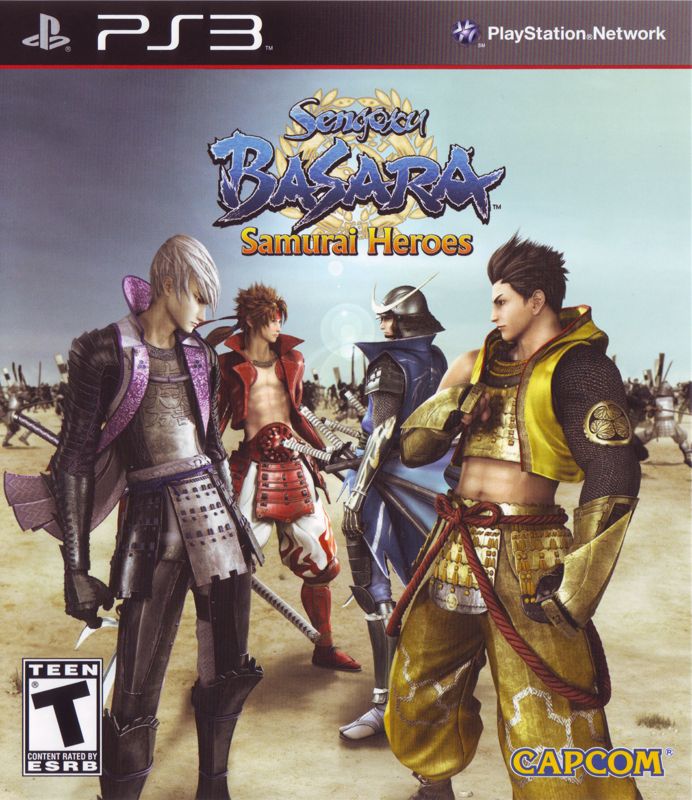
The look is openly anime-styled and deliberately exaggerated rather than grounded. Heroes and their weapons are the focal point, fitting a game where each selectable leader is meant to feel like a distinct battlefield star. The third-person action view keeps attention on the character you chose and the mass of enemies surrounding them.
Story
Rather than asking you to follow one fixed campaign, Samurai Heroes breaks its storytelling across the individual Heroes’ Story modes. Every leader has a story of their own, and the territory choices you make determine multiple possible paths. That is a smart match for the roster: you are encouraged to see the conflict from more than one perspective instead of treating one completion as the whole package.
The game serves as a prequel to the anime storyline, but it works most naturally as a character-led excuse to keep moving from battle to battle. The branching structure is more compelling than a straight line because it turns conquest choices into a reason to replay. You can pursue a different route with a familiar hero or change leaders entirely when you want a new style of fighting alongside a new story.
Do not come in expecting restrained historical drama. This is Sengoku-era material filtered through fantasy action and anime excess. That tone fits the combat: the story is there to frame rival leaders, campaigns, and big confrontations, while the real payoff comes from taking your chosen hero through the routes and seeing what another path unlocks.
Overall Experience
Sengoku Basara: Samurai Heroes is a solid, enthusiastic brawler that earns its fun through variety. Its immediate action is easy to understand, but the roster, branching story routes, leveling, and equipment rewards give you enough to chase once the first few battles stop being novel. The shared progression between Heroes’ Story and Quick Battle is especially welcome, since time spent replaying stages still feeds into your larger pool of characters and gear.
Its limitations are tied to its strengths. You will spend a lot of time fighting through battles, and no amount of unlockable equipment changes the fact that this is a broad, energetic hack-and-slash game first. If that loop already leaves you cold, the anime style and campaign branches are unlikely to convert you. If you enjoy the genre’s simple power fantasy, however, Basara’s more theatrical attitude makes it a worthwhile alternative to the usual warrior-on-a-battlefield formula.
The 6.5 score fits: there is real replay value here, especially if you sample several leaders or bring in a second player for split-screen, but it does not rise much beyond its familiar crowd-fighting foundation. Give it a chance if you want arcade-flavored samurai action with a strong urge to reward one more run. Skip it if you want precision combat or a more measured tactical war game.


Reviews
There are no reviews yet.